 Save
Save I discovered these noodles on a chaotic Tuesday night when my pantry was nearly bare and friends were texting about dinner plans. Out of desperation and curiosity, I threw together what I had—some rice noodles, peanut butter, and whatever vegetables hadn't wilted yet—and the result was so good that it became my go-to move for feeding people on short notice. Now when I make them, I think back to that first happy accident and how something so simple became the dish everyone asks me to bring.
I'll never forget the first time I made these for my roommate who swore she didn't like peanut sauce—she cleaned her bowl and asked for the recipe before she was even done eating. That's when I realized this dish had something special, a way of winning people over with its bold flavor and comforting warmth that felt less like "cooking" and more like sharing something genuinely good.
Ingredients
- Dried rice noodles or spaghetti (12 oz): Rice noodles give you that silky texture that soaks up sauce beautifully, but spaghetti works just fine if that's what you have—the dish adapts to what's in your cabinet.
- Creamy peanut butter (1/2 cup): This is your sauce's foundation, so use something you'd actually eat on toast—the better the peanut butter, the better your dish.
- Soy sauce (1/4 cup): The umami backbone that makes everything taste deeper and more intentional.
- Rice vinegar (2 tbsp): A small splash that cuts through the richness and wakes up your palate with subtle brightness.
- Toasted sesame oil (1 tbsp): Don't skip this or substitute it—its nutty intensity is irreplaceable and worth hunting down.
- Honey or maple syrup (2 tbsp): A touch of sweetness that balances the heat and salt, making every bite feel rounded.
- Sriracha or chili garlic sauce (2–3 tbsp): Start lower and taste as you go; spice is personal, and you want heat that makes you smile, not wince.
- Fresh garlic (2 cloves, minced): Mince it fine so it dissolves into the sauce rather than creating harsh bites.
- Fresh ginger (1 tbsp, grated): The warmth and slight sharpness that makes the whole thing taste alive and more complex than the sum of its parts.
- Warm water (1/4 cup, plus more as needed): The secret to a sauce that coats rather than puddles—you're looking for pourable, not pourable, not thick.
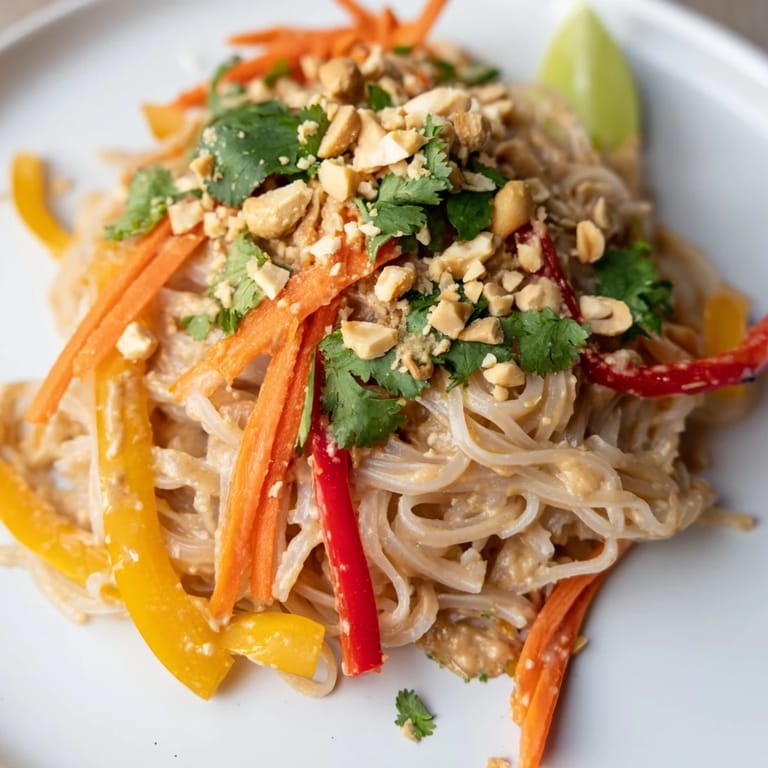
- Shredded carrots (1 cup): Their natural sweetness and crunch create a textural contrast that keeps the dish interesting.
- Thinly sliced bell pepper (1 cup): Any color works, though I love the brightness red or yellow bring to the final plate.
- Scallions (2, thinly sliced): Save these for garnish where their fresh onion bite stays sharp and alive.
- Roasted peanuts (1/4 cup, chopped): The final crunch that makes people pause and say, "Oh, that's nice."
- Fresh cilantro (1/4 cup, chopped): If you're a cilantro person, don't skip it; if you're not, move to lime wedges as your bright note.
- Lime wedges for serving: That last squeeze of acid is the period at the end of the sentence, tying everything together.
Tired of Takeout? 🥡
Get 10 meals you can make faster than delivery arrives. Seriously.
One email. No spam. Unsubscribe anytime.
Instructions
- Boil the noodles until just tender:
- Fill your pot with salted water and bring it to a rolling boil—you want the kitchen filled with steam and the smell of starch. Cook according to package directions, then drain and rinse under cold water until they're no longer hot, tossing gently so they don't clump.
- Build your sauce with intention:
- In a medium bowl, whisk peanut butter with soy sauce, rice vinegar, sesame oil, honey, sriracha, garlic, and ginger, watching as it transforms from thick to silky. Start with the smaller amount of water and add more slowly, tasting as you go—you're aiming for something that flows but still clings to the noodles.
- Toss everything together in one big bowl:
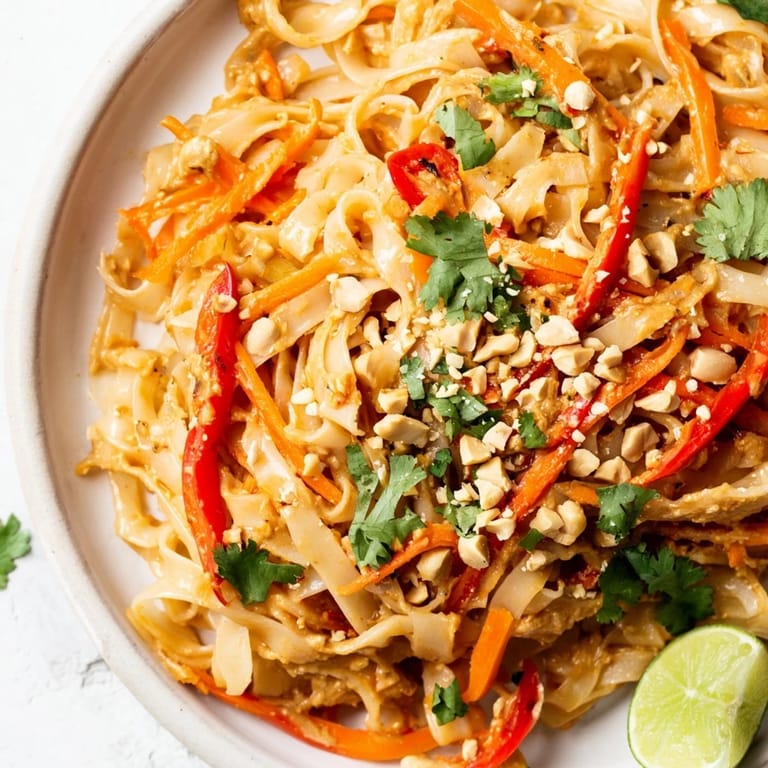
- Combine the cooked noodles, carrots, and bell pepper, then pour that beautiful sauce over top and toss with urgency, making sure every strand gets coated and every vegetable finds its place.
- Plate and finish with brightness:
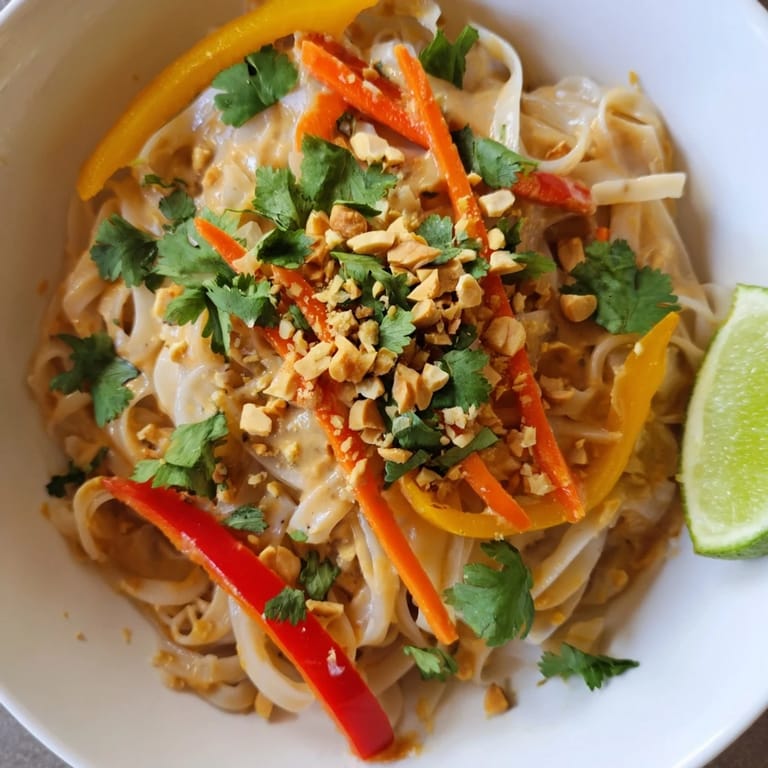
- Divide among bowls and scatter scallions, peanuts, and cilantro on top like you mean it, then add a squeeze of lime that makes people's eyes light up at that final flavor pop.
- Eat immediately or chill for later:
- Serve warm if your kitchen is cool and you want that comforting feeling, or chill it and serve it cold on a hot day when cold noodles feel like the best idea anyone's ever had.
 Save
Save There's a moment when you're tossing the noodles and sauce together where the kitchen smells like toasted sesame and garlic and you realize you've made something that feels both fancy enough to impress and simple enough to repeat forever. That's when I know I've done something right.
Making It Your Own
This recipe is a foundation, not a rulebook, and it loves when you improvise. I've made it with whatever vegetables are around—cucumber, snap peas, shredded cabbage—and it just gets better the more colorful you make it. The sauce is forgiving too; if you prefer it less spicy, dial back the sriracha and lean on the sesame oil for depth instead.
Protein Options That Work
On nights when I want something more substantial, I'll add cooked shrimp that I've quickly pan-seared with a bit of garlic, or crumbled baked tofu that takes on the sauce like it was made for it. Rotisserie chicken torn into pieces works too—just toss it in with the noodles so it gets warm and coated, and suddenly you've fed actual humans a meal they'll remember.
Spice and Heat Customization
I learned early on that spice is deeply personal, so I treat sriracha like seasoning—starting small and tasting constantly until I hit that perfect note where it enhances rather than overwhelms. Some of my friends barely notice the heat, while others push toward three tablespoons and beam when the warmth builds as they eat.
- Keep sriracha separate while you're making the sauce and stir it in gradually, tasting as you go.
- If you overshoot on spice, a splash more honey or a bigger squeeze of lime can soften and balance it back out.
- Chili garlic sauce and sriracha aren't interchangeable flavor-wise, so experiment to find which one makes your version sing.
 Save
Save These noodles are proof that the simplest ingredients, when treated with a little care and attention, become something people crave and come back for. Make them once and I promise you'll find yourself making them again on the nights when you need something warm, flavorful, and absolutely effortless.
Common Questions
- → How can I adjust the spice level?
The heat can be tailored by varying the amount of sriracha or chili garlic sauce. Start with less and add more to suit your taste.
- → What noodles work best for this dish?
Dried rice noodles or spaghetti are ideal choices. Rice noodles give an authentic texture, while spaghetti is a convenient substitute.
- → Can I make the sauce creamier?
For extra creaminess, add a splash of warm water gradually while whisking until the desired consistency is achieved.
- → Are there any protein additions recommended?
Adding sautéed tofu, chicken, or shrimp can boost protein and make this dish more filling.
- → What are good substitutes for peanut butter?
Almond or cashew butter can be used as alternatives. For those allergic to nuts, sunflower seed butter is a safe option.