 Save
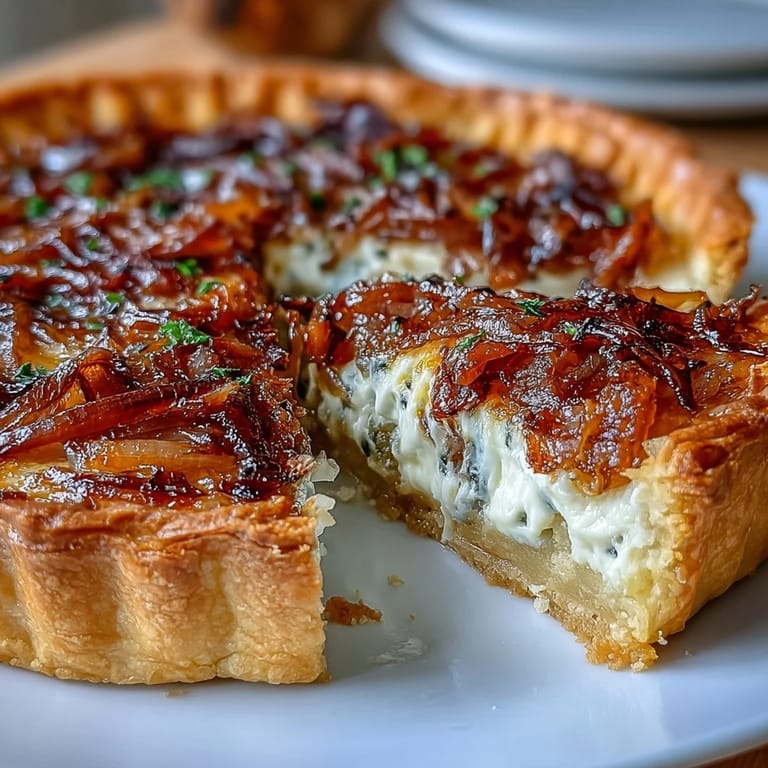
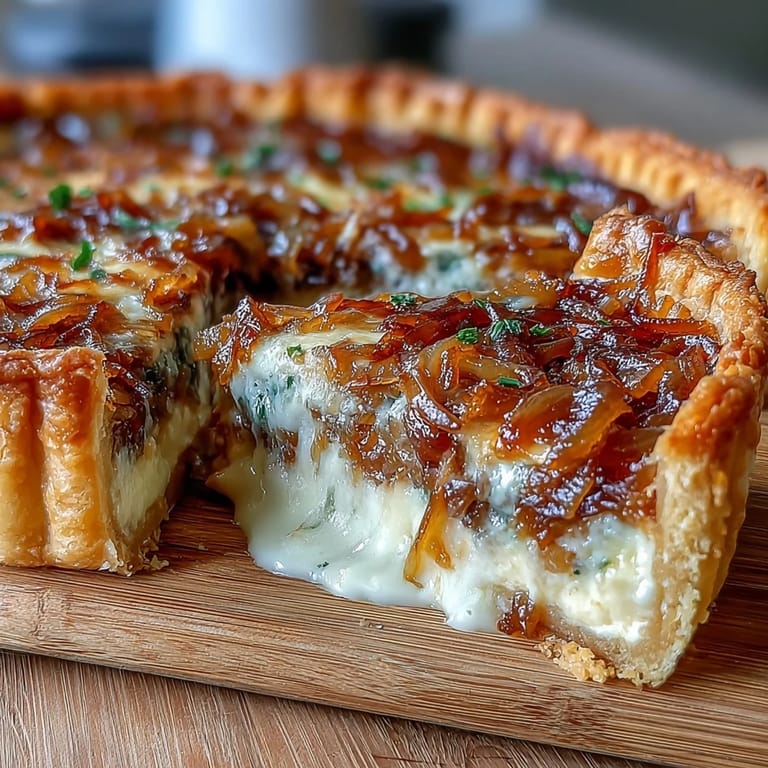
Save There's a particular moment in late autumn when my kitchen fills with the smell of onions slowly turning golden, and I know it's time to make this tart. A friend once called it my secret weapon for impressing people without actually trying hard, which made me laugh because she was right—there's something about the contrast of sweet, jammy onions against sharp Gruyere that feels effortlessly elegant. What started as me following a French cookbook one rainy afternoon has become the dish I reach for whenever I want to feel capable and sophisticated at the same time.
I'll never forget serving this to my in-laws the first time I made it—I was genuinely nervous about the timing, but when that tart came out of the oven with its golden top and that incredible aroma filling the dining room, my anxiety completely melted away. My mother-in-law asked for the recipe right there at the table, which felt like winning an unspoken competition I didn't even know I was in.
Ingredients
- Puff pastry (9-inch sheet): The foundation that gets flaky and buttery—thaw it in the fridge the night before if you remember, but honestly, even slightly chilled works beautifully.
- Unsalted butter and olive oil: The combination matters because butter gives you flavor while olive oil prevents the butter from burning during the long caramelization.
- Large yellow onions (4, thinly sliced): Yellow onions have more natural sugar than other varieties, which is why they're worth seeking out for this dish.
- Salt, pepper, and sugar: Salt draws out moisture from the onions, pepper adds bite, and a teaspoon of sugar accelerates the caramelization process.
- Fresh thyme (2 teaspoons): Add this late in the cooking so it stays bright and fragrant instead of turning muddy and bitter.
- Eggs (3 large): Use room temperature eggs because they blend more smoothly with the cream into a silky custard.
- Heavy cream and whole milk (1 cup and 1/2 cup): The combination creates a custard that's rich but not overwhelmingly heavy.
- Ground nutmeg: Just a whisper of it adds depth that people taste but can't quite name.
- Gruyere cheese (1 1/2 cups, grated): Don't use pre-shredded if you can help it—freshly grated melts into the custard more evenly and adds better flavor.
- Dijon mustard (1 tablespoon): This is the secret that prevents the pastry from getting soggy and adds a subtle tang that balances the sweetness of the onions.
Tired of Takeout? 🥡
Get 10 meals you can make faster than delivery arrives. Seriously.
One email. No spam. Unsubscribe anytime.
Instructions
- Heat your oven and prepare the pastry:
- Preheat to 375°F while you gently fit your thawed puff pastry into the tart pan, letting it settle naturally into the corners without stretching. Prick the base all over with a fork so it doesn't puff up too much, then slide the whole thing into the fridge while you work on the filling.
- Begin the long, slow caramelization:
- In a large skillet over medium-low heat, melt butter with olive oil together, then add your thinly sliced onions along with salt, pepper, and a teaspoon of sugar. This low-and-slow approach takes about 30 to 35 minutes, and you'll need to stir frequently—it's meditative work, honestly, the kind that makes you feel purposeful in the kitchen.
- Watch for the color change:
- The onions will go from raw to translucent to pale gold to deep amber, and that final stage is where the magic happens. During the last five minutes, stir in your thyme so it perfumes everything without losing its delicate flavor.
- Make your custard filling:
- In a mixing bowl, whisk together eggs, heavy cream, milk, nutmeg, salt, and pepper until smooth and unified—this takes less than a minute but makes all the difference in texture.
- Layer the tart:
- Pull your chilled pastry shell from the fridge, brush the base with Dijon mustard (this is the step people forget and then wonder why their tart is soggy), then spread the cooled caramelized onions evenly across. Sprinkle the grated Gruyere over the onions, then pour the custard mixture slowly and carefully over everything.
- Bake until set and golden:
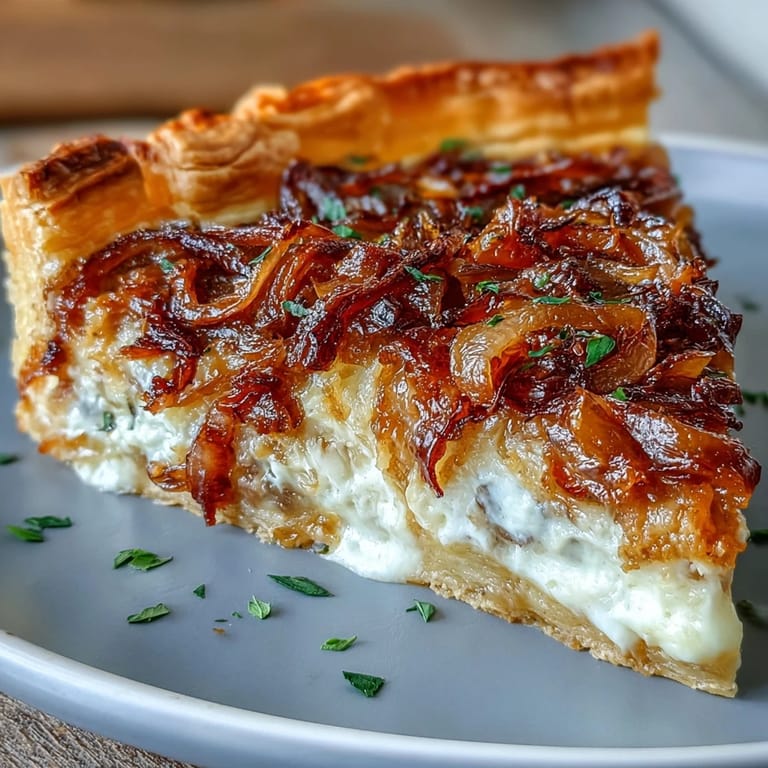
- This takes 35 to 40 minutes, and you'll know it's done when the filling is just set but still jiggles slightly in the very center when you gently shake the pan. The top should be golden and slightly puffed.
- Rest before serving:
- Let the tart cool for at least ten minutes so the filling firms up and becomes easier to slice cleanly.
 Save
Save This tart somehow became the thing I make when I want to turn an ordinary Sunday lunch into something that feels intentional and special. There's something about sitting down to eat something this beautiful that shifts the whole mood of the day.
The Art of Caramelizing Onions
Caramelization is less about technique and more about respecting time—those onions need about thirty to thirty-five minutes to fully transform, and there's honestly no way to rush it without sacrificing flavor. I learned this the hard way by trying to increase the heat, which just gave me burnt edges and a bitter taste that no amount of Gruyere could fix. The secret is keeping the heat at medium-low, stirring frequently, and letting the natural sugars in the onions slowly concentrate into something jammy and sweet.
Pastry Perfection
Good puff pastry is already a miracle of butter and time, so the best thing you can do is not overthink it. Let it thaw properly at room temperature or in the fridge overnight, handle it gently without stretching, and remember that the Dijon mustard base is doing more work than you'd expect. I've learned that pricking the base prevents it from puffing into an unwieldy mess, but leaving some structure helps the filling sit evenly and cook through.
Serving Suggestions and Storage
This tart is wonderful served warm or even at room temperature, which makes it surprisingly flexible for entertaining. A simple salad of peppery greens and a crisp white wine like Sauvignon Blanc are perfect companions, letting the onions and Gruyere be the stars. Leftovers keep beautifully in the refrigerator for a couple of days and reheat gently in a 300°F oven until warmed through.
- You can make the caramelized onions the day before and store them in an airtight container, which actually deepens their flavor.
- If you want to swap the cheese, Emmental or Swiss work beautifully and create slightly different flavor profiles while maintaining that creamy, melty quality.
- For a white wine variation, add a splash of dry white wine to the onions during caramelization for extra depth and sophistication.
 Save
Save This tart has become proof that the most elegant dishes don't require complicated techniques, just patience and good ingredients. Make it once and you'll understand why it shows up again and again in French kitchens.
Common Questions
- → How do I properly caramelize onions for this tart?
Cook sliced onions slowly over medium-low heat with butter and olive oil, stirring often until golden and soft, about 30-35 minutes. Add thyme near the end for fragrant depth.
- → Can I use a different cheese instead of Gruyere?
Yes, Emmental or Swiss cheese are excellent substitutes that melt well and offer similar flavor profiles.
- → What is the best pastry for this tart?
Use a high-quality 9-inch puff pastry sheet, thawed if frozen, for a flaky and buttery crust that complements the filling.
- → How should the tart be served?
Allow it to cool for about 10 minutes after baking, then serve warm or at room temperature, paired nicely with mixed greens and crisp white wine.
- → Can I add any extra flavor to the onions?
Adding a splash of white wine during caramelization enhances the sweetness and complexity of the onions.