 Save
Save There's something about the smell of salmon hitting a hot pan that makes me feel like I'm actually cooking something worthwhile. Years ago, I burned a piece of fish so badly trying to impress someone that I swore I'd never attempt it again, but then a friend handed me a jar of good honey mustard and casually suggested I just bake the whole thing in the oven. That one suggestion changed everything. Now this is the dish I reach for when I want to feel confident in the kitchen without spending hours there.
I made this for my roommate once when she was having a rough week, and watching her face light up when she tasted it felt like the smallest, best thing I could do. She asked for the recipe three times in one dinner, and I realized then that simple food made with attention actually matters. Now whenever I bake salmon this way, I think about that moment and how cooking for someone is its own kind of kindness.
Ingredients
- Salmon fillets (4 fillets, 6 oz each): Look for fillets that feel firm and smell like the ocean, not fishy. Skin-on holds together better, but skinless works if that's what your store has.
- Dijon mustard (3 tbsp): This is the backbone of the sauce and brings sophistication without heat. Don't skip it for regular yellow mustard unless you want something gentler.
- Whole grain mustard (2 tbsp): Those little seeds add texture and a subtle sweetness that keeps the sauce from tasting one-note.
- Honey (3 tbsp): Use something decent here—it's not just sweetener, it's what makes the glaze actually glaze. Raw honey or regular will both work beautifully.
- Olive oil (1 tbsp): This helps everything meld together and prevents the sauce from drying out on top of the fish.
- Lemon juice (1 tbsp): Fresh lemon changes everything. Bottled works, but fresh tastes brighter and cuts through the richness.
- Garlic (2 cloves, minced): Mincing it small means it distributes evenly and doesn't overwhelm the delicate fish.
- Salt and black pepper: These aren't afterthoughts—they wake up all the other flavors.
- Fresh parsley (1 tbsp, chopped): A small handful scattered on top makes it look intentional and adds a tiny bit of freshness.
- Lemon wedges (for serving): People love squeezing these over the top at the table. It feels interactive.
Tired of Takeout? 🥡
Get 10 meals you can make faster than delivery arrives. Seriously.
One email. No spam. Unsubscribe anytime.
Instructions
- Get your oven ready:
- Heat it to 400°F and line your baking sheet with parchment paper if you have it. This step takes two minutes and saves you from scrubbing.
- Make the magic sauce:
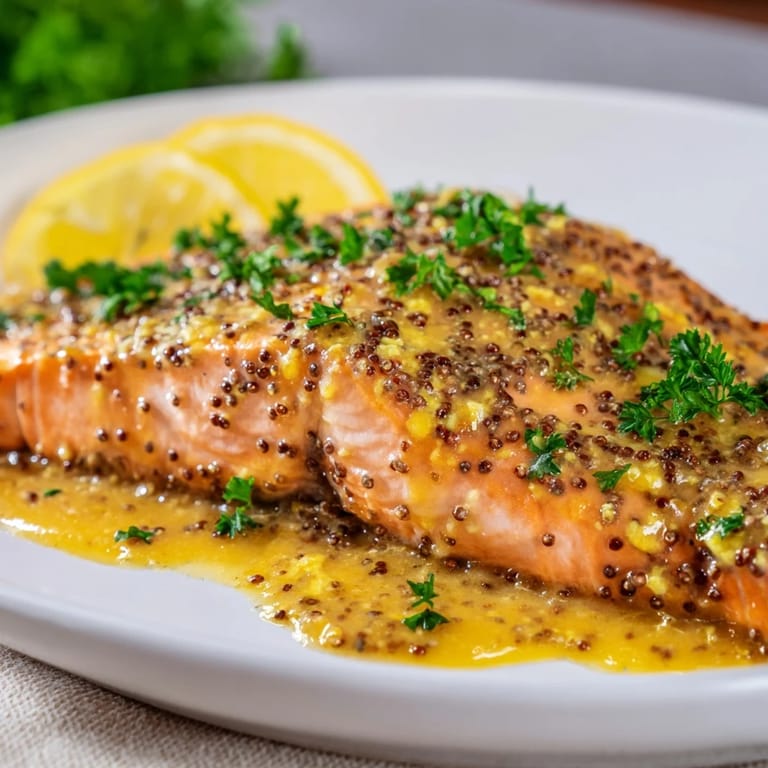
- Whisk the mustards, honey, olive oil, lemon juice, minced garlic, salt, and pepper together in a small bowl until it looks glossy and combined. It should taste balanced—sweet, tangy, and a little sharp all at once.
- Prepare the salmon:
- Pat your fillets dry with paper towels and lay them out on the baking sheet. Wet salmon won't brown properly, so this small step actually matters.
- Coat generously:
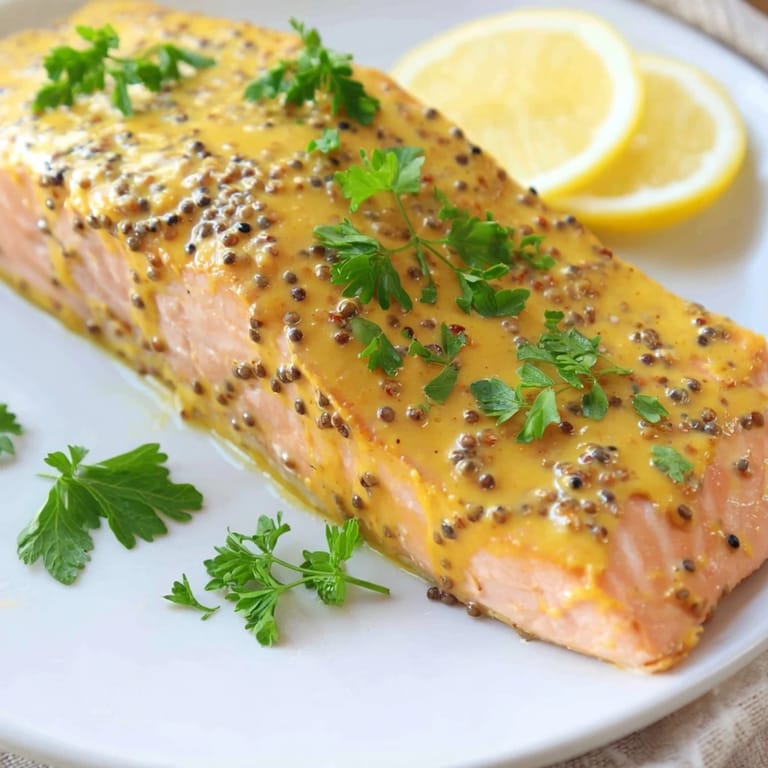
- Spoon the sauce over each fillet, making sure to coat the top and sides. You want it to look intentional, not shy.
- Bake until it's done:
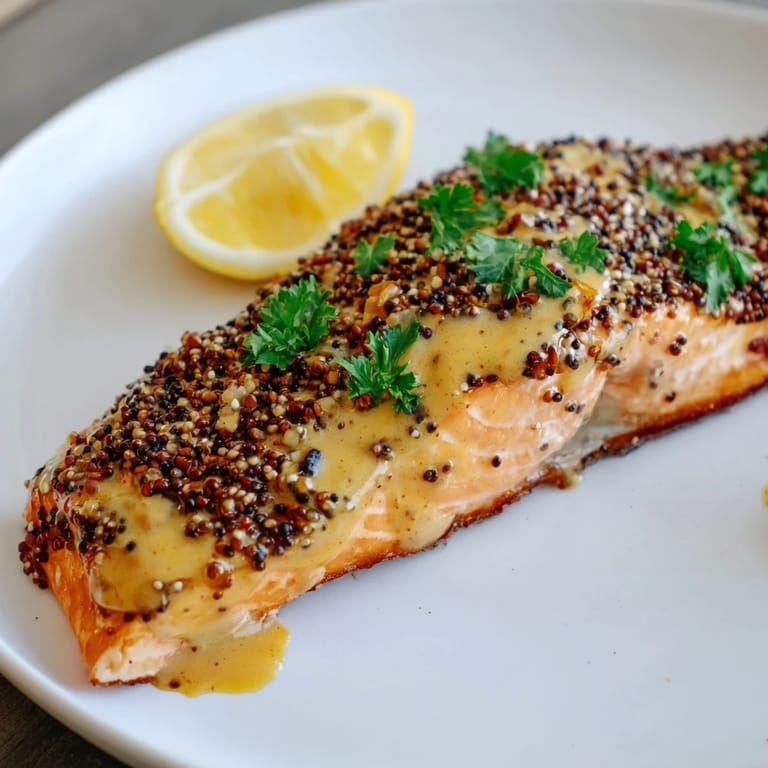
- Slide the whole thing into the oven for 15 to 20 minutes. The salmon is ready when it flakes easily with a fork and looks opaque in the center—don't overcook it or it becomes dry.
- Finish and serve:
- Pull it out, sprinkle parsley over the top, and serve with lemon wedges on the side. Let people finish it however they want.
 Save
Save I remember plating this for my family on a quiet Sunday and realizing halfway through the meal that nobody was talking—they were just eating, present and quiet in the way that only happens when food is really good. That's when I understood the point of cooking simple things well.
Why This Sauce Works
The combination of Dijon and whole grain mustard might seem overthinking it, but they work together like an old song. One brings smoothness and sophistication, the other adds tiny pockets of texture and sweetness. The honey bridges everything, turning it from acidic and sharp into something that actually caramelizes on the salmon. The lemon juice keeps it from tasting cloying, and the garlic adds a whisper of depth. It's not complicated, but it's intentional.
What to Serve Alongside It
This salmon doesn't need much, but it loves certain things. I usually make a simple rice or quinoa to catch any sauce that runs off the fish, or roasted vegetables if I have time and energy. A fresh salad with something acidic in the dressing works beautifully too. The point is to let the salmon be the star—everything else is there to listen.
Swaps and Variations
This recipe is flexible in ways that matter. If you don't have whole grain mustard, just double the Dijon—it won't be quite the same, but it'll still be delicious. Regular yellow mustard makes everything milder and sweeter if that's what your family prefers. Some people add a pinch of paprika or cayenne if they want a tiny bit of heat. The sauce also works beautifully on chicken or even roasted vegetables if you're cooking for mixed tastes at the table.
- Broil for the last two minutes if you want the top to caramelize and darken.
- Make the sauce ahead and let it sit in the fridge—it actually gets better as the flavors settle together.
- Double the batch and freeze the extra sauce in ice cube trays for busy weeks.
 Save
Save This dish has become my quiet confidence in the kitchen, the thing I make when I want to feel like I know what I'm doing. It's honest food that tastes better than it has any right to, given how little time and fuss it takes.
Common Questions
- → What type of mustard is used in the sauce?
The sauce combines Dijon and whole grain mustards, providing both smoothness and texture for a balanced tang.
- → Can I use skin-on salmon fillets?
Yes, skin-on fillets work well and help retain moisture during baking, adding extra flavor and texture.
- → How is the salmon cooked evenly?
Baking at 400°F ensures the fillets cook through gently, while broiling for the last 2 minutes enhances caramelization.
- → What side dishes complement this salmon?
Serve with rice, quinoa, roasted vegetables, or a fresh green salad for a balanced meal.
- → Is this dish suitable for gluten-free diets?
Yes, all ingredients are naturally gluten-free, making it suitable for those avoiding gluten.