 Save
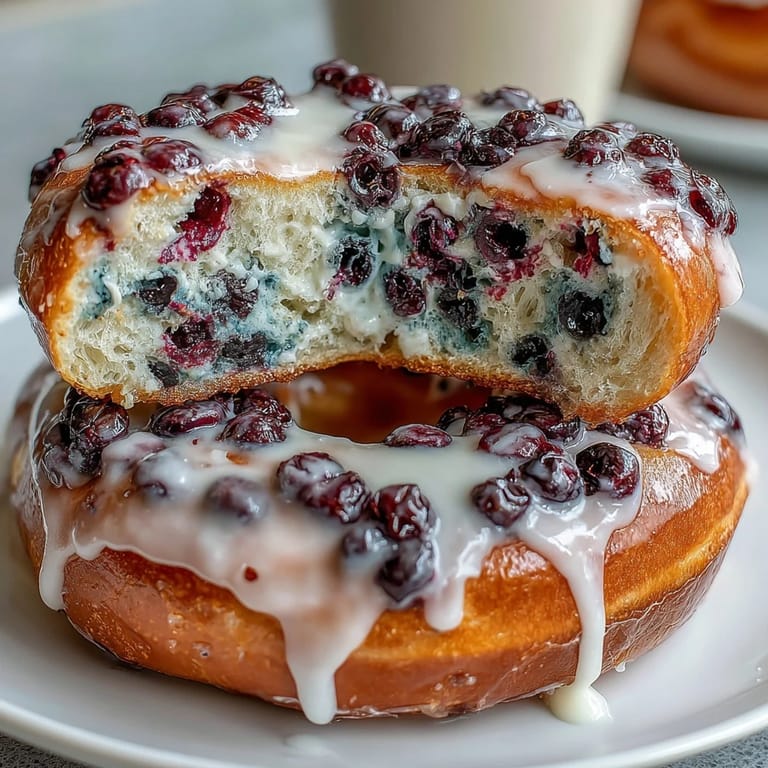
Save One Saturday morning, I stood in my kitchen wondering why my usual breakfast routine felt so predictable, when it hit me—what if bagels could do more than just sit there looking pretty? That's when I started experimenting with mixing protein powder into the dough, and the kitchen suddenly smelled like a bakery meets a gym in the best way possible. The first batch came out chewy and substantial, studded with blueberries that burst with tartness, and I knew I'd stumbled onto something that would change my weekends.
I made a double batch for my partner's birthday brunch, and watching people pick up a second one without asking questions first—that's when I realized these weren't just my experiment anymore. Someone's toddler actually requested the bagel instead of the pastries on the table, which might be the highest compliment a breakfast food can receive.
Ingredients
- Bread flour: This is your foundation, and it matters because it has enough gluten to create that proper chewy bagel texture that makes people understand why bagels exist.
- Vanilla protein powder: Choose whey or plant-based depending on your preference, and don't skip it thinking you can just add more flour—the protein actually changes the dough structure in a good way.
- Instant dry yeast: This is what makes them rise and become bagels instead of dense protein pucks, so make sure yours isn't expired by doing the smell test.
- Granulated sugar: Just enough to feed the yeast and give it something to work with during rising.
- Salt: Balances everything and keeps the yeast from going absolutely wild.
- Warm water: Too hot kills the yeast, too cold and nothing happens, so aim for that temperature where you can hold your finger in it for ten seconds comfortably.
- Unsalted butter: Melted and stirred in for richness that you'll taste in every bite.
- Fresh or frozen blueberries: Frozen is actually better here because they stay intact and don't bleed purple everywhere, which I learned the hard way.
- Honey or maple syrup for boiling: Optional but it adds a subtle sweetness and helps with browning, and honestly, why not.
- Powdered sugar: For the glaze, and it needs to be fine so it dissolves smoothly into that lemon juice.
- Fresh lemon juice: Bottled works in a pinch, but fresh tastes so much brighter and makes the whole thing taste like something you'd pay twelve dollars for.
- Lemon zest: This is where the real lemon flavor hiding, so don't skip it and grab a microplane if you're still using that box grater.
- Milk or water: For adjusting the glaze consistency until it drizzles exactly how you want it.
Tired of Takeout? 🥡
Get 10 meals you can make faster than delivery arrives. Seriously.
One email. No spam. Unsubscribe anytime.
Instructions
- Mix your dry ingredients:
- Whisk together the bread flour, protein powder, sugar, salt, and yeast in a large bowl, making sure there are no lumps hiding in there. This prevents the yeast from clumping up when you add the water and creates an even distribution of everything.
- Bring it together:
- Pour in your warm water and melted butter, then stir until you have a shaggy, rough dough that looks like it's barely holding itself together. Don't worry about it being messy at this point—that's exactly how it should feel.
- Knead until it transforms:
- Work this dough by hand or with a stand mixer and dough hook for 8 to 10 minutes, and you'll feel it go from sticky and stubborn to smooth and elastic under your hands. The dough should spring back when you poke it, and your arms will feel like they did something worthwhile.
- Fold in the blueberries gently:
- Add the frozen or fresh blueberries now, folding them in so they're distributed throughout without crushing them to oblivion. Work gently here, because you want whole berries, not blue dough.
- Let it rise:
- Shape your dough into a ball, place it in a lightly greased bowl, cover it with a clean cloth, and set it somewhere warm for about an hour. You'll know it's ready when it's doubled in size and jiggles a little when you touch the bowl.
- Shape your bagels:
- Punch down the dough—and actually punch it, which feels satisfying—then divide it into 8 equal pieces by eye or scale if you're feeling precise. Roll each piece into a ball, then poke your thumb through the center and gently stretch until you have a bagel shape with a hole big enough that it won't close up during cooking.
- Let them rest:
- Place your shaped bagels on a parchment-lined baking sheet, cover them, and give them 15 minutes to relax and proof slightly. This makes them puff up beautifully when they hit the boiling water.
- Bring water to a boil:
- Get 8 cups of water heating in a large pot, and if you want that extra touch, stir in honey or maple syrup. The bagels will boil in this water, so make sure your pot is big enough that they have room to move around freely.
- Preheat your oven:
- Set it to 400°F so it's ready when your bagels come out of the water, and your kitchen will start smelling incredible.
- Boil your bagels:
- Working in batches of 2 or 3, gently drop bagels into the simmering water and boil them for exactly 1 minute per side, which is way shorter than you might expect. Use a slotted spoon to flip them and fish them out, then return them to your baking sheet.
- Bake until golden:
- Pop your boiled bagels into the oven for 20 to 25 minutes, until they're golden brown and sound hollow when you tap them. The tops will get this beautiful caramelized color, and the insides will be soft and chewy.
- Cool them properly:
- Transfer bagels to a wire rack so air can circulate underneath them and they don't get soggy on the bottom. This takes patience, but don't skip it.
- Make your lemon glaze:
- Whisk together powdered sugar, fresh lemon juice, and lemon zest until combined, then add milk or water a teaspoon at a time until it reaches that perfect drizzling consistency. It should flow off the spoon but not pour like water.
- Glaze and set:
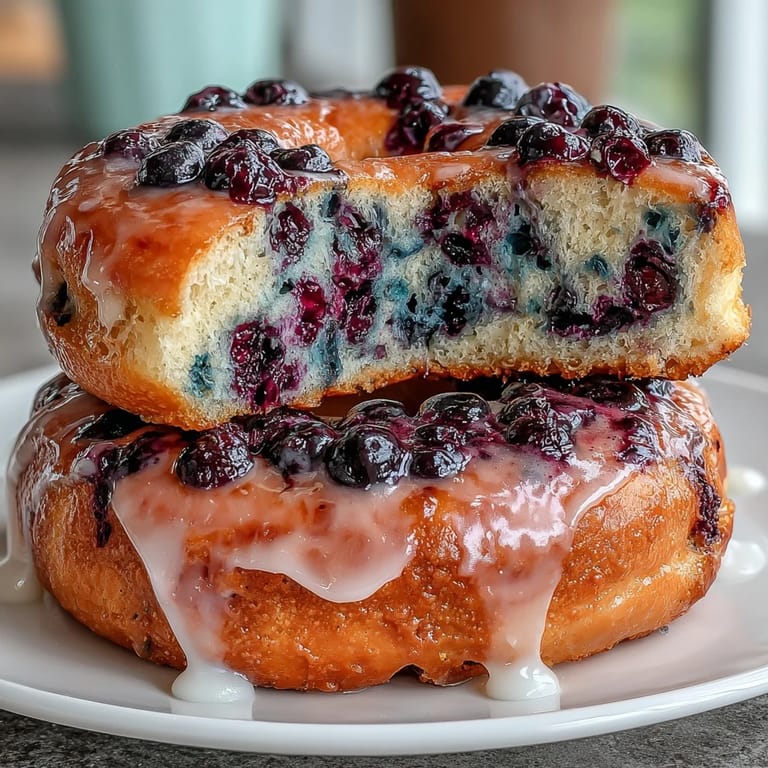
- Once your bagels are completely cool, drizzle the glaze over the top in whatever pattern makes you happy. Let it set for a few minutes before eating, though I won't judge you if you can't wait.
 Save
Save There was this one morning when a friend text-apologized before arriving for coffee, saying she'd eaten a sad desk lunch all week, and I knew exactly what to do. Watching her face when she bit into a still-warm bagel with that lemony sweetness hitting her—that moment tasted better than any recipe rating could ever tell you.
Why Protein Powder Actually Matters Here
Adding protein powder isn't just about gym aesthetics; it genuinely changes how the dough behaves and how it tastes. The protein creates a tighter crumb structure, which means your bagels stay chewy instead of turning into dry hockey pucks by afternoon, and the vanilla flavor adds this subtle sweetness that makes the lemon glaze feel intentional rather than random.
The Boiling Water Secret
That step where you boil the bagels isn't optional theater—it's what separates actual bagels from bread with a hole in it. The boiling causes the exterior to set quickly while the inside stays soft, creating that contrast in texture that makes people understand why bagels deserve their own category of breakfast food.
Making These Work For Your Life
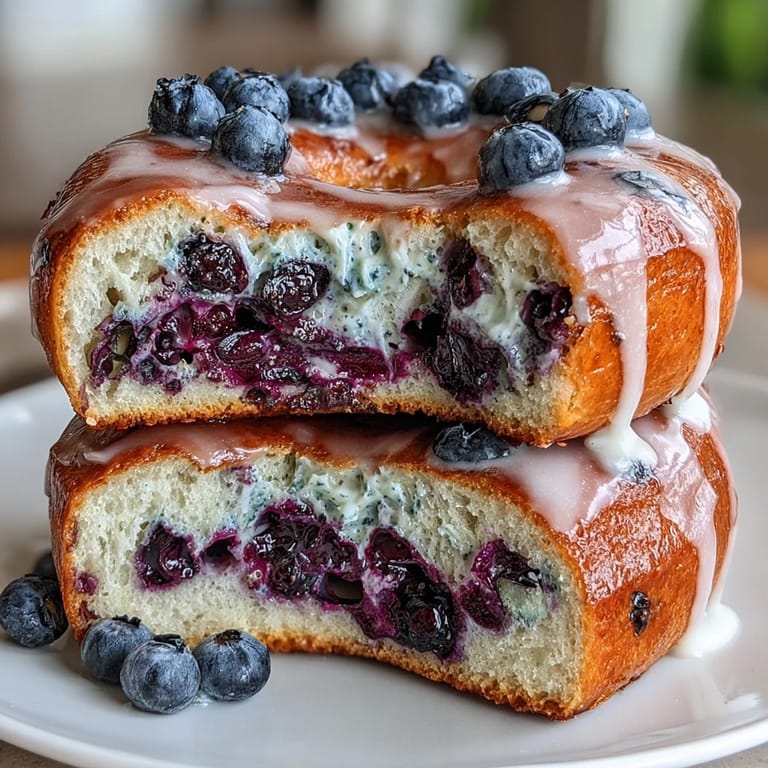
I learned the hard way that you don't have to serve these warm from the oven, which freed up my entire weekend because I could make them ahead and just reheat them before people arrived. The frozen ones actually reheat beautifully, so you can batch these on Sunday and have breakfast sorted for the entire week.
- Freeze extras in an airtight container for up to three weeks, and they thaw and reheat like they were just made.
- You can swap the blueberries for raspberries, chopped strawberries, or even chocolate chips if someone in your life is being difficult about fruit.
- The lemon glaze keeps for several days in the fridge, so you can glaze bagels as you eat them instead of all at once.
 Save
Save These bagels turned into my answer to people asking what I bring to brunches, and somehow a recipe born from kitchen boredom became the thing people actually remember. Make them once and you'll understand why protein and blueberries belong together.
Common Questions
- → How does protein powder affect the bagel texture?
Protein powder adds nutritional value and can make the bagels denser but still soft when combined with the right flour and rising times.
- → Can I use frozen blueberries without thawing?
Yes, folding frozen blueberries directly into the dough helps prevent excess moisture and keeps the berries intact during baking.
- → What is the purpose of boiling the bagels before baking?
Boiling sets the bagel crust, creating a chewy outer layer that distinguishes them from other breads.
- → How is the lemon glaze made and applied?
The glaze blends powdered sugar with fresh lemon juice and zest for brightness; it’s drizzled over cooled bagels for a sweet-tart finish.
- → Are there suitable substitutions for the protein powder?
Greek yogurt can replace some liquid to add protein and moisture, though it may slightly alter dough consistency.