 Save
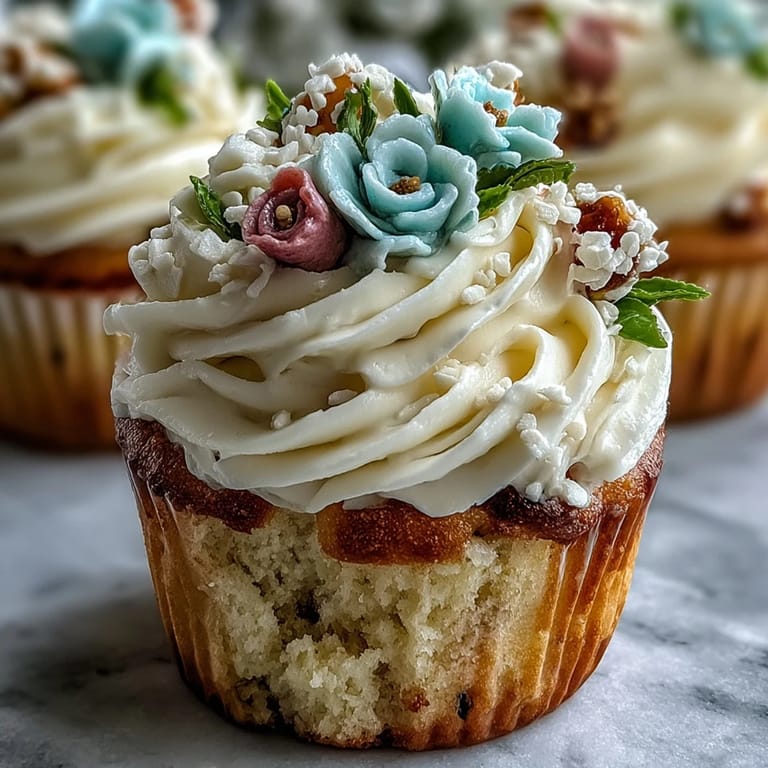
Save My sister called me in a panic two weeks before her baby shower, asking if I could bring something that looked as beautiful as it tasted. I'd never piped flowers before, but something about the challenge appealed to me—turning simple buttercream into tiny blooms felt like magic. That afternoon, I stood in my kitchen with a piping bag in one hand and pure determination in the other, watching delicate petals take shape on practice parchment. These vanilla cupcakes became my answer to her plea, and honestly, they surprised us both with how forgiving and rewarding they turned out to be.
I'll never forget my friend Sarah's face when she saw the cupcake tower at the baby shower—her eyes went wide and she immediately grabbed her phone to photograph them from every angle. What made that moment special wasn't just that they looked fancy; it was knowing I'd actually made something that brought that much joy to someone I cared about. The guests devoured them within minutes, asking for the recipe between bites, and I realized that sometimes the best food memories aren't about perfection but about the genuine happiness you create.
Ingredients
- All-purpose flour: Use fresh flour if you can, and spoon-and-level it into your measuring cup rather than scooping directly from the bag, which packs it down and throws off your ratios.
- Granulated sugar: This creams beautifully with softened butter to create the light, airy crumb that makes these cupcakes so tender.
- Unsalted butter (for cupcakes): Room temperature is essential here—cold butter won't cream properly and you'll end up with a dense cupcake instead of something fluffy.
- Large eggs (room temperature): I learned this the hard way by using cold eggs once and getting a slightly grainy texture; room temperature eggs incorporate smoothly and create a silkier batter.
- Whole milk (room temperature): The cold liquid matters more than you'd think, so pull your milk out of the fridge about 20 minutes before you start mixing.
- Pure vanilla extract: Splurge on the real thing here—imitation vanilla gets lost in the buttery richness, and you want that subtle floral note to shine.
- Baking powder: Check the expiration date; old baking powder loses its lift and you'll end up with flat, disappointing cupcakes.
- Unsalted butter (for buttercream): Make absolutely sure it's softened—this is where most piping failures happen because people try to work with cold or even slightly cool butter.
- Powdered sugar (sifted): Sifting removes lumps that refuse to dissolve and ensures your buttercream pipes smoothly without interruption or texture grittiness.
- Whole milk or cream (for buttercream): Add this gradually because you can always add more, but you can't take it out once it's in and makes your buttercream too thin to pipe.
- Food coloring: Gel or paste colors are more concentrated than liquid versions, so you need less and they won't thin out your buttercream the way liquid coloring does.
Tired of Takeout? 🥡
Get 10 meals you can make faster than delivery arrives. Seriously.
One email. No spam. Unsubscribe anytime.
Instructions
- Prep your oven and pans:
- Set your oven to 350°F and line your muffin tin with liners—this takes just a moment but prevents sticking and makes cleanup so much easier later. Cold oven equals uneven baking, so give it a few minutes to reach temperature before you fill those liners.
- Combine your dry ingredients:
- Whisk your flour, baking powder, and salt together in a medium bowl, making sure the baking powder is evenly distributed throughout the flour. This dry run prevents pockets of unmixed leavening that would create an uneven rise.
- Cream butter and sugar until fluffy:
- Beat softened butter and sugar together for 2–3 minutes on medium speed until the mixture looks pale and doubled in volume—this is where you're incorporating tiny air bubbles that create your cupcake's tender crumb. If it still looks grainy or dense after 3 minutes, your butter wasn't quite soft enough, but keep going and it'll eventually come together.
- Add eggs one at a time:
- Drop in one egg, mix until fully combined, then add the next; this gradual approach prevents the batter from looking curdled or separated. Between each egg, you should see the mixture blend smoothly back together.
- Add vanilla to your wet mixture:
- Stir in the vanilla extract and let the mixer run for a few seconds to distribute it evenly throughout the creamed butter and eggs.
- Alternate wet and dry ingredients:
- Add half the flour mixture first, mix until just combined (don't overmix or you'll develop gluten and toughen your cupcakes), then pour in the milk, then add the remaining flour mixture and mix until smooth. The batter should be thick but pourable—if it looks lumpy, you haven't mixed long enough, but if it looks overworked and sticky, you've gone too far.
- Fill and bake the cupcakes:
- Divide batter evenly among liners, filling each about 2/3 full—overfilling causes them to dome and overflow, while underfilling leaves you with shallow, sad cupcakes. Bake for 16–18 minutes until a toothpick inserted in the center comes out clean or with just a few moist crumbs clinging to it.
- Cool completely on a wire rack:
- This is non-negotiable for piping—warm cupcakes will melt your buttercream and your flowers will turn into a sad puddle. Let them cool to room temperature before you even think about decorating.
- Beat butter until creamy:
- For your buttercream, beat softened butter on medium speed for about 2 minutes until it looks pale and fluffy, scooping down the bowl occasionally so every bit gets incorporated. You're creating an aerated base that will hold air and stay light.
- Add powdered sugar gradually:
- Sprinkle in your sifted powdered sugar a little at a time while mixing, which prevents a cloud of powdered sugar from erupting out of your mixer and coating your kitchen. Once you've added it all, the mixture might look grainy—this is fine.
- Add vanilla and milk to reach piping consistency:
- Start with 2 tablespoons of milk and vanilla extract, beat until smooth and fluffy, then add just a tiny bit more milk if needed until the buttercream holds peaks and spreads easily. The consistency should be firm enough to hold its shape when piped but soft enough that the nozzle moves through smoothly without dragging.
- Tint buttercream with food coloring:
- Divide buttercream into small bowls and add gel coloring a tiny bit at a time, stirring until you reach the shade you want—gel colors are potent and it's easy to overshoot into something that looks artificial. Start with just a toothpick dab and build up from there.
- Fill piping bags and pipe flowers:
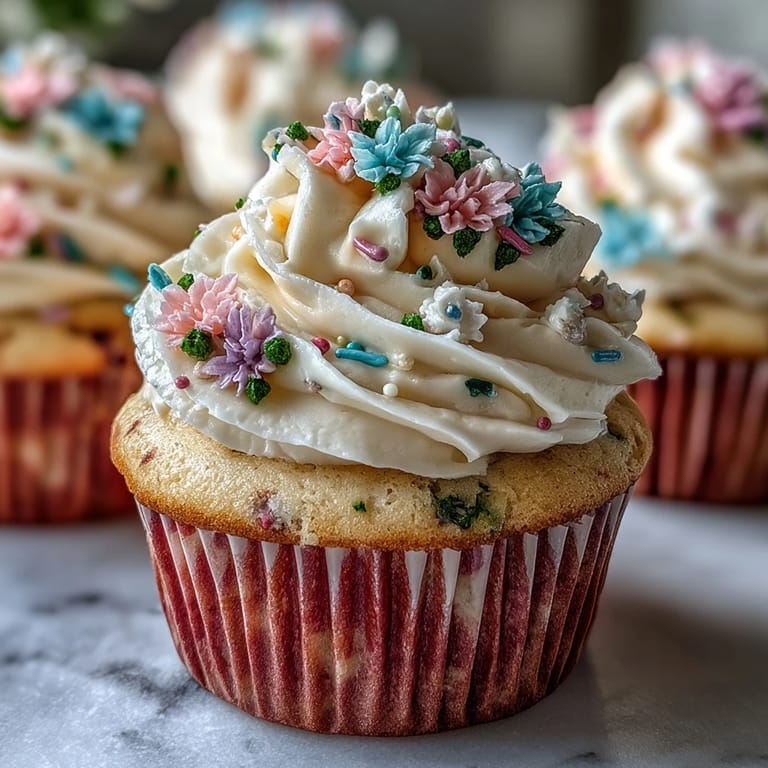
- Fit each piping bag with your chosen tip (petal tips create realistic flowers, round tips make dots, leaf tips form foliage), fill with colored buttercream, and pipe directly onto your cooled cupcakes using whatever techniques feel natural to you. If you've never piped before, practice on a piece of parchment first—even a few practice strokes build confidence and muscle memory.
 Save
Save Watching my cousin's two-year-old son point at one of the flower cupcakes and say, 'Pretty, Mama,' before taking a huge bite reminded me why I love baking so much. That moment wasn't about technique or perfection; it was just pure, uncomplicated joy about something beautiful and delicious existing in the world.
Flavor Variations to Consider
Once you've mastered the basic vanilla, you can spin these cupcakes in so many directions without changing the structure at all. I added lemon zest to the batter for a spring version and the brightness transformed them into something entirely different while keeping the same tender crumb. Almond extract, a pinch of cardamom, or even a tiny bit of rose water in the buttercream each create completely new vibes while working with the same foundational recipe.
The Piping Tip Learning Curve
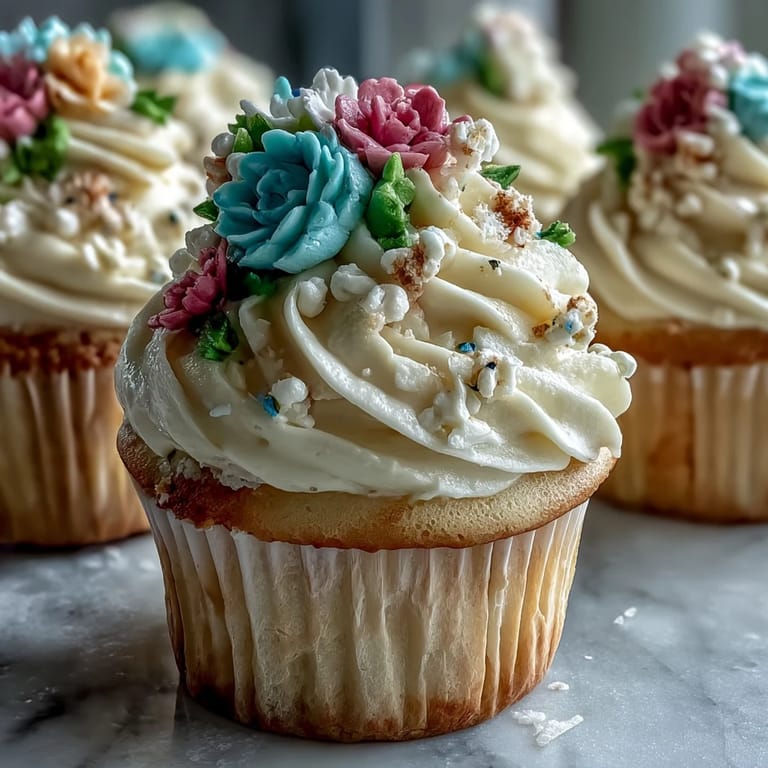
I spent way too long convincing myself that I needed to be some kind of professional pastry chef to pipe flowers, when honestly the learning curve is way gentler than I expected. The petal tip (usually Wilton 104 or similar) does most of the work for you—you just move the bag and the tip naturally creates petal shapes that look like actual flowers even when you're still learning. My first attempt looked a little wobbly and imperfect, but that's actually what made them charming, and my second batch looked noticeably better because my hand knew what to expect.
Storage and Make-Ahead Magic
These cupcakes actually improve after a day in an airtight container, which is a blessing when you're prepping for a party or celebration. The vanilla flavor deepens slightly and the crumb stays incredibly moist, almost like they were baked yesterday even if it's been two days. I've also learned that you can bake the cupcakes a day or two ahead, refrigerate them unfrosted, and then decorate them the morning of your event, which takes so much pressure off the final hours.
- Unfrosted cupcakes keep in the fridge for up to four days, which is a huge advantage if you're planning ahead.
- Fully decorated cupcakes stay fresh at room temperature for two days, though they taste best on day one or day two.
- If you need to transport them, arrange them in a stable box with dividers so the piped flowers don't get crushed against the lid.
 Save
Save These cupcakes remind me that baking is as much about the person you're making them for as it is about following instructions perfectly. There's something deeply satisfying about creating something beautiful with your hands that brings genuine happiness to someone else's celebration.
Common Questions
- → What ingredients create the vanilla cupcake base?
Flour, granulated sugar, softened butter, eggs, milk, vanilla extract, baking powder, and a pinch of salt combine for a tender, flavorful base.
- → How can I make the buttercream flowers vibrant?
Divide the buttercream into portions and add food coloring in pink, yellow, green, purple, or other desired shades before piping.
- → What piping tips are best for floral decorations?
Use flower and leaf tips such as Wilton 104, 352, and 1M for creating detailed and realistic buttercream flowers and leaves.
- → Can I add extra flavor to the cupcakes?
A touch of lemon zest in the batter brightens the flavor and complements the vanilla notes beautifully.
- → How should I store these cupcakes after decorating?
Keep them in an airtight container at room temperature for up to two days to maintain texture and freshness.
- → What is the recommended baking temperature and time?
Bake at 350°F (175°C) for 16–18 minutes until a toothpick inserted comes out clean.