 Save
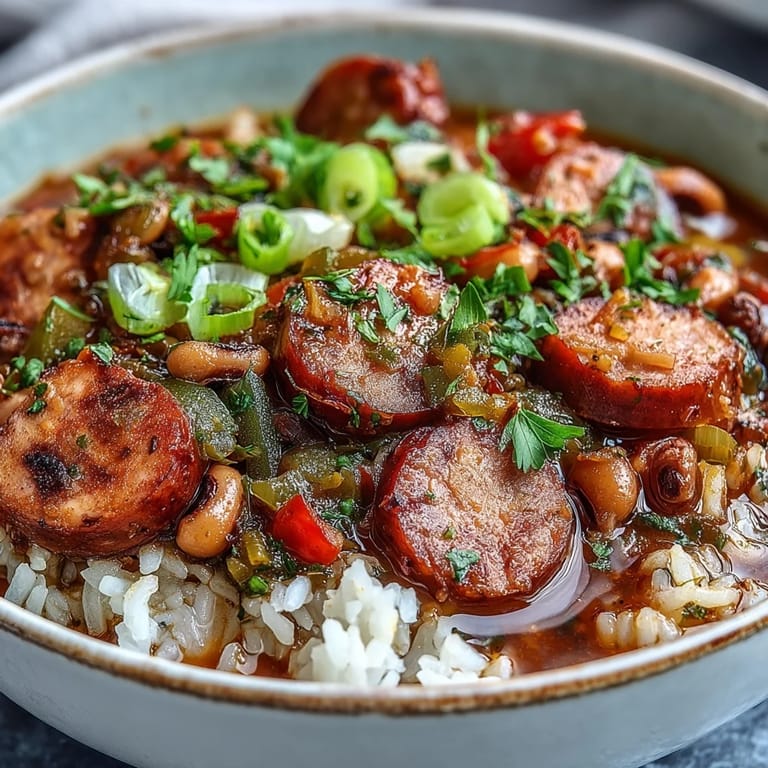
Save My neighbor Marcus showed up at my door one humid afternoon with a container of his grandmother's jambalaya, and I understood immediately why people in New Orleans don't mess around with their one-pot meals. The smell alone told me everything—smoky sausage, the holy trinity of onions and celery and peppers, all those spices working together like they'd been introduced at birth. I kept thinking about that pot while eating, wondering how he made it taste so effortless, so complete. That night I called him back and asked for the recipe, and what he gave me was less a formula and more a philosophy: throw everything in one pot, trust the heat, and let the flavors find each other.
I made this for my partner on a Tuesday night when we both needed something warm and unpretentious, and halfway through the first bite they looked at me and said, "This tastes like a place I've never been." That's when I realized good jambalaya isn't about following steps perfectly—it's about building a flavor landscape where everyone can taste something different, something that feels like home to them specifically.
Ingredients
- Smoked sausage (340 g / 12 oz): Andouille gives you that authentic Cajun bite, but kielbasa works beautifully if that's what you have; slicing it thin helps it brown faster and distribute flavor throughout the pot.
- Onion, celery, bell peppers (1 medium, 2 stalks, 2 peppers): This holy trinity is non-negotiable in Cajun cooking, and dicing them roughly the same size means they cook evenly and blend into the rice without disappearing entirely.
- Garlic (3 cloves, minced): Add this after the vegetables soften so it perfumes the oil without burning and turning bitter.
- Black-eyed peas (1 can, drained): Rinsing them removes excess sodium and starch, which keeps your jambalaya from getting gummy as it sits.
- Long-grain white rice (300 g / 1½ cups): This is your foundation; it stays separate and absorbs broth like a sponge, which is exactly what you want.
- Chicken broth (800 ml / 3⅓ cups): Low-sodium gives you control over the final salt balance, and the ratio of liquid to rice is crucial for tender grains that aren't mushy.
- Diced tomatoes with juices (1 can, 400 g): The acid balances the richness of the sausage and adds brightness you can taste in every spoonful.
- Cajun seasoning (1½ tsp): This is your backbone—it contains paprika, cayenne, garlic, and oregano all at once, which saves time and keeps flavors cohesive.
- Smoked paprika, thyme, oregano, bay leaf (1 tsp, ½ tsp each, 1 leaf): These are your supporting cast; they layer depth without overpowering the sausage and vegetables.
- Salt and black pepper (½ tsp, ¼ tsp): Taste as you go and adjust at the end; the sausage and broth both contribute saltiness, so you might need less than you think.
- Cayenne pepper (¼ tsp, optional): Add this only if you want heat; it creeps up on you as the pot simmers.
- Olive oil (2 tbsp): This is your cooking medium and your flavor base; don't skip it or use something with a high smoke point and no personality.
- Spring onions and fresh parsley (2 onions, 2 tbsp, for garnish): These are your final flourish—bright, fresh, and a reminder that jambalaya is a living dish that improves with every addition.
Tired of Takeout? 🥡
Get 10 meals you can make faster than delivery arrives. Seriously.
One email. No spam. Unsubscribe anytime.
Instructions
- Brown the sausage first:
- Heat olive oil in your large Dutch oven over medium heat, then add the sliced sausage and let it cook undisturbed for 3-4 minutes before stirring; you want those edges caramelized and the fat rendered out to flavor everything that comes next.
- Build your vegetable base:
- Once the sausage has color, add your diced onion, celery, and both bell peppers all at once; stir them around and give them 5 minutes to soften and start releasing their moisture.
- Bloom the aromatics:
- Stir in the minced garlic and let it sit for just 1 minute—you want it fragrant, not toasted.
- Toast the rice:
- Add your rice and stir constantly for about 2 minutes; this coats every grain in oil and begins the toasting process that keeps the rice from becoming a starchy clump.
- Add everything else:
- Pour in the chicken broth, diced tomatoes with their juices, drained black-eyed peas, and all your spices in one go; stir well so nothing sticks to the bottom.
- Bring to a boil and cover:
- Let the mixture come to a rolling boil, which takes about 5 minutes, then reduce the heat to low, place your lid on tight, and let it simmer undisturbed for 20-25 minutes; resist the urge to peek.
- Rest and fluff:
- Remove from heat and let the pot sit covered for 5 minutes; this allows the rice to finish absorbing the last bit of liquid and the flavors to settle into one unified dish.
- Finish with fresh garnish:
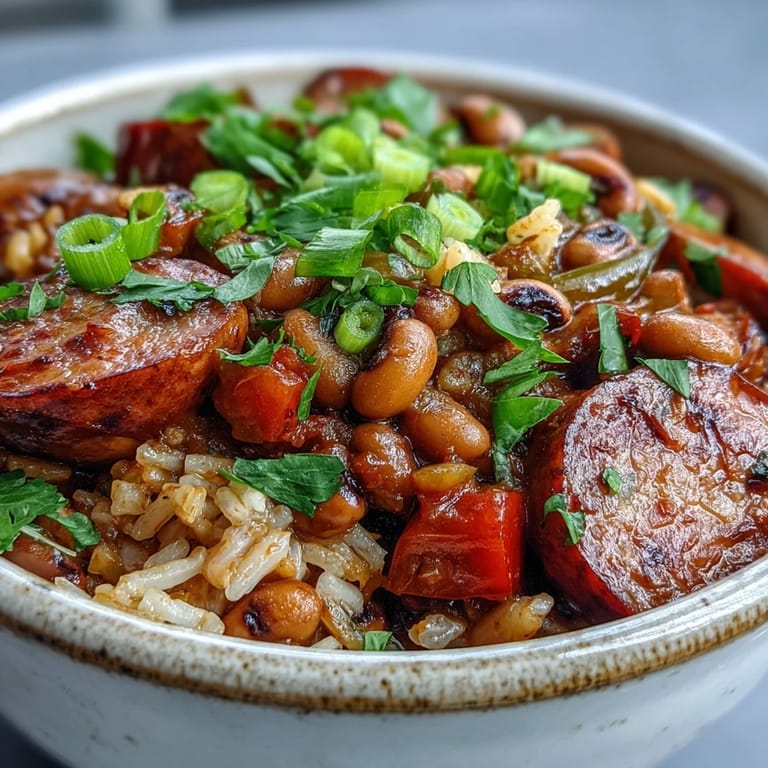
- Discard the bay leaf, fluff everything with a fork, then scatter the sliced spring onions and fresh parsley over the top right before serving.
 Save
Save I served this to my friend's book club once, and someone asked for the recipe before they finished their first bowl. That's when I learned that jambalaya has this quiet power—it doesn't announce itself, but it fills you up in a way that makes you want to pull up a chair and stay longer.
The Sausage Matters More Than You Think
Your choice of sausage will flavor the entire pot, so spend a moment thinking about it. Andouille is traditional and brings a smoky, slightly spicy backbone that tastes authentically Cajun, but kielbasa is milder and lets the spices shine through more clearly. I once used chorizo by accident and ended up with a completely different dish—not bad, just not jambalaya. The quality of the sausage also matters; cheap stuff has filler and weird spices that muddy the flavor, while a good sausage renders cleanly and tastes like actual meat.
Adjusting Heat and Spice to Your Taste
Cajun seasoning varies by brand, and some are much spicier than others. I learned this the hard way when I used a new brand and everyone at dinner was quietly sweating but trying to be polite about it. Start with the amount called for, taste the simmering mixture at the 15-minute mark, and adjust from there. The cayenne is optional for a reason—if you like gentle warmth, skip it entirely, or add just a pinch if you want a slow burn that builds by the end of the meal.
What to Do If Something Goes Wrong
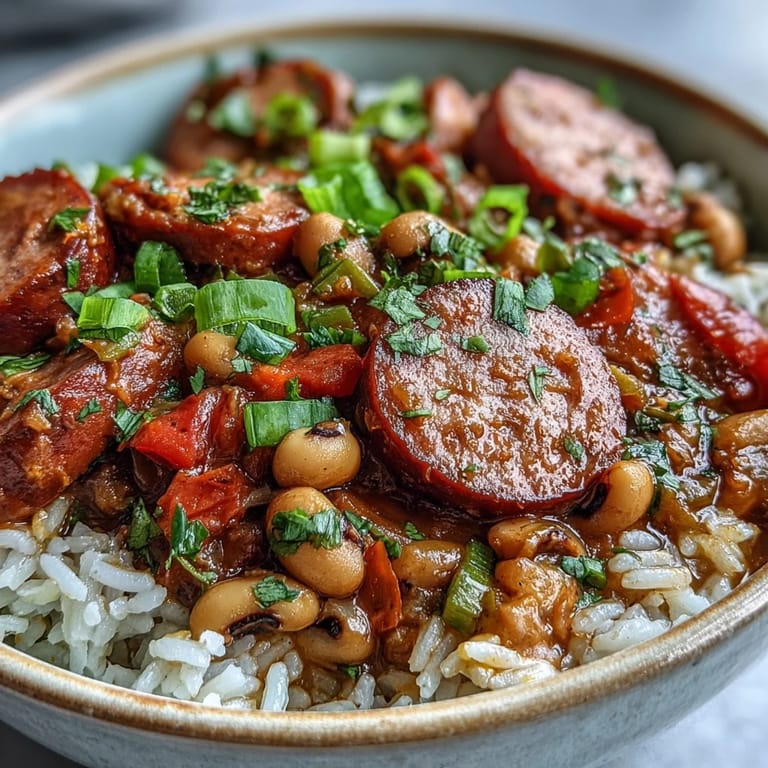
Rice overcooking is the most common problem, and it usually happens because people uncover the pot too much or add too much liquid from the start. If your jambalaya seems soupy before the rice is done, increase the heat slightly to evaporate excess moisture faster. If the rice is done but there's still standing liquid, remove the lid and let it cook uncovered for another few minutes, stirring gently so nothing sticks.
- Burnt rice at the bottom is salvageable if you catch it early—transfer the good stuff to another pot and continue cooking from there.
- Too spicy to eat means you need more rice; add an extra handful of cooked rice from the side and stir it in to dilute the heat.
- Bland jambalaya usually means you need more salt or you should have browned the sausage longer; taste constantly and season aggressively, remembering that underseasoned food is worse than slightly oversalted.
 Save
Save This dish has a way of becoming a regular in your rotation, the kind of meal you make when you want something that tastes intentional but doesn't demand your constant attention. Once you understand how it works, you can make it without thinking, which is when cooking stops being a task and becomes something you actually enjoy.
Common Questions
- → Can I make this vegetarian?
Yes, simply omit the sausage and substitute vegetable broth for chicken broth. Add extra vegetables like mushrooms or additional beans to maintain heartiness and protein content.
- → How spicy is this jambalaya?
The dish has moderate heat from Cajun seasoning and optional cayenne. Adjust spice levels by reducing or increasing these ingredients to suit your preference.
- → Can I use dried black-eyed peas instead of canned?
Yes, but you'll need to soak and cook them separately first, as dried beans require longer cooking time than the rice. Use about 1 ½ cups cooked dried peas.
- → What rice works best for jambalaya?
Long-grain white rice is traditional as it stays fluffy and separate. Avoid using converted or parboiled rice as it may not absorb flavors properly.
- → How should I store leftovers?
Store in an airtight container in the refrigerator for up to 4 days. Reheat gently on the stove with a splash of broth or water to restore moisture.
- → Can I freeze this dish?
Yes, cool completely and freeze in portion-sized containers for up to 3 months. Thaw overnight in the refrigerator before reheating.