 Save
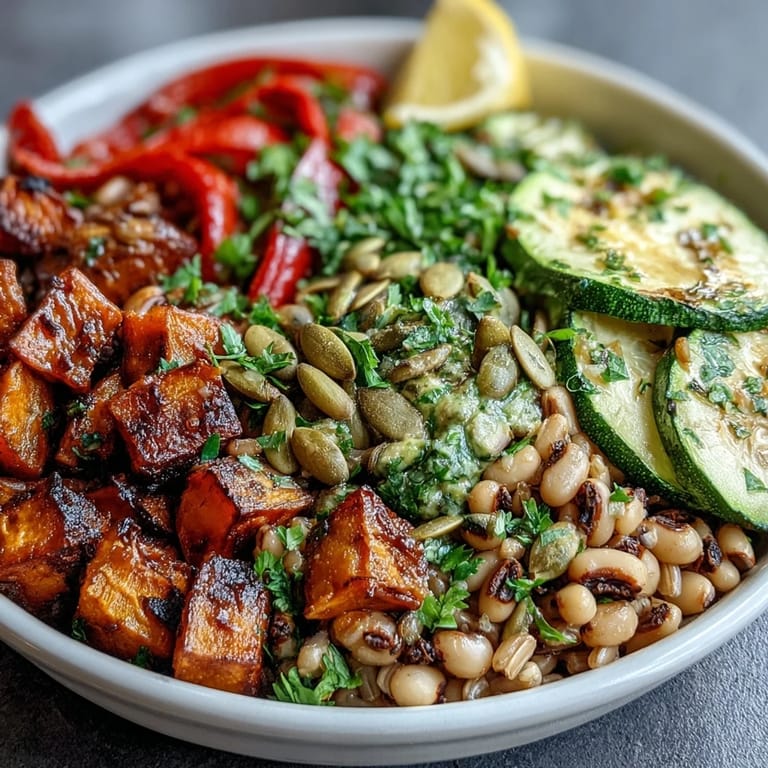
Save There's something about a grain bowl that feels like you're putting together a edible mosaic, each component having its own moment to shine. I discovered black-eyed peas properly while standing in a friend's kitchen in Charleston, watching her grandmother layer them over rice with such care that it seemed almost ceremonial. That bowl changed how I thought about weeknight dinners, turning them from something rushed into something intentional. Now I make variations whenever I need to feel grounded, and this farro version with roasted vegetables became my go-to when I wanted something that felt both nourishing and celebratory.
I made this for my partner on a cold March evening when neither of us knew what we wanted, only that we were tired of takeout containers piling up. We ate it standing at the counter, and halfway through he asked why I didn't make this every week. That question stuck with me because it meant the bowl had done something quiet and essential, turning simple ingredients into something that felt personal.
Ingredients
- Farro or wild rice: Farro brings a nutty earthiness that makes the bowl feel substantial, though wild rice works beautifully if you prefer something lighter and more delicate.
- Cooked black-eyed peas: If using canned, the ritual of rinsing them until the water runs clear somehow makes them taste better than just dumping and using.
- Sweet potato: Cubed rather than sliced means every bite catches some caramelized edge, which is where all the flavor lives.
- Red bell pepper: The brightness it brings is non-negotiable, cutting through the earthiness with sweet, vegetal notes.
- Zucchini: Sliced on the bias if you want to be fancy, though it doesn't judge either way.
- Red onion: Roasting transforms it from sharp to almost candy-like, a lesson that changed my entire relationship with cooking vegetables.
- Olive oil: Not skimping here means the vegetables actually caramelize instead of just warming through.
- Smoked paprika and ground cumin: Together they create a warmth that ties everything together without announcing itself loudly.
- Fresh parsley or cilantro: The herbs are what make people say this tastes fresh, so don't treat them as optional garnish.
- Toasted seeds: They add a textural surprise and remind you why nuts and seeds deserve a seat at every table.
- Lemon wedges: Keep them separate until serving so people can squeeze exactly as much brightness as they want.
Tired of Takeout? 🥡
Get 10 meals you can make faster than delivery arrives. Seriously.
One email. No spam. Unsubscribe anytime.
Instructions
- Heat the oven and start your grains:
- Set your oven to 425°F while you combine your farro or wild rice with water or broth and salt in a medium saucepan. Bring it to a boil, then lower the heat and let it simmer covered, listening for that gentle bubbling sound that means it's doing what it should.
- Prepare and roast your vegetables:
- While the grains work away, toss your diced sweet potato, bell pepper, zucchini, and red onion wedges with olive oil, smoked paprika, cumin, salt and pepper. Spread them across a baking sheet so they have room to breathe, then slide them into the oven for 20 to 25 minutes, stirring halfway through so they caramelize evenly on all sides.
- Warm the black-eyed peas:
- Give your cooked or canned black-eyed peas a gentle warming in a small saucepan or the microwave, just enough so they're warm when the bowl comes together. This small step makes them taste intentional rather than cold from the can.
- Assemble with intention:
- Divide your cooked grains among four bowls as your foundation, then layer the warm black-eyed peas and roasted vegetables on top. Finish each bowl with fresh herbs scattered across, a handful of toasted seeds for texture, and lemon wedges on the side so people can season to taste.
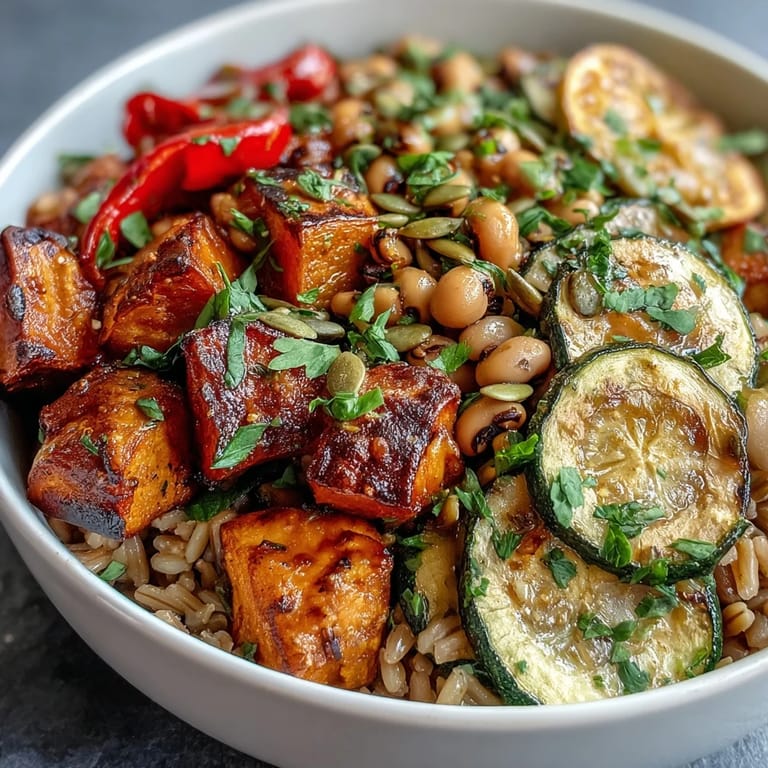 Save
Save The first time someone told me this bowl felt celebratory enough for company, I realized that simple food prepared with attention becomes something entirely different. It's not fancy, but it's thoughtful, and that distinction matters more than any complicated technique ever could.
Making It Your Own
This bowl is more of a framework than a rigid recipe, which is part of why it works so well for different moods and seasons. Swap the farro for brown rice in summer, or use barley in winter when you want something heavier. I've made it with quinoa for friends with gluten concerns, and it tastes entirely valid. The vegetables can follow whatever looks good at your market that day, so asparagus in spring, corn in summer, and roasted Brussels sprouts in fall all belong here equally.
The Dressing Question
I usually serve this bowl naked, letting the lemon wedges be enough brightness, but I've learned that a tahini-lemon drizzle makes it feel almost luxurious when you want something richer. A simple herbed vinaigrette works too, or even just a splash of good olive oil and red wine vinegar whisked together with a bit of garlic. The bowl doesn't demand a dressing, which is kind of the point, but it certainly welcomes one if you're in the mood.
Beyond the Bowl
Sometimes I make extra components and reassemble them differently throughout the week, turning Sunday's roasted vegetables into Monday's grain bowl and Tuesday's lunch salad. It's the kind of cooking that pays dividends if you think about it as building blocks rather than a single meal. You can add avocado slices or a poached egg if you want something richer, or scatter it all over fresh greens if you're feeling lighter.
- Toast the seeds yourself if you can, because the difference between buying them toasted and toasting them is the difference between adequate and perfect.
- Make the grains and vegetables the day before if you're planning ahead, then assemble fresh when you're ready to eat.
- Keep lemon wedges separate and let everyone season their own bowl, because that's the kind of small freedom that makes eating feel less like routine.
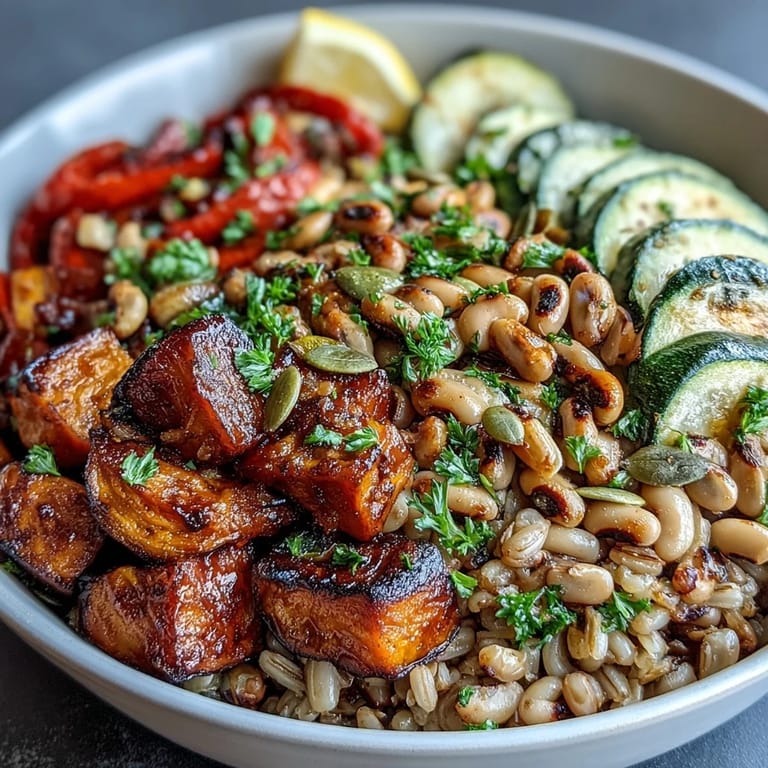 Save
Save This bowl is the kind of thing you keep making because it always works, and that's perhaps the highest compliment a recipe can receive. It's there when you need something nourishing, when you're cooking for others, and when you just need to know that simple ingredients treated with care will never let you down.
Common Questions
- → Can I make this grain bowl ahead of time?
Absolutely. The grains, roasted vegetables, and black-eyed peas can all be prepared up to 3 days in advance. Store each component separately in airtight containers in the refrigerator and assemble when ready to serve. Reheat gently before adding fresh toppings.
- → What other grains work well in this bowl?
Brown rice, quinoa, barley, or even millet make excellent substitutes for farro. Each grain offers slightly different cooking times and textures, so adjust liquid ratios accordingly. Quinoa cooks fastest at about 15-20 minutes.
- → How do I roast vegetables for the best flavor?
Spread vegetables in a single layer on a large baking sheet without overcrowding. This allows edges to caramelize properly. Toss generously with olive oil and spices, and roast at high heat (425°F) until tender and slightly charred.
- → Is this bowl protein-rich enough for a main meal?
Yes, black-eyed peas provide approximately 13 grams of protein per serving. For additional protein, consider adding chickpeas, a poached egg, or grilled chicken. The combination of grains and legumes creates a complete protein profile.
- → What dressings complement these flavors?
A tahini-lemon drizzle adds creamy richness, while a simple herbed vinaigrette with olive oil, apple cider vinegar, and Dijon mustard enhances the roasted vegetables. Avocado also contributes natural creaminess.