 Save
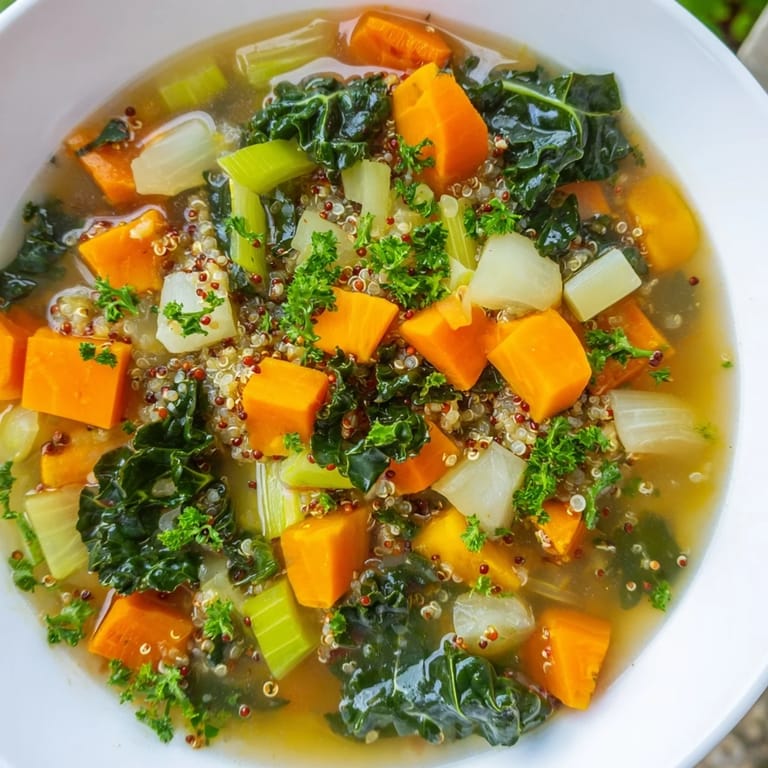
Save Last January, I found myself standing in my kitchen on a gray afternoon with nothing but root vegetables in the crisper and a vague craving for something warm and uncomplicated. I'd just returned from the farmer's market with more winter produce than I knew what to do with, and honestly, I was tired of my usual rotation. That's when I decided to throw together whatever looked promising—carrots, parsnips, kale—and suddenly I had a soup that tasted less like obligation and more like comfort, the kind that makes you want to curl up with a bowl and stay a while.
I made this for my sister when she was going through a rough stretch, and she called me three days later saying she'd made it twice more. There's something about a bowl of this soup—the way the steam rises and carries all those earthy flavors—that seems to hit differently when you need it most. Now whenever someone mentions they're feeling run down or the weather turns properly cold, this is what I think of.
Ingredients
- Olive oil: Just enough to coat the bottom of your pot and help the onions and garlic release their sweetness as they soften.
- Onion and garlic: These two form the flavor foundation—the moment they hit the hot oil is when your kitchen starts smelling like something real is happening.
- Carrots, celery, and parsnip: The classic aromatic trio that anchors any good broth, each bringing its own quiet sweetness as they cook down.
- Sweet potato: It adds a subtle sweetness and a natural creaminess to the broth without needing any cream at all.
- Kale or Swiss chard: Choose whichever you find fresher at the market; both wilt beautifully and add an earthiness that makes the whole thing feel substantial.
- Cabbage: A humble addition that brings texture and a gentle sweetness that rounds out the sharper vegetable notes.
- Tomatoes: Canned works perfectly fine here and adds a subtle acidity that balances everything else.
- Quinoa: Rinsed beforehand, it cooks right in the broth and adds a nutty protein that makes this genuinely filling.
- Vegetable broth: Low-sodium is key so you're not fighting salt levels by the end; quality matters more than you'd think in something this simple.
- Thyme, oregano, and bay leaf: Dried herbs are your friend here—they steep quietly into the broth and build flavor without extra fuss.
- Lemon juice and parsley: The lemon is optional but transforms the whole thing at the end with brightness; fresh parsley adds life and color right before serving.
Tired of Takeout? 🥡
Get 10 meals you can make faster than delivery arrives. Seriously.
One email. No spam. Unsubscribe anytime.
Instructions
- Wake up your aromatics:
- Heat the olive oil over medium heat and add the diced onion and minced garlic. Sauté for about two to three minutes, stirring occasionally, until the kitchen fills with that smell and you can see the onion turning translucent at the edges.
- Layer in the harder vegetables:
- Add the carrots, celery, parsnip, and sweet potato to the pot and cook for five to six minutes, stirring now and then so everything has a chance to soften slightly and release its flavor into the oil.
- Build your greens and brightness:
- Stir in the chopped kale, cabbage, and tomatoes, letting everything sit for about two minutes so the greens start to surrender and the tomatoes warm through.
- Add the soul of the soup:
- Pour in the rinsed quinoa, vegetable broth, thyme, oregano, and that bay leaf, then season with salt and pepper. Stir once and watch as it all comes together.
- Let it become something:
- Bring everything to a boil, then lower the heat, cover the pot, and simmer gently for twenty-five to thirty minutes until the vegetables are tender and the quinoa has cooked through, absorbing all those flavors.
- The final touches:
- Fish out the bay leaf, stir in the fresh parsley and a squeeze of lemon if you have it, then taste and adjust the salt and pepper to make it exactly what you want.
 Save
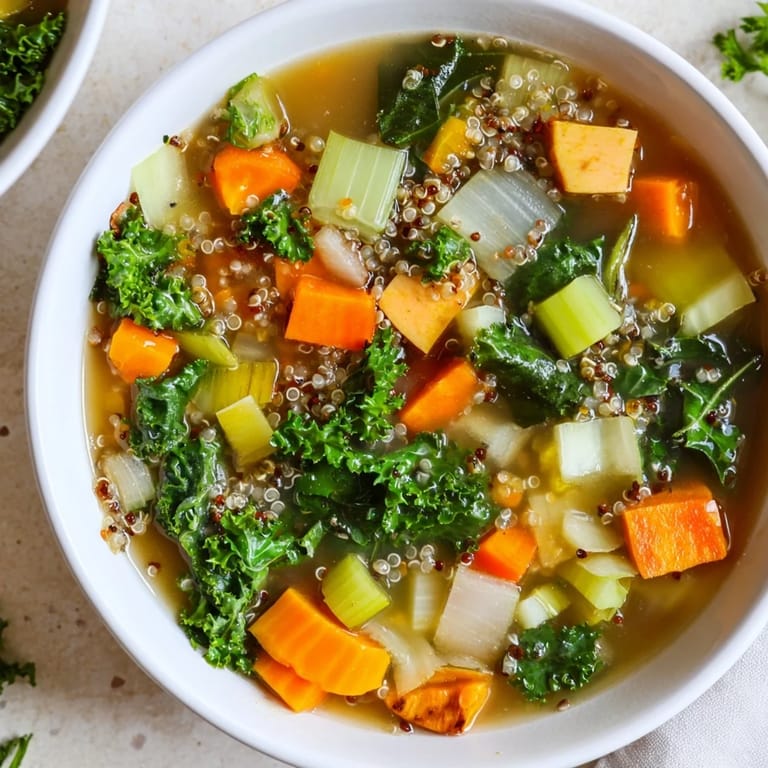
Save There was a moment last winter when my neighbor knocked on the door while I was stirring this soup, and the smell hit her before she could even say hello. I sent her home with a container, and it became this unexpected thread between us—she'd text me from work saying she was heating up that soup again, and somehow that simple exchange made my whole week feel worthwhile.
Why Winter Vegetables Matter Most
There's something grounding about cooking with vegetables that are actually in season, especially the ones designed by nature to store well and last through the cold months. Winter vegetables tend to be sweeter and more substantial than their summer counterparts, and they're also less expensive and more flavorful because they haven't traveled as far or lost nutrients in transit. When you're making something as straightforward as this soup, letting those natural qualities shine through becomes the whole point.
Customizing Without Losing Your Way
The beauty of this recipe is that it's more of a template than a rigid set of rules, which I genuinely mean as a compliment. I've made it with different vegetables depending on what I had—sometimes with butternut squash, sometimes with beets if I was feeling adventurous, and once with added white beans just because I was hungrier than usual. Each version taught me something different about how vegetables work together and what seasonings matter most.
Making It Your Own Thing
The most important ingredient here isn't really on the list—it's knowing that a soup like this is infinitely flexible and forgiving, which means you can trust your instincts and actually enjoy the process of making it. Cook it on a Sunday afternoon and you've got simple meals ready to reheat all week, or make it on a whim whenever the craving strikes and nothing tastes quite as good as something you threw together without overthinking it.
- For extra staying power, add a can of drained chickpeas or white beans and let them warm through in the last few minutes.
- A pinch of red pepper flakes added to the oil right at the beginning brings a gentle heat that builds as you taste.
- Serve it with thick slices of crusty whole-grain bread if you want the meal to feel more substantial and complete.
 Save
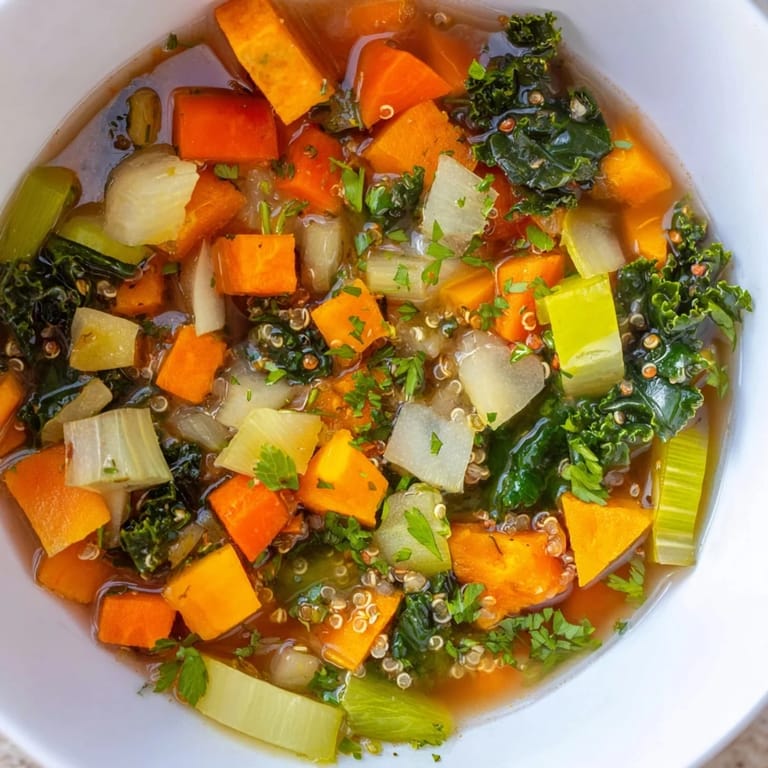
Save This soup has become one of those quiet kitchen victories that I return to whenever life feels complicated or the weather turns gray. It's proof that the simplest things, made with honest ingredients and a little attention, are often the ones worth keeping.
Common Questions
- → Can I substitute quinoa with another grain?
Yes, you can use barley, farro, or brown rice for different textures while keeping the dish hearty.
- → What vegetables work well in this soup?
Root vegetables like carrots, parsnips, and sweet potatoes blend well, alongside leafy greens such as kale or Swiss chard.
- → How can I add more protein to the dish?
Adding drained chickpeas or white beans boosts protein content without altering the flavor too much.
- → Is it possible to make this soup spicier?
Yes, include a pinch of red pepper flakes during the sautéing step for a gentle heat.
- → What's the best way to store leftovers?
Keep the soup refrigerated in an airtight container for up to 3 days; reheat gently on the stovetop.