 Save
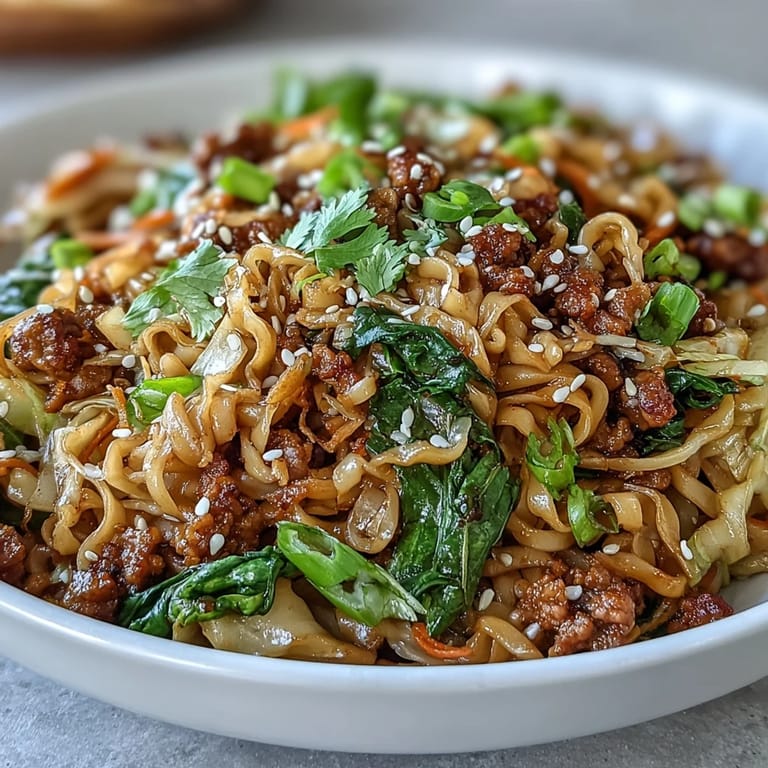
Save The smell hit me first—ginger and garlic sizzling in hot oil, that sharp, sweet aroma that makes you stop mid-step and just inhale. I was trying to recreate the potsticker filling I loved from my favorite dumpling spot, but I had no wrappers and no patience for pleating. So I tossed it all into a bowl with noodles instead, and honestly, it tasted better than I expected. Now it's the dish I make when I want all that savory, sticky comfort without the fuss.
I made this for a friend who was convinced she didn't like ground pork. She ate two bowls and asked for the recipe before she left. It was the crispy edges on the meat and the way the sesame oil clung to the noodles that won her over. Sometimes the best compliment is just watching someone go quiet while they eat.
Ingredients
- Rice noodles or lo mein noodles: Rice noodles give you that silky, slippery texture, while wheat noodles add chew—either works beautifully, just don't overcook them or they'll turn mushy.
- Ground pork or chicken: Pork brings richness and crisps up beautifully, but ground chicken is leaner and just as flavorful when seasoned right.
- Soy sauce: The backbone of the seasoning—use low-sodium so you can control the saltiness and layer in other flavors without going overboard.
- Toasted sesame oil: A little goes a long way; it adds that nutty, aromatic finish that makes everything taste more intentional.
- Cornstarch: Mixed into the meat, it helps create a slightly sticky, cohesive texture that mimics dumpling filling.
- White pepper: Subtle but essential—it has a warmer, more floral heat than black pepper and is traditional in Chinese cooking.
- Garlic and ginger: The aromatic duo that makes your kitchen smell like a restaurant; mince them finely so they melt into the dish.
- Green onions: Use the whites for cooking and the greens for garnish—they add sharpness and a pop of color.
- Green cabbage: Shredded thin, it wilts down quickly and adds crunch and sweetness without taking over.
- Carrots: Matchstick or shredded, they bring natural sweetness and a little brightness to balance the savory sauce.
- Shiitake or cremini mushrooms: Earthy and meaty, they soak up the sauce and add another layer of umami.
- Rice vinegar: Cuts through the richness with a gentle tang—don't skip it or the dish will taste flat.
- Oyster sauce: Adds a deep, slightly sweet savory note; hoisin works if you want something a little sweeter and thicker.
- Chili-garlic sauce or sambal oelek: Brings the heat and a touch of funk—adjust to your spice tolerance.
- Chicken broth or water: Loosens the sauce and helps everything come together without drying out.
- Toasted sesame seeds: A small flourish that adds crunch and makes the whole bowl feel finished.
Tired of Takeout? 🥡
Get 10 meals you can make faster than delivery arrives. Seriously.
One email. No spam. Unsubscribe anytime.
Instructions
- Prepare the noodles:
- Boil them just until tender, then drain and rinse quickly under cold water to stop the cooking. Toss with a few drops of oil so they don't clump into a sad, sticky mass while you cook everything else.
- Season the meat:
- Whisk the soy sauce, sesame oil, cornstarch, white pepper, sugar, and salt together, then fold it gently into the ground pork or chicken until it feels slightly tacky. If you're using minced napa cabbage, squeeze it bone-dry first or it'll release water into the pan.
- Make the sauce:
- Combine soy sauce, rice vinegar, oyster or hoisin sauce, chili-garlic sauce, sesame oil, brown sugar, and broth in a bowl and whisk until smooth. Taste it now—this is your chance to adjust the heat, sweetness, or tang before it hits the pan.
- Prepare the vegetables:
- Shred the cabbage and carrots, slice the mushrooms thin, and separate the green onion whites from the greens. Prep work feels tedious, but it makes the actual cooking fast and smooth.
- Brown the meat:
- Heat oil in a large skillet or wok over medium-high heat, then add the seasoned meat in an even layer and resist the urge to touch it for 2 to 3 minutes—those crispy, golden edges are where the flavor lives. Break it up, cook until no pink remains, then drain off excess fat if it pools.
- Add aromatics:
- Push the meat aside, add a bit more oil to the empty space, then toss in garlic, ginger, and the white parts of the green onions. Stir for 30 to 60 seconds until the kitchen smells incredible, then mix everything together.
- Cook vegetables:
- Toss in the mushrooms and let them soften for a couple of minutes, then add the cabbage and carrots and stir-fry until the cabbage wilts but still has some bite. If the pan looks dry, splash in a little water to keep things moving.
- Combine with sauce:
- Pour the prepared sauce over the meat and vegetables, toss well to coat, and let it simmer for a minute or two until it thickens slightly and clings to everything. The sauce should be glossy and fragrant.
- Add noodles:
- Add the cooked noodles and toss gently but thoroughly, adding a splash of water or broth if it looks too dry. If you're using bean sprouts, toss them in at the very end so they stay crisp.
- Finish and serve:
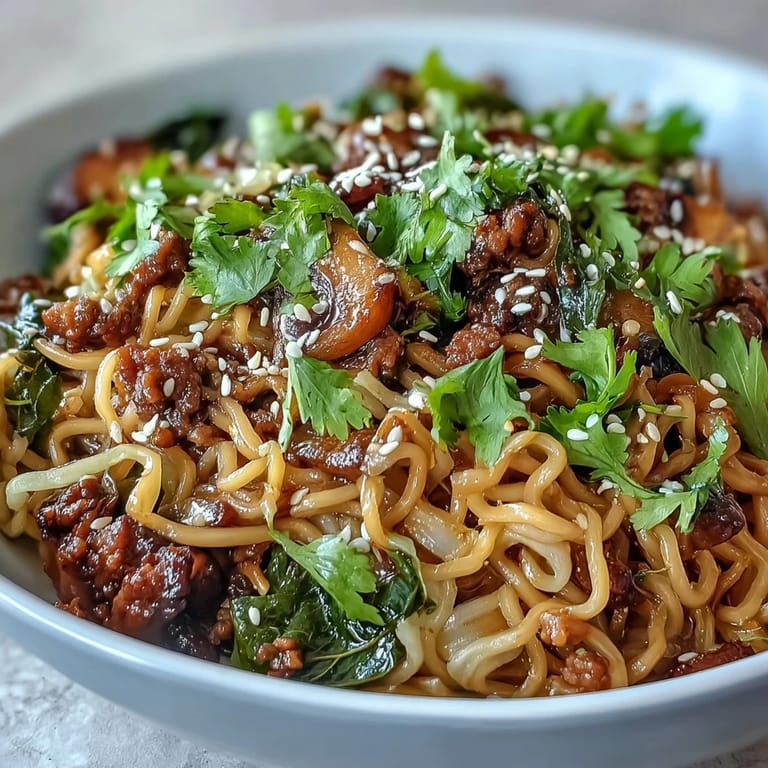
- Taste and adjust with more soy sauce, chili-garlic sauce, or a squeeze of lime, then stir in half the green onion tops. Divide into bowls and garnish with the remaining green onions, cilantro, and sesame seeds.
 Save
Save I served this to my neighbor on a rainy Tuesday, and she told me it reminded her of the dumpling house her mom used to take her to after school. We sat at my kitchen counter with our bowls, slurping noodles and laughing about how good food doesn't need to be complicated. That's when I knew this recipe was a keeper.
How to Store and Reheat
Leftovers keep well in an airtight container in the fridge for up to three days, though the noodles will soak up some of the sauce as they sit. When you reheat, add a splash of water or broth to loosen everything up, and warm it gently in a skillet or microwave. The texture won't be quite as fresh, but the flavors actually deepen overnight, so it's still delicious.
Swaps and Substitutions
If you can't find rice noodles, use spaghetti or even ramen noodles in a pinch—just cook them al dente. Ground turkey or beef works if you're not into pork, and crumbled firm tofu can stand in for a plant-based version. Swap napa cabbage or baby bok choy for green cabbage, or use whatever hearty greens you have on hand. Hoisin sauce is sweeter and thicker than oyster sauce, so if you make that swap, start with a little less and taste as you go.
Make It Your Own
This recipe is a framework, not a rulebook. Add a soft-boiled or fried egg on top for richness, or toss in snap peas, bell peppers, or edamame for extra crunch and color. If you like it spicy, double the chili-garlic sauce or drizzle on some chili oil at the end. For a gluten-free version, use tamari, gluten-free oyster sauce, and rice noodles, and you're all set.
- Top with crushed peanuts or cashews for extra texture and a nutty finish.
- Stir in a handful of baby spinach or kale at the very end for a pop of green.
- Serve with a side of pickled vegetables or kimchi to cut through the richness.
 Save
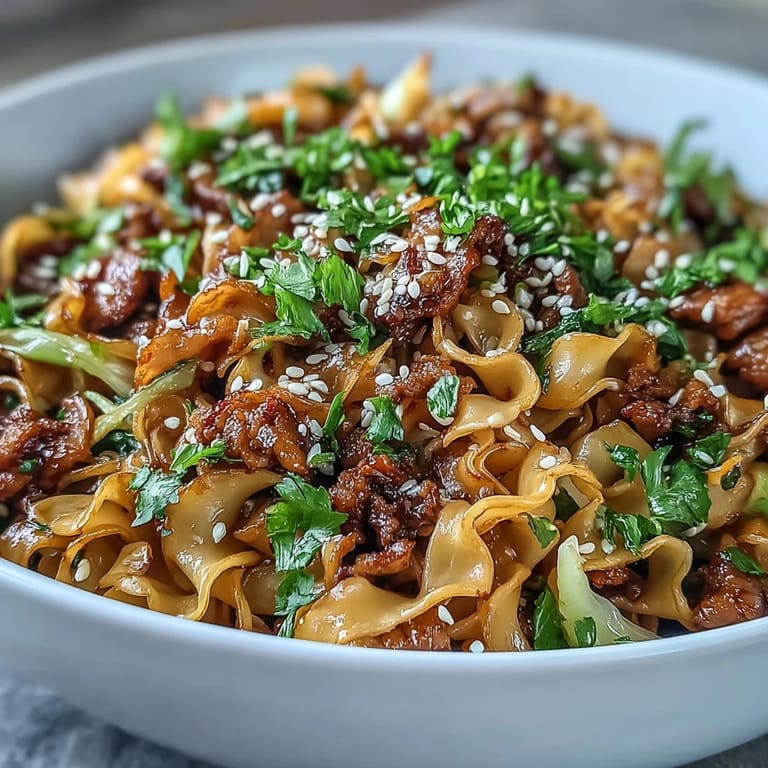
Save This bowl has become my weeknight shortcut to something that feels special without the stress. I hope it lands on your table with the same ease and joy it's brought to mine.
Common Questions
- → Can I make this gluten-free?
Yes, use rice noodles and gluten-free tamari instead of regular soy sauce. Check that your oyster sauce is certified gluten-free or use hoisin as an alternative.
- → What protein alternatives work well?
Ground chicken, turkey, or beef all work beautifully. For a plant-based version, crumbled extra-firm tofu or plant-based ground meat substitutes are excellent options.
- → Can I prepare components ahead?
The sauce can be mixed up to 3 days in advance. Vegetables can be shredded a day ahead and stored in the refrigerator. Cook everything just before serving for best texture.
- → How do I store leftovers?
Refrigerate in an airtight container for up to 3 days. Reheat with a splash of water or broth to refresh the noodles and sauce. The flavors often develop even more overnight.
- → Can I add more vegetables?
Absolutely. Baby bok choy, sliced bell peppers, snap peas, or spinach all work well. Add quicker-cooking vegetables during the last 2-3 minutes of tossing.
- → Is this dish very spicy?
The chili-garlic sauce adds moderate heat. Adjust the amount to your preference or omit it entirely for a mild version that still has plenty of savory depth.