 Save
Save There's something magical about opening your pantry on a Tuesday night and realizing you can have restaurant-quality food ready before your roommate finishes scrolling through their phone. That's exactly what happened when I discovered that instant ramen doesn't have to taste like a broke college student's last resort—it can taste like you just ordered takeout from that Thai place downtown. A jar of peanut butter, some chili crisp, and five minutes later, I was genuinely surprised by how much I wanted seconds.
My sister came home from work exhausted and skeptical when I offered her a bowl of "fancy ramen." She took one bite and actually said wow out loud, which doesn't happen often. That moment reminded me that the best meals aren't always about complexity—sometimes they're just about knowing the right tricks to make something humble taste intentional and delicious.
Ingredients
- Instant ramen noodles: Buy whatever brand is on sale, but toss those flavor packets immediately—they're the enemy of this whole operation.
- Creamy peanut butter: Use something you'd actually eat by the spoonful, not the bargain bin stuff that tastes like sawdust.
- Soy sauce: This is where umami lives; don't skip it or go lite on it.
- Chili crisp: The spicy, garlicky condiment that just sits in your fridge waiting for moments like this.
- Rice vinegar: Brings brightness that keeps everything from tasting one-note and heavy.
- Honey or maple syrup: A touch of sweetness that balances the salt and heat.
- Toasted sesame oil: A little goes so far—it's the ingredient that makes people ask what you did differently.
- Garlic clove: Minced fresh, not powder, because you can taste the difference in five-minute meals.
- Hot water: The secret weapon for achieving that silky, pourable sauce without it being thick paste.
Tired of Takeout? 🥡
Get 10 meals you can make faster than delivery arrives. Seriously.
One email. No spam. Unsubscribe anytime.
Instructions
- Boil the noodles:
- Cook them according to the package, but watch carefully—you want them tender but not mushy, still with a tiny bit of bite. Pour out most of the water but save a few tablespoons of that starchy liquid; it's going to help bind your sauce.
- Build the sauce:
- In a bowl, add your peanut butter, soy sauce, chili crisp, vinegar, honey, sesame oil, and minced garlic, then whisk like you mean it. If it looks thick and stubborn, add the reserved noodle water one tablespoon at a time while whisking, until it flows like peanut sauce should—smooth, creamy, and glossy.
- Marry the noodles and sauce:
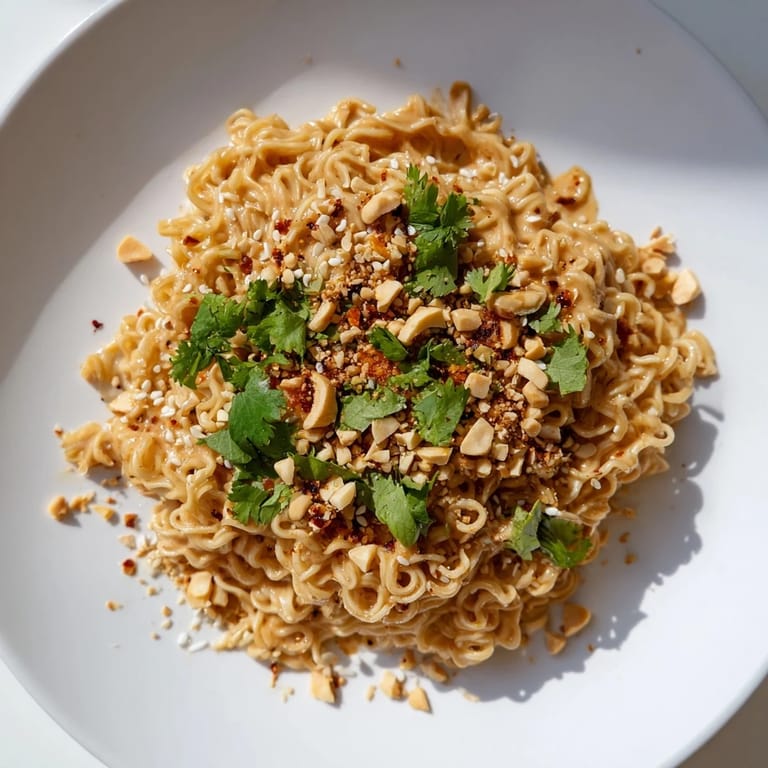
- Pour the warm noodles into the sauce bowl and toss everything together until every strand is coated and glistening. This should take about a minute of actual tossing.
- Plate and top:
- Divide between two bowls and scatter scallions, peanuts, sesame seeds, and cilantro over the top if you have them on hand. A squeeze of lime at the end lifts everything into focus.
- Eat it now:
- This is not a make-ahead situation—serve it the moment it's done, while everything is warm and the sauce clings to the noodles.
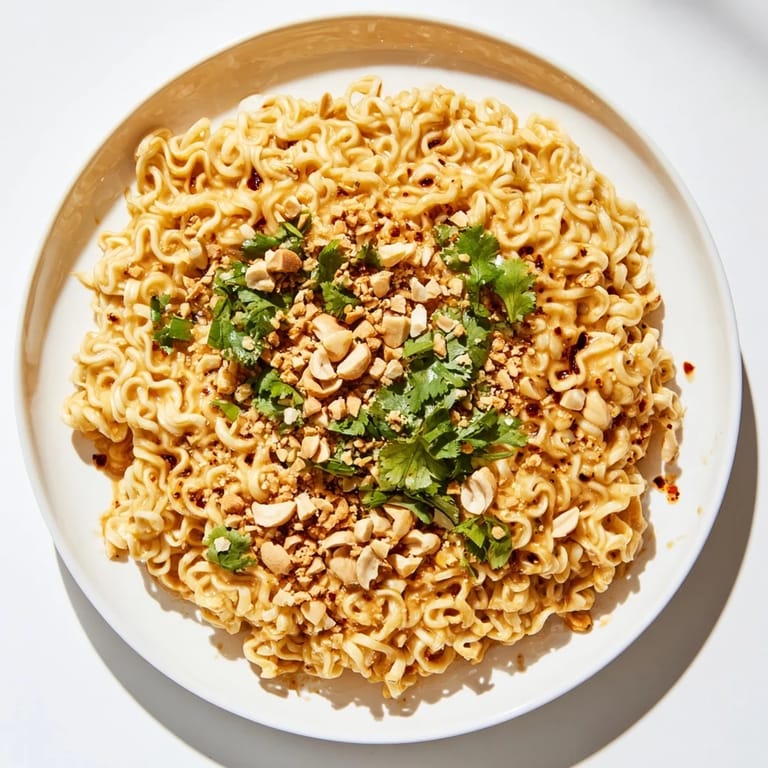 Save
Save I realized while eating this at my kitchen counter that some of the best things in life don't need hours of prep or fancy ingredients—just the right combination of things you probably already have, plus a moment to actually enjoy them without rushing. That's what this dish taught me.
Balancing Heat and Flavor
Chili crisp is wonderful but it's not forgiving if you go overboard, so taste as you go. The first time I made this, I dumped a whole tablespoon in without thinking, and while my taste buds did wake up, my sinuses paid the price. Now I start with less and add more as needed, and everyone's happier for it. The honey or maple syrup is your friend here—it tames the spice and prevents any one flavor from bullying the others.
Building Your Bowl
The beauty of this dish is how customizable it is without requiring any actual cooking skills. Want more protein? A soft-boiled egg or some leftover rotisserie chicken turns this into a complete meal, not just a snack. Stir-fried vegetables, a handful of spinach, or even some tofu make it feel intentional and wholesome, but honestly, it's delicious on its own.
Storage and Substitutions
Make the sauce ahead if you want—it'll keep in the fridge for a few days—but cook your noodles fresh. If peanut butter isn't happening because of allergies or preference, almond butter works beautifully, and sunflower seed butter won't let you down either. The sauce cares more about that creamy base than about which nut brought it to the party.
- For gluten-free, swap regular soy sauce for tamari and use a gluten-free noodle brand.
- Add steamed broccoli, snap peas, or mushrooms if you want vegetables without extra work.
- Lime juice can replace some of the rice vinegar if you're out, and it'll actually taste nice.
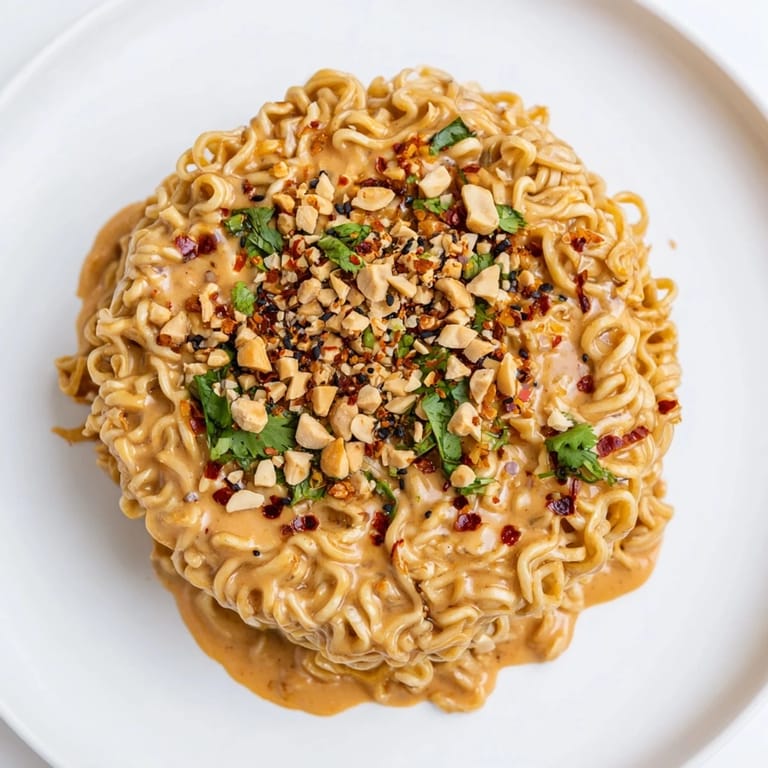 Save
Save This recipe proves that you don't need a complicated process or expensive ingredients to eat something worth remembering. It's the kind of meal that makes a busy weeknight feel a little less exhausting.
Common Questions
- → What type of noodles work best for this dish?
Instant ramen noodles provide a quick and easy base, but any thin wheat noodles can be used for a similar texture and cooking time.
- → How can I adjust the spice level?
Modify the amount of chili crisp to suit your heat preference, starting with less and adding more gradually.
- → What are some good protein additions?
Pan-seared tofu, grilled chicken, or a soft-boiled egg complement the flavors and boost nutritional value.
- → Can this sauce be made nut-free?
Yes, substitute almond or sunflower seed butter for peanut butter to avoid nuts while maintaining creaminess.
- → What toppings enhance this dish?
Fresh scallions, chopped roasted peanuts, sesame seeds, cilantro, and lime wedges add crunch, brightness, and depth.