 Save
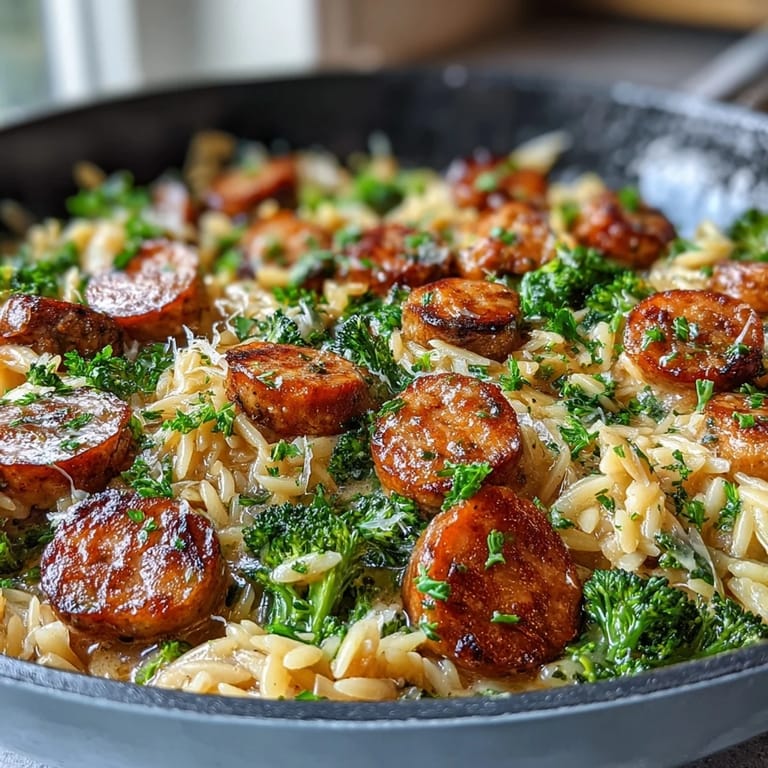
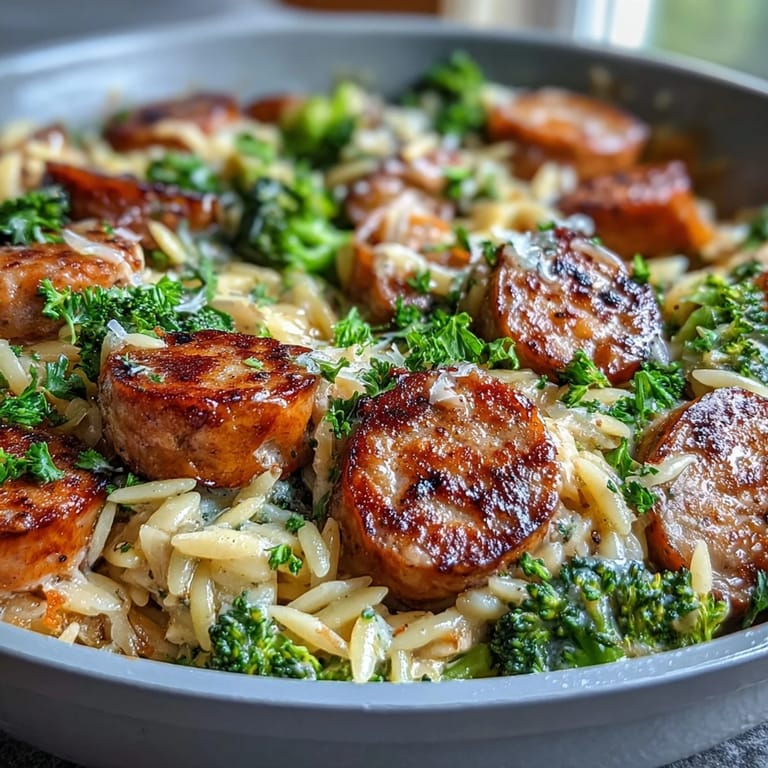
Save There was a Tuesday when I opened my fridge to find half a package of chicken sausage, some broccoli starting to soften, and absolutely no energy for my usual cooking routine. I grabbed a skillet, threw everything together without overthinking it, and twenty minutes later had the kind of dinner that tastes both comforting and bright. That one-pan moment became my go-to when life gets hectic but my appetite doesn't compromise.
I made this for my neighbor who'd just moved in, and watching her face when that first forkful hit was worth every minute at the stove. She came back the next week asking for the recipe, then showed up with wine a month later saying she'd made it three times already. Food has this quiet way of building friendships when you least expect it.
Ingredients
- Chicken sausage, 1 lb sliced: Look for varieties with garlic or Italian herbs already mixed in to save a step; browning it first builds flavor that carries through the whole dish.
- Orzo pasta, 1 cup uncooked: This tiny rice-shaped pasta soaks up the broth beautifully and cooks right in the pan without extra pots.
- Broccoli florets, 3 cups: Cut them roughly equal in size so they cook evenly and get just tender enough without turning mushy.
- Yellow onion, 1 medium diced: The sweetness balances the sausage's saltiness and builds a savory base when it softens.
- Garlic cloves, 3–4 minced: Fresh garlic makes an enormous difference here; jarred garlic tastes flat by comparison.
- Chicken broth, 2½ cups: Use the good stuff if you can; the broth becomes the sauce, so its quality matters.
- Lemon juice, ½–1 fresh lemon: Squeeze it fresh right before finishing; it wakes up every flavor in the pan without making anything taste sour.
- Parmesan cheese, ½ cup grated: Grate it fresh from the block the same day you cook if possible—pre-grated loses something essential during storage.
- Olive oil, 2 tbsp: Choose a robust one that can handle the heat without losing character.
- Italian seasoning, 1 tsp: This is your flavor backbone, so don't skip it or reduce it.
- Red pepper flakes, ¼ tsp optional: Add it if you want warmth building in the back of your throat, skip it if you're cooking for someone who avoids heat.
- Salt and black pepper to taste: Taste as you go and adjust at the end; don't trust the sausage's saltiness alone.
- Fresh parsley, chopped for garnish: It brightens the presentation and adds a fresh herbal note that ties everything together.
Tired of Takeout? 🥡
Get 10 meals you can make faster than delivery arrives. Seriously.
One email. No spam. Unsubscribe anytime.
Instructions
- Brown the sausage:
- Heat olive oil in a large skillet over medium-high heat and add your sliced sausage. Let it sit undisturbed for a minute so it develops a golden crust, then stir and cook until the edges are caramelized, about 5 minutes total.
- Build the aromatics:
- Remove the sausage to a plate and add diced onion to the same skillet, scraping up any stuck bits with your spoon. Cook for 3–4 minutes until the onion turns translucent and sweet-smelling, then add minced garlic, Italian seasoning, and red pepper flakes if using, stirring constantly for just 1 minute until the kitchen smells like a trattoria.
- Toast the orzo:
- Pour the uncooked orzo directly into the skillet and stir it around for 1–2 minutes, letting it pick up color and nutty flavor from the hot pan. You'll hear it click and tap against the bottom—that's exactly right.
- Add the broth:
- Pour in your chicken broth slowly, scraping the bottom of the pan with your spoon to dissolve every caramelized bit. Bring it to a simmer, cover the skillet, and let it cook gently for 8 minutes, stirring once or twice so the orzo cooks evenly.
- Finish with broccoli and sausage:
- Stir in your broccoli florets and return the sausage to the pan, nestling everything into the broth. Cover again and cook for another 4–5 minutes until the broccoli is tender but still has a slight snap and the orzo is creamy but not mushy.
- Final seasoning:
- Remove the pan from heat, stir in fresh Parmesan cheese until it's distributed and slightly melted, then squeeze in your lemon juice and taste. Add salt and pepper carefully—you might need less than you think.
- Rest and serve:
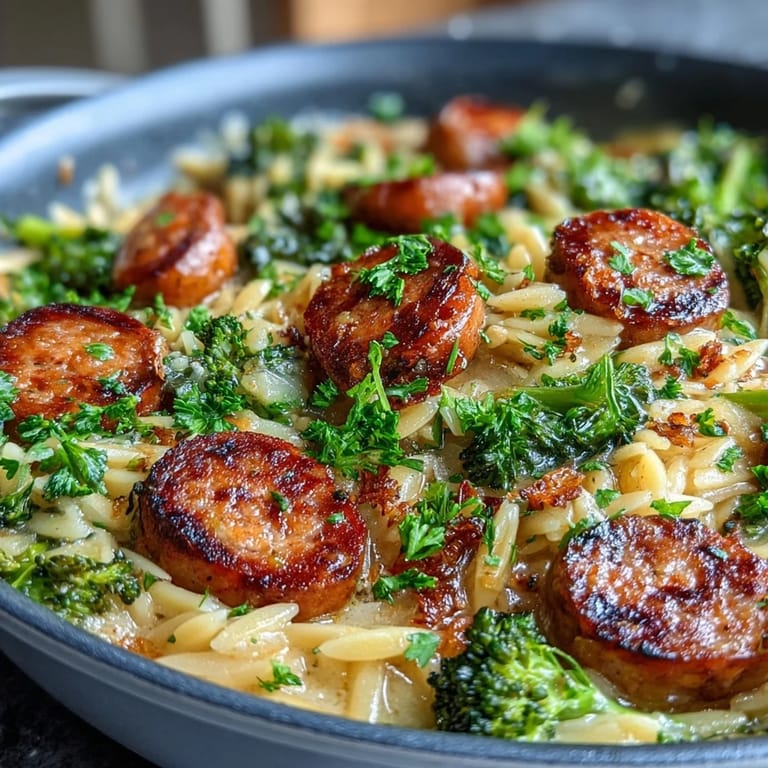
- Let the skillet sit for 5 minutes off the heat so the sauce thickens and everything melds. Scatter fresh parsley on top and serve straight from the pan if you're feeling casual, or plate it individually for a nicer presentation.
 Save
Save My daughter surprised me by requesting this specifically on a night she could have ordered anything she wanted, and that small vote of confidence meant more than any compliment from a restaurant review ever could. Turns out the meals that stick with people aren't always the most complicated—they're the ones made with decent ingredients and a little attention to detail.
Why Toasting Matters More Than You'd Think
That quick minute of toasting the orzo in the hot pan fundamentally changes how it tastes and feels in your mouth. The grains pick up a subtle butteriness that elevates the whole dish from weeknight simple to genuinely crave-worthy. It's one of those small moves that separates good homecooking from just going through the motions.
The Lemon Moment
There's a second near the end where you squeeze that lemon juice in and suddenly everything tastes brighter, fresher, and somehow more complex all at once. It's like someone turned up the volume on every flavor without actually adding much. The key is using fresh lemon and saving it for the very end so the brightness doesn't cook away.
Flexibility Without Losing Your Way
This recipe feels flexible enough that you can swap ingredients without losing what makes it work. Turkey sausage slides in perfectly if that's what you have, and plant-based versions work too if you're cooking for someone with different preferences. The structure stays solid even when you improvise.
- If broccoli doesn't appeal to you, zucchini or spinach work equally well and cook in similar timeframes.
- Add a splash of white wine after toasting the orzo if you want extra depth and acidity beyond the lemon.
- Double the garlic if you're someone who thinks there's no such thing as too much—your skillet, your rules.
 Save
Save This is the kind of dinner that proves you don't need complicated techniques or obscure ingredients to make something genuinely satisfying. Cook it once and it becomes your answer to the question everyone asks on a busy weeknight: what's for dinner?