 Save
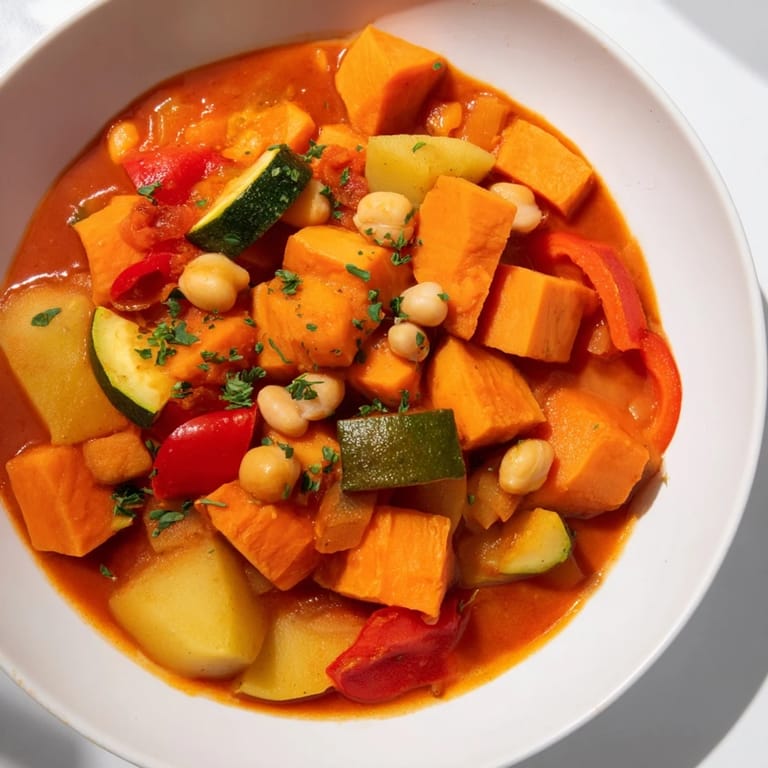
Save There's something about the first genuinely cold evening of the year that makes me want to fill the kitchen with steam and the smell of caramelized onions. I was standing in front of my nearly empty fridge one October, holding two sweet potatoes and wondering if I could stretch them into something substantial, when this stew practically built itself. It turns out that sweet potatoes have this magic quality—they collapse into creamy sweetness while beans hold firm, and somehow it all tastes like comfort wrapped in a bowl.
My partner came home while this was bubbling away and immediately asked if he could have two bowls, which in our house is the highest compliment possible. I remember him tearing up some bread over it without even waiting for me to plate it properly, and I realized right then that this wasn't just a recipe—it was something I wanted to make again and again.
Ingredients
- Sweet potatoes: These provide the stew's backbone, turning silky and almost creamy as they cook without needing any dairy to get there.
- Regular potatoes: Yukon Golds hold their shape beautifully and add earthiness that keeps the stew from feeling one-note.
- Carrots and celery: This is your flavor foundation, so don't skip the aromatics—they're what make people say the stew tastes like home.
- Tomato paste and diced tomatoes: Use good-quality canned tomatoes if you can, and don't be tempted to use tomato sauce in place of paste, as it changes the consistency.
- Beans and chickpeas: The combination gives you different textures and makes the stew protein-dense enough to feel genuinely satisfying.
- Smoked paprika, thyme, and cumin: These three spices are doing almost all the work flavor-wise, so they deserve your attention—buy them fresh if you can.
- Vegetable broth: This is where a low-sodium broth shines, since you'll be reducing flavors and don't want salt creeping up on you.
- Olive oil: Good olive oil makes a difference here since it's doing the heavy lifting at the beginning when you're building your base.
Tired of Takeout? 🥡
Get 10 meals you can make faster than delivery arrives. Seriously.
One email. No spam. Unsubscribe anytime.
Instructions
- Build your foundation:
- Heat the olive oil over medium heat and add onion, celery, and carrot. You want them to soften and start turning golden at the edges—this takes about five minutes, and you'll smell them before you notice the color change. Don't rush this step by turning up the heat, as burnt aromatics will make the entire stew taste slightly off.
- Layer in the next flavor:
- Once your base smells like a kitchen should, add garlic, red bell pepper, and zucchini and let them cook for three minutes. The garlic will go from raw-smelling to deeply fragrant in what feels like an instant, which is your signal that you're ready for the next step.
- Toast your spices:
- Add the sweet potatoes, regular potatoes, and all your dried spices to the pot and stir constantly for about two minutes. This toasting step wakes up the paprika, thyme, and cumin so they're not just riding along in the background.
- Bring in the broth:
- Stir in the tomato paste first (it browns slightly in the hot oil, which is exactly what you want), then add your canned tomatoes, broth, and bay leaf. Bring everything to a boil, which usually takes five minutes or so, then reduce the heat and cover the pot.
- Let it simmer:
- Keep the heat low and let the pot bubble gently for twenty minutes—you're waiting for the potatoes to reach that tender but not-falling-apart stage. If you poke one with a fork and it gives way but still has some structure, you're there.
- Add the beans:
- Once the potatoes are tender, add your cannellini beans and chickpeas and let everything simmer uncovered for another ten to fifteen minutes. This is when the stew thickens and flavors really start to marry together.
- Finish with greens:
- If you're using spinach, add it in the last two minutes and stir until it wilts down. Taste the stew now and adjust your salt and pepper—this is your only chance to fix the seasoning.
- Serve:
- Remove the bay leaf, ladle into bowls, and add whatever garnishes make you happy. Fresh parsley and a squeeze of lemon lift the whole thing into something brighter.
 Save
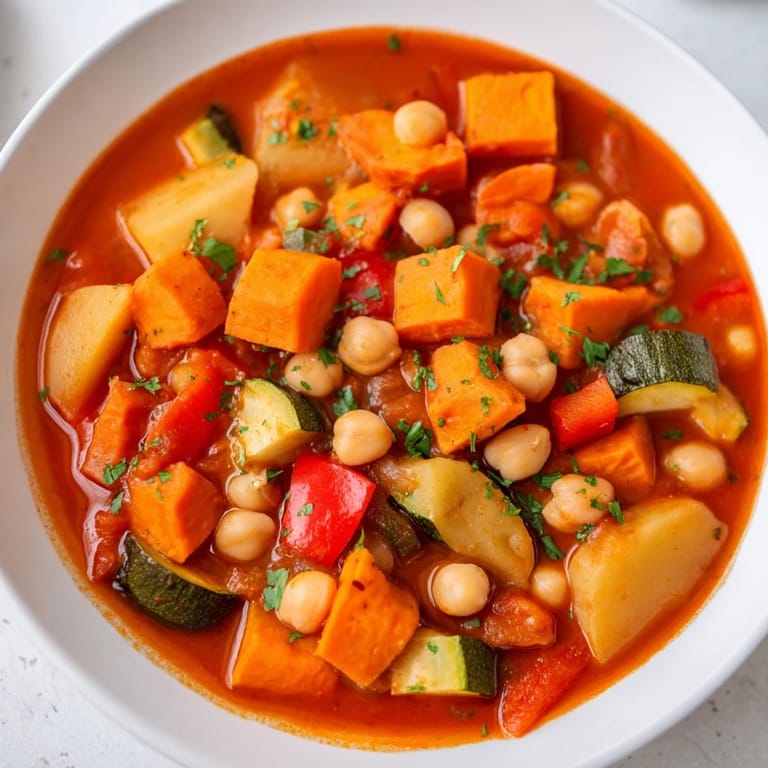
Save I've learned that stew is one of those rare dishes that actually gets better when you reheat it. The next day, when I had a bowl of this cold from the fridge and warmed it up, the flavors had deepened in a way that felt almost intentional, like the stew had been working overtime while I slept.
Why This Stew Works Year-Round
Most comfort food feels seasonal, but this one sits right in the middle—it's heavy enough for winter but the bright tomato broth keeps it from feeling too dense even on a mild evening. I've made it in June with extra zucchini and it felt right, and I've made it in January with extra carrots and it felt equally at home. The beauty is that the core is solid enough to handle whatever vegetables are calling to you.
Make It Your Own
Once I understood how this stew actually works, I started riffing on it without thinking too hard. Sometimes I add a can of diced fire-roasted tomatoes instead of regular ones, or I swap out some of the regular potatoes for parsnips if they're around. The frame is strong enough that it can handle improvisation.
Serving and Storage
This stew is generous with leftovers—it reheats beautifully and actually tastes better the next day as flavors continue to meld. Serve it with crusty bread or over rice if you want to stretch it further, though honestly it's complete on its own. I've kept it in the fridge for four days without any trouble, and it freezes solid for up to two months if you want to build a little stew reserve.
- Let the stew cool completely before freezing to avoid condensation and freezer burn.
- A squeeze of fresh lemon right before serving brightens everything up instantly.
- If your stew thickens too much after cooking, thin it with a splash of broth when you reheat it.
 Save
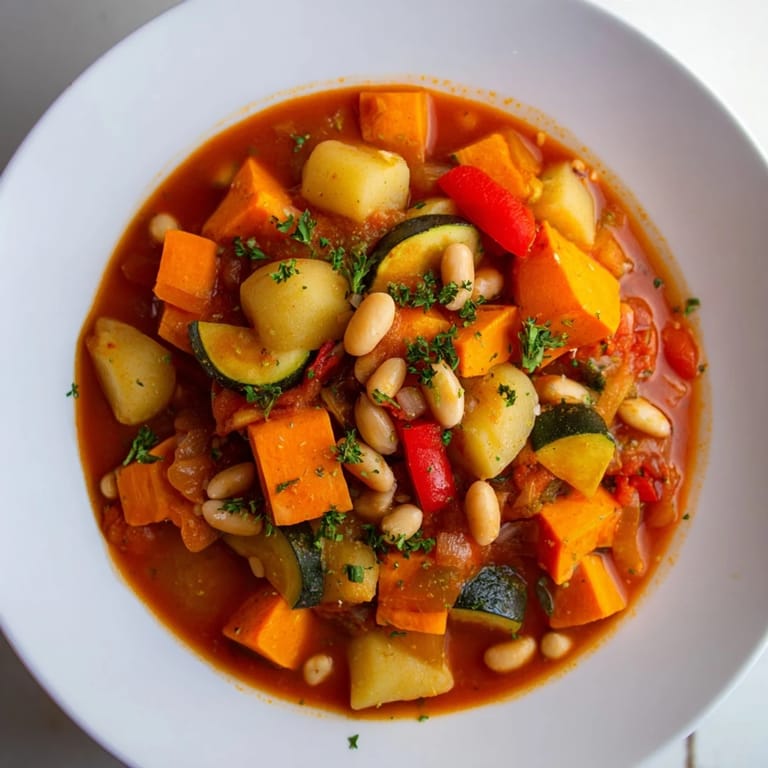
Save There's something deeply satisfying about turning humble vegetables into something that tastes like it took hours when you really only spent fifteen minutes with a knife. This stew has become the thing I make when I want to feel taken care of, or when I want to take care of someone else.
Common Questions
- → Can I substitute the beans with other legumes?
Yes, lentils or black beans can be used as alternatives, adjusting cooking times accordingly.
- → How can I make this stew spicier?
Add ½ tsp of chili flakes or cayenne pepper during the sautéing step for a gentle heat boost.
- → Is baby spinach necessary in the stew?
Baby spinach is optional but adds a fresh, vibrant touch and additional nutrients toward the end of cooking.
- → What is the best way to serve this dish?
Serve warm, garnished with chopped parsley and lemon wedges. It pairs well with crusty bread or over rice for a filling meal.
- → Can this be prepared in advance?
Yes, this dish is perfect for meal prep as flavors deepen after resting. Reheat gently before serving.