 Save
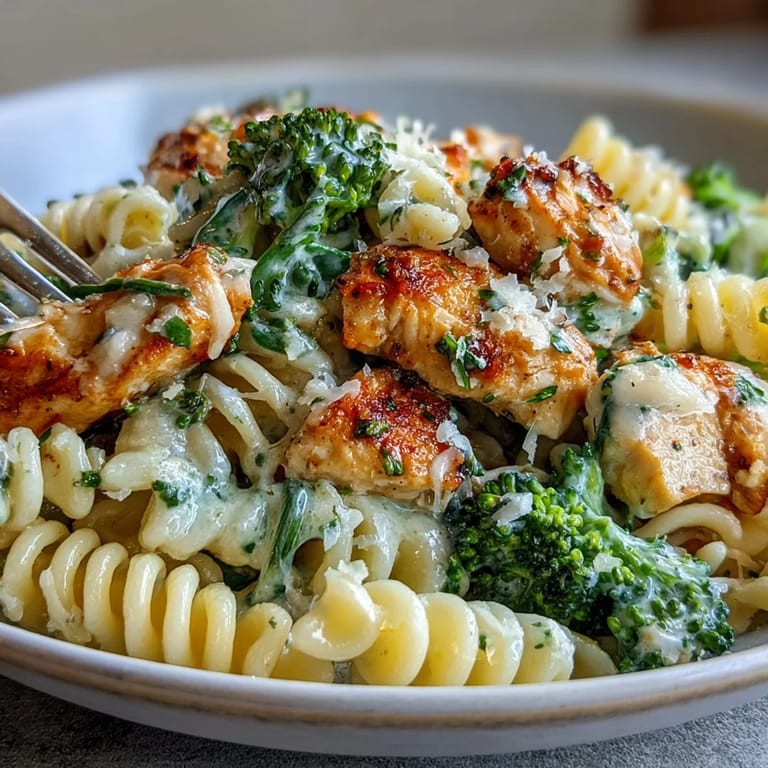
Save One Tuesday evening, my partner came home exhausted from work and asked for something that felt like a hug in a bowl. I had chicken breasts thawing and a head of broccoli getting soft in the crisper drawer, so I decided to throw together this creamy pasta situation right then and there. The whole thing came together in one skillet while we talked about our day, and by the time we sat down to eat, that exhaustion seemed to lift with every bite of garlicky, cheesy goodness. It became our go-to comfort dish whenever life felt a little heavy.
I made this for my mom when she was recovering from surgery and couldn't stand the thought of takeout or anything too fussy. She sat at the kitchen counter watching me cook, and the smell of garlic and butter wafting through the apartment seemed to brighten her mood instantly. She asked for seconds, which rarely happens, and that's when I knew this recipe was a keeper for the tough days.
Ingredients
- Boneless, skinless chicken breasts (400 g total): Cutting them into bite-size pieces ensures they cook through quickly and distribute evenly throughout the pasta so no forkful lacks protein.
- Penne, rigatoni, or rotini pasta (300 g): Choose a shape with ridges or curves because they actually catch the sauce better than smooth pasta does, and you'll taste the difference.
- Small broccoli florets (2 cups): The word 'small' is doing heavy lifting here—larger florets won't soften in time, but tiny ones will get tender without turning mushy.
- Garlic, minced (3 cloves): Fresh garlic is non-negotiable because the pre-minced kind tastes faintly metallic once heated in cream, a lesson I learned the hard way.
- Onion, finely chopped (1 small): This adds sweetness and depth that chicken broth alone cannot provide, creating a more balanced sauce.
- Heavy cream (1 cup): Don't try to substitute with half-and-half or milk alone unless you enjoy a watery, sad pasta experience.
- Freshly grated Parmesan cheese (1 cup): Block cheese grated at home melts into the sauce smoothly, while pre-shredded versions contain anti-caking agents that make everything grainy.
- Unsalted butter (2 tbsp): Start with unsalted so you control the sodium level throughout the dish, especially since chicken broth and Parmesan already contribute salt.
- Milk (1/2 cup): This stretches the cream and keeps the sauce from becoming too rich while helping it coat the pasta more evenly.
- Low-sodium chicken broth (2 cups): Low-sodium matters because as the liquid reduces, regular broth becomes overly salty and unpleasant.
- Salt and black pepper: Season in layers rather than all at once at the end, and taste as you go.
- Crushed red pepper flakes (1/4 tsp, optional): Just a whisper of heat lifts the entire dish without making it spicy, which is the secret to why restaurant versions taste so complete.
- Dried Italian herb blend (1/2 tsp, optional): Oregano and basil dried together provide an earthy background that keeps the sauce from tasting one-dimensional.
- Fresh parsley and extra Parmesan for garnish: These final touches aren't just pretty—they add brightness and a cheese hit that anchors the flavors.
Tired of Takeout? 🥡
Get 10 meals you can make faster than delivery arrives. Seriously.
One email. No spam. Unsubscribe anytime.
Instructions
- Get the chicken golden:
- Heat butter in your large skillet over medium heat until it stops foaming, then add chicken pieces seasoned with a pinch of salt and pepper. Let them sit undisturbed for a couple minutes so they develop color on one side before stirring—this takes about 4 to 5 minutes total. The slight golden crust seals in juices and tastes infinitely better than pale boiled chicken.
- Build the flavor base:
- Once the chicken is set aside, toss in your finely chopped onion and minced garlic, stirring constantly for about 2 minutes until the kitchen smells incredible and the onion turns translucent. Don't let the garlic brown or it becomes bitter.
- Create the sauce:
- Pour in the chicken broth, milk, and heavy cream all at once, stirring to combine everything smoothly. Bring it to a gentle simmer—you'll see small bubbles forming around the edges—which signals the sauce is warming through without scorching.
- Cook pasta and broccoli together:
- Add both the uncooked pasta and broccoli florets to the simmering liquid, stir everything so nothing sticks to the bottom, then cover the skillet and reduce heat to medium-low. Stir occasionally over the next 10 to 12 minutes, checking that the pasta is becoming tender and the liquid is being absorbed without drying out completely—add a splash more broth if it looks too thick.
- Finish with chicken and cheese:
- Return the cooked chicken to the skillet, then sprinkle in the freshly grated Parmesan, Italian herbs, and red pepper flakes if you're using them. Stir constantly for about a minute so the cheese melts evenly into a silky sauce that coats every piece of pasta.
- Taste and adjust:
- This is where you become the boss—taste a spoonful and decide if it needs more salt, pepper, or even a tiny squeeze of lemon juice for brightness.
- Serve right away:
- Divide into bowls while everything is steaming hot, then shower each serving with chopped fresh parsley and extra Parmesan because those final touches matter more than you'd think.
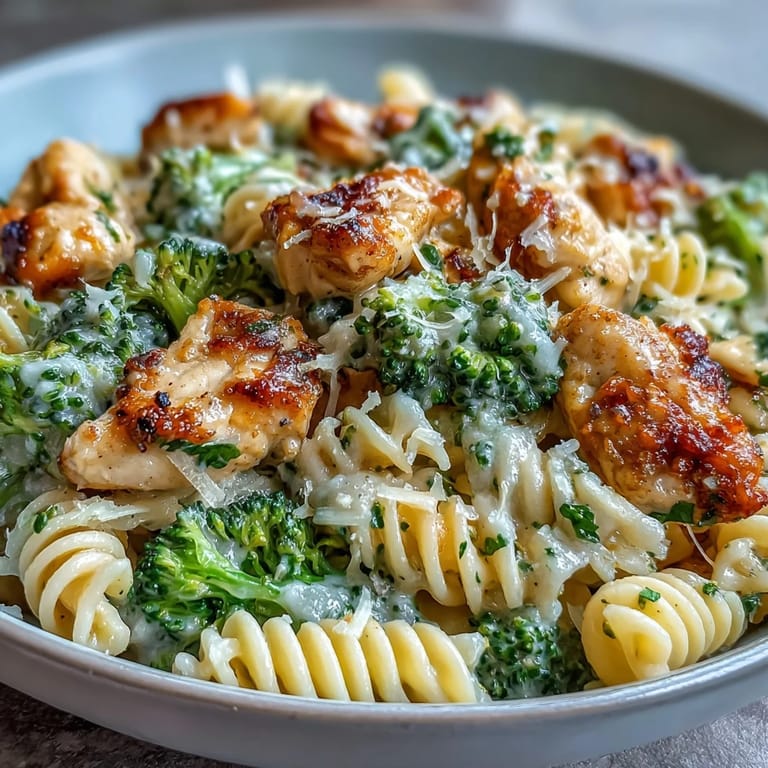 Save
Save This dish has a way of bringing people together without any fuss or pretense. My neighbor knocked on my door one evening drawn by the smell, and we ended up sharing dinner on my back porch while the sun set, talking about life and second helpings, which felt like the point of cooking altogether.
Why This Recipe Wins Every Time
There's something magical about recipes that come together in a single vessel because it means you're not juggling five pots and pans while your family waits hungrily. This skillet pasta cooks in the same place it gets served, which somehow makes it taste better and definitely makes you feel less frazzled. The combination of chicken, broccoli, and creamy sauce hits that sweet spot between comfort food and something that feels intentional enough for guests.
Timing and Temperature Matter More Than You'd Think
I used to cook this on high heat because I was impatient, which resulted in a broken sauce with flecks of separated cream floating around like sad little clouds. Medium or medium-low heat is genuinely the difference between a glossy, clinging sauce and one that looks curdled and unpleasant. Once I learned to slow down and let the sauce develop naturally, this dish became foolproof even on nights when I was distracted or tired.
Customization Without Losing the Magic
The beauty of this recipe is how flexible it actually is, though changing things requires a light touch so you don't lose what makes it work. You can swap rotisserie chicken if you're short on time, or use whole-wheat pasta if that's your preference, or even go vegetarian by using vegetable broth instead of chicken broth. The one thing I wouldn't compromise on is using fresh garlic and block Parmesan because those two ingredients are what separate this from tasting like every other creamy pasta out there.
- A squeeze of fresh lemon juice added at the very end brightens the cream and makes it feel less heavy.
- If you like heat, double the red pepper flakes or add a pinch of cayenne for a spicier version.
- Swap the broccoli for spinach, mushrooms, or sun-dried tomatoes if that's what you have on hand.
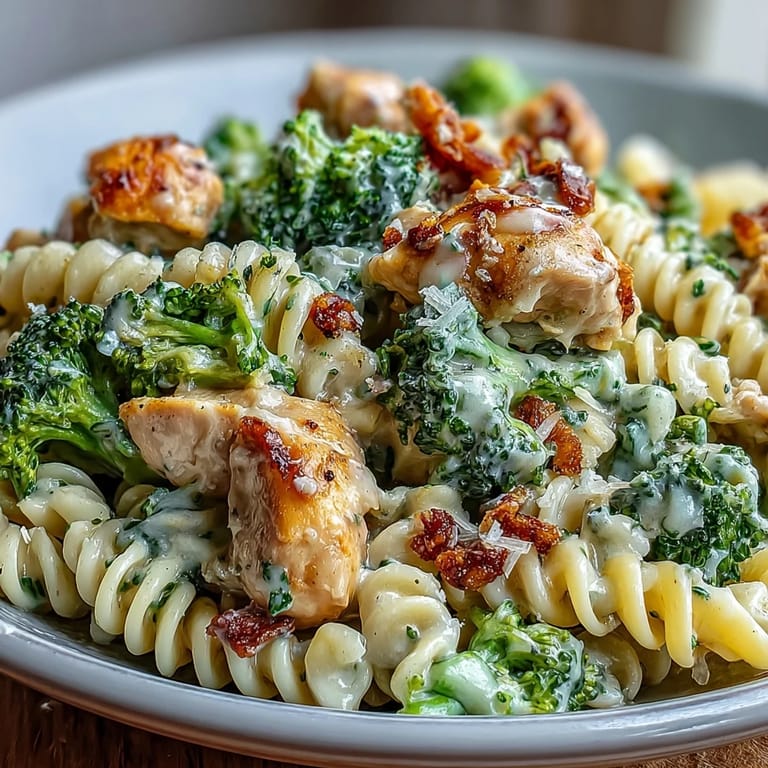 Save
Save This recipe lives in my kitchen rotation because it never disappoints and always feels like a gift to whoever's eating it. Make it once and you'll understand why it becomes the thing people ask you to cook again and again.
Common Questions
- → Can I make this dish ahead of time?
Yes, you can prepare the components separately up to a day in advance. Store the cooked chicken, pasta, and sauce in individual containers. Reheat gently with a splash of milk or cream to restore the creamy consistency before serving.
- → What pasta shapes work best?
Penne, rigatoni, and rotini are ideal because their ridges and tubes hold the creamy sauce beautifully. Short pasta with texture helps the Parmesan coating cling to every bite. Avoid long strands like spaghetti as they're harder to eat in this skillet preparation.
- → How can I make this lighter?
Substitute half-and-half or evaporated milk for some of the heavy cream. Use less Parmesan or a blend with nutritional yeast. Increase the broccoli ratio and reduce pasta slightly. The dish will still be satisfying with fewer calories.
- → Can I use frozen broccoli?
Frozen broccoli works in a pinch. Thaw and drain well before adding, or add directly to the skillet during the last 5-6 minutes of cooking. Fresh broccoli provides better texture and doesn't water down the sauce.
- → What can I substitute for the chicken?
Shrimp cook quickly and pair wonderfully with garlic Parmesan. Italian sausage adds depth and spice. For a vegetarian version, use white beans or chickpeas for protein. You could also double the broccoli and add sliced mushrooms.
- → Why is my sauce too thick?
The pasta naturally releases starch and absorbs liquid as it cooks. If the sauce becomes too thick, simply add warm broth or water a few tablespoons at a time until you reach the desired consistency. The sauce should coat the back of a spoon.