 Save
Save The first time I made a sushi bake, it was a happy accident born from leftovers and impatience. I had cooked sushi rice for rolls that never happened, some beautiful salmon sitting in the fridge, and friends coming over in an hour. Instead of panicking, I layered everything into a baking dish, threw cheese on top, and slid it into the oven. Twenty-five minutes later, something magical emerged—all the flavors I loved about sushi but warm, comforting, and impossible to eat with chopsticks. My guests devoured it straight from the dish, and I realized I'd stumbled onto something better than the original plan.
There's something about watching people's faces when they realize what they're eating. My partner took one bite and asked if we could have this for every dinner party, and suddenly I wasn't thinking about sushi rolls anymore—I was thinking about how a deconstructed dish somehow feels more generous than the original.
Ingredients
- Sushi rice: Use short-grain sushi rice, not regular rice; it has the right stickiness and absorbs the vinegar seasoning perfectly.
- Salmon: Cook it yourself or use high-quality canned salmon if fresh isn't available; flaking it by hand gives you better texture control.
- Cream cheese and mayonnaise: These create the creamy base that holds everything together; Japanese Kewpie mayo adds a subtle sweetness that complements the sushi flavors.
- Sriracha: Start with less than the recipe suggests if you're unsure about heat levels; you can always add more, but you can't take it back.
- Mozzarella cheese: Don't skip this—it melts beautifully and adds richness without overpowering the delicate salmon.
- Nori: Tear it into strips just before serving so it stays crispy and doesn't absorb moisture from the warm dish.
Tired of Takeout? 🥡
Get 10 meals you can make faster than delivery arrives. Seriously.
One email. No spam. Unsubscribe anytime.
Instructions
- Prepare the sushi rice:
- Rinse the rice under cold running water, stirring gently with your fingers until the water runs nearly clear. This removes excess starch and prevents the rice from becoming gummy. Combine with water in a saucepan, bring to a boil, cover tightly, and reduce heat to low for 15 minutes, then let it sit undisturbed for another 10 minutes to finish steaming.
- Season the rice:
- While the rice is still warm, mix rice vinegar, sugar, and salt in a small bowl, then fold gently into the rice using a wooden spoon or plastic spatula. The warmth helps the vinegar absorb evenly, creating that signature sushi rice flavor without the grains breaking apart.
- Layer the foundation:
- Spread the seasoned rice evenly across a greased 9x13-inch baking dish, pressing it down gently so it forms a compact, even layer that will hold the toppings.
- Build the creamy layer:
- In a mixing bowl, combine the flaked salmon, shredded crab (if using), softened cream cheese, mayo, Sriracha, and soy sauce, stirring until everything is creamy and well mixed. Taste as you go and adjust the Sriracha if you want more heat.
- Assemble and bake:
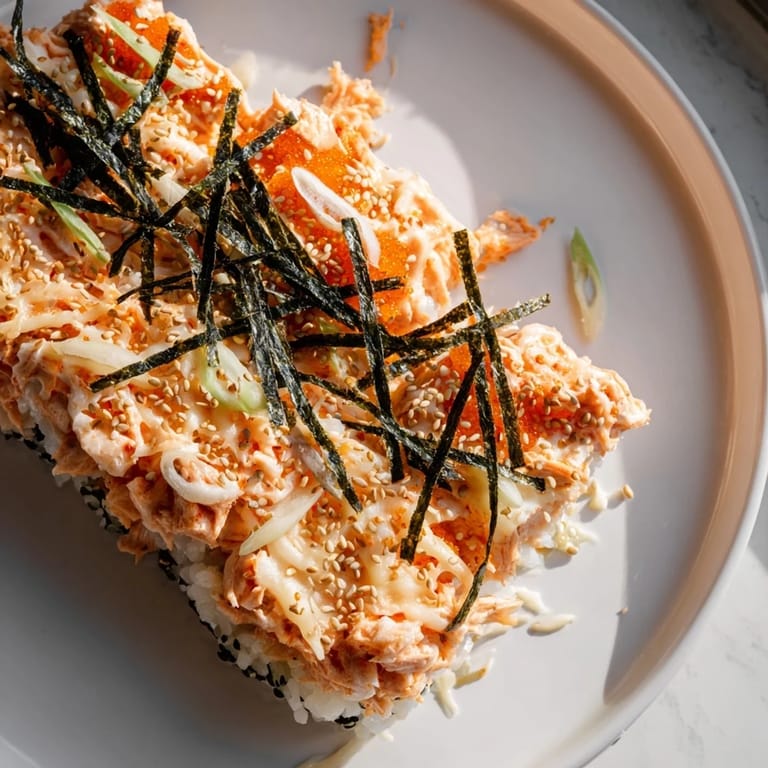
- Spread the salmon mixture evenly over the rice, then top generously with shredded mozzarella cheese. Bake at 200°C (400°F) for 20 to 25 minutes until the cheese is melted, bubbly, and just beginning to turn golden around the edges.
- Finish with freshness:
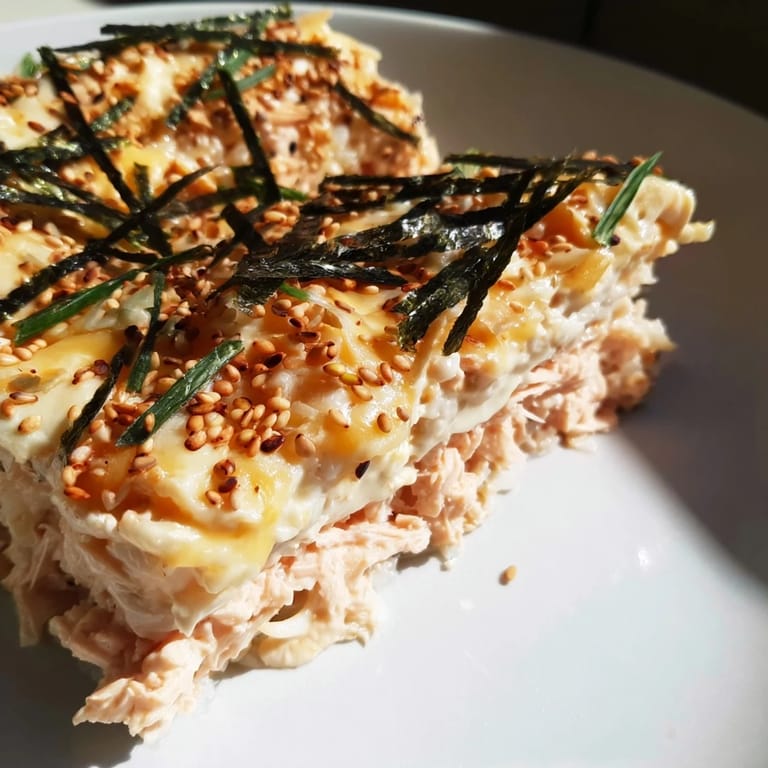
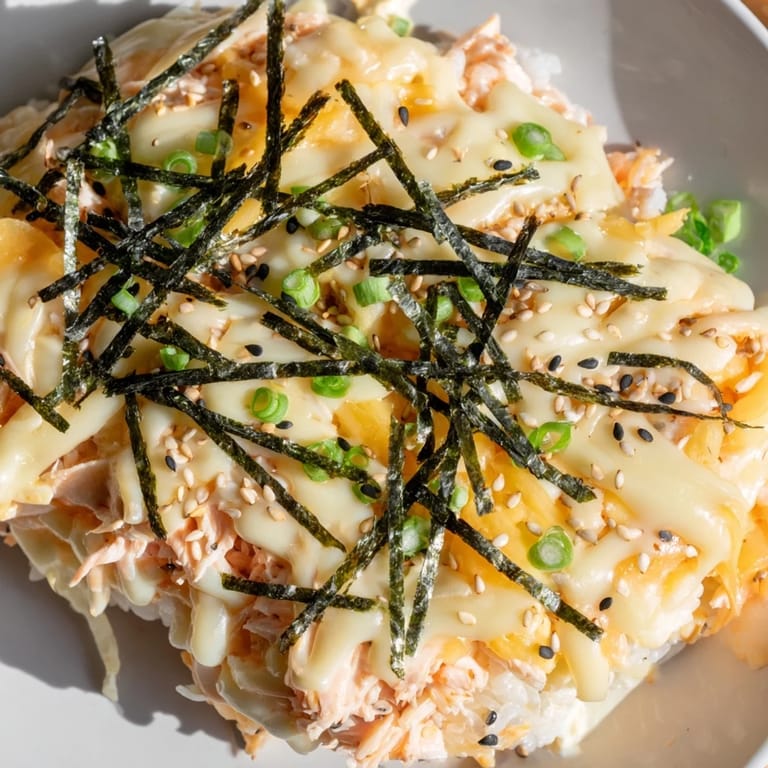
- Remove from the oven and scatter toasted sesame seeds, sliced scallions, and nori strips across the top while it's still warm. The heat brings out the sesame aroma and softens the nori just enough without making it chewy.
 Save
Save I learned the hard way that serving this straight from the baking dish makes people linger longer at the table, passing it around, going back for more, asking questions about what makes it taste like that. It stops being about sushi or casserole and becomes about the moment—everyone reaching in at the same time, laughing when the cheese stretches.
Why This Works as a Bake
Sushi is beautiful but requires patience and skill. A bake is forgiving and actually gets better when flavors meld together in the oven. The rice absorbs just enough moisture from the creamy layer to stay tender, the cheese acts as a protective blanket that keeps everything moist, and the gentle heat brings out sweetness in the mayonnaise that you'd miss in raw preparations. It's sushi's comfort-food cousin, and it deserves to exist on its own terms.
Variations That Actually Work
Substitute salmon with cooked shrimp if that's what you have, or use canned tuna for a more budget-friendly version that honestly tastes just as good. Add sliced avocado on top after baking so it stays creamy rather than getting warm and mushy. A drizzle of unagi sauce or teriyaki before baking adds depth that will make people ask for your secret.
Serving and Storage
Serve this warm, torn into pieces, and eat it with nori sheets if you want to stay true to sushi form, or just fork it straight from the dish because that's what actually happens. Leftovers reheat beautifully in a 160°C oven for 10 minutes, and cold leftovers the next day are surprisingly good, though the cheese won't have that same bubbly charm.
- Have nori strips ready to add just before serving so they stay crispy.
- If your salmon is particularly dry, mix an extra tablespoon of mayo into the creamy layer for more richness.
- This dish feeds six generously, but honestly, it rarely lasts that long once people discover how good it is.
 Save
Save This dish reminds me that food doesn't have to follow the rules to be good. It just has to taste like home and bring people together, and this sushi bake does both beautifully.
Common Questions
- → What type of rice works best?
Sushi rice is ideal for this dish due to its sticky texture and ability to hold flavors well.
- → Can I substitute salmon with other seafood?
Yes, cooked shrimp or canned tuna can be used for variation without compromising taste.
- → How spicy is the sauce?
The sauce includes Sriracha, which provides a mild to moderate kick, adjustable to preference.
- → What toppings enhance flavor and texture?
Toasted sesame seeds, scallions, and nori strips add crunch and umami, balancing creamy and cheesy elements.
- → Is there a recommended baking time and temperature?
Baking at 200°C (400°F) for 20–25 minutes creates a golden, bubbly cheese crust while warming the layers evenly.