 Save
Save I used to think butternut squash was more trouble than it was worth until a particularly rainy Tuesday changed my mind. The wind was rattling the kitchen window and I just needed something that felt like a hug in a bowl. I found a lonely squash in the pantry and decided to roast it instead of just boiling it into oblivion. That caramelized smell filled the whole house and suddenly the gloomy weather did not seem so bad. It turned out to be the most comforting meal I had made all season.
One evening I accidentally added a bit too much cinnamon and thought I had ruined the whole batch. I served it anyway to my roommates and they actually asked if it was a secret family recipe from some far off place. It taught me that spices are meant to be played with and sometimes a heavy hand leads to a better result. We sat on the floor with oversized bowls and polished off the entire pot before the movie even started.
Ingredients
- Butternut squash: Roasting the cubes until the edges turn dark brown creates a rich base that makes the soup taste like it simmered for hours.
- Carrots: These add a subtle sweetness and help create a beautiful vibrant orange color once everything is blended.
- Onion: Sautéing them until they are translucent provides a savory depth that balances the sweeter vegetables.
- Garlic: Freshly minced cloves offer a punchy aroma that ties the earthy spices to the sweet squash.
- Red lentils: These are the magic ingredient that thickens the soup naturally as they break down during the simmering process.
- Vegetable broth: A savory liquid base allows the lentils and vegetables to cook thoroughly while absorbing tons of flavor.
- Olive oil: Essential for both roasting the squash and sautéing the aromatics to ensure nothing sticks and flavors develop.
- Cumin and Coriander: This duo brings an earthy and slightly floral note that makes the dish feel incredibly sophisticated.
- Smoked paprika: Just a touch adds a hint of woodsy flavor that complements the roasted notes of the squash.
- Cinnamon and Cayenne: A surprising warmth from the cinnamon paired with a tiny kick of heat creates a complex finish.
Tired of Takeout? 🥡
Get 10 meals you can make faster than delivery arrives. Seriously.
One email. No spam. Unsubscribe anytime.
Instructions
- Roast the squash:
- Toss your squash cubes with oil and salt then let them get nice and golden in a hot oven. You want to see those brown caramelized edges because that is where the deep flavor lives.
- Sauté the base:
- While the oven works its magic cook your onions and carrots in a large pot until they are soft and fragrant. This creates a sweet foundation that supports the rest of the ingredients.
- Bloom the spices:
- Stir in the garlic and spices for just a minute until the air in your kitchen smells like a spice market. This brief heat wakes up the oils in the spices for maximum impact.
- Simmer everything:
- Add the roasted squash and lentils with the broth and let it bubble away until the lentils are completely tender. The lentils should practically be falling apart before you even think about blending.
- Puree to perfection:
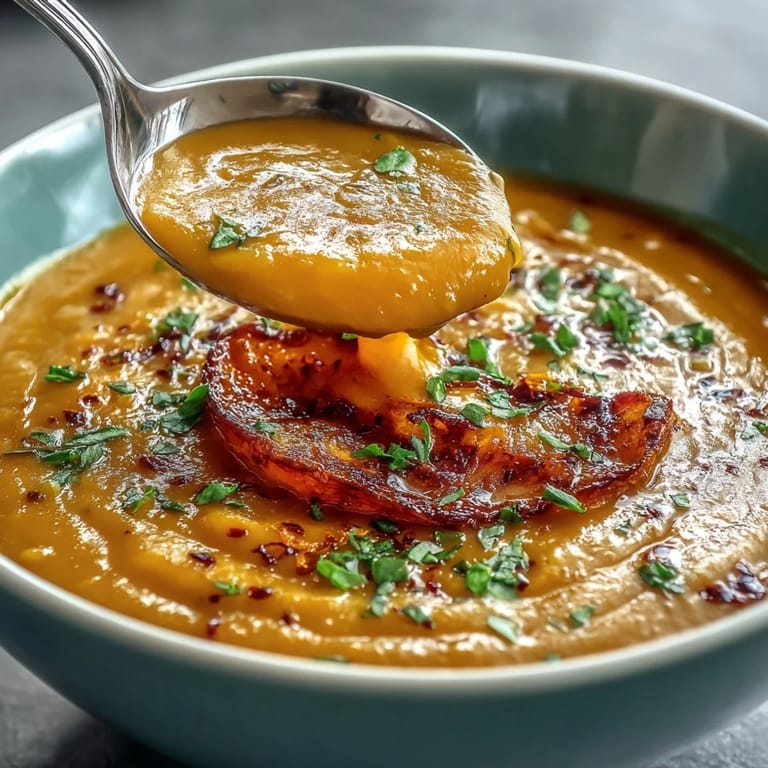
- Use your immersion blender to turn the chunky mixture into a silky smooth velvet consistency. If it looks too thick you can always add a little extra broth or water to get it just right.
- Season and serve:
- Taste for salt and pepper then ladle it into bowls with a swirl of cream if you are feeling fancy. I like to serve mine while it is still steaming hot with a bit of fresh greenery on top.
 Save
Save Last winter I brought a thermos of this soup on a sunset hike through the woods. We reached the lookout just as the temperature dropped and sharing that warm cup while looking at the frost felt like magic.
The Texture Secret
Using a countertop blender will give you an even smoother finish than an immersion blender if you want a true restaurant quality feel. Just be careful when blending hot liquids as the steam can build up pressure quickly inside the jar.
Leveling Up the Garnish
A simple squeeze of fresh lemon juice right before eating cuts through the richness and wakes up all the earthy spices. I also love adding a handful of toasted pumpkin seeds for a crunch that contrasts with the creamy soup.
Making It Your Own
This recipe is incredibly forgiving and adapts well to whatever you happen to have hiding in your vegetable drawer. It is the perfect way to use up those last few carrots or that half container of broth. Experimenting with different garnishes can also completely change the personality of the bowl.
- Swap the butternut squash for sweet potatoes if you want a slightly different kind of sweetness.
- Stir in a handful of spinach at the very end for a pop of bright green color.
- Serve it alongside some warm garlic naan to scoop up every last drop from the bowl.
 Save
Save This soup is more than just a meal it is a warm blanket for your soul on a cold day. I hope it brings as much comfort to your table as it does to mine.
Common Questions
- → Can I make this soup ahead of time?
Absolutely! This soup stores beautifully in the refrigerator for 4-5 days or freezes well for up to 3 months. The flavors continue to develop, making it even more delicious the next day.
- → Do I have to roast the squash first?
Roasting isn't strictly necessary but highly recommended. It caramelizes the squash, adding depth and sweetness that you won't get from boiling alone. If you're short on time, you can simmer raw squash cubes directly in the pot.
- → Can I substitute green or brown lentils for red?
Red lentils work best because they break down completely, creating that velvety texture. Green or brown lentils hold their shape and would result in a chunkier soup rather than a smooth puree.
- → How can I make this soup more filling?
Pair with crusty bread, naan, or add a protein like chickpeas. You can also serve over cooked grains like rice or quinoa, or stir in extra coconut milk for richness and calories.
- → What if I don't have an immersion blender?
A standard countertop blender works perfectly—just blend in batches and be careful with hot liquids. You can also use a potato masher for a chunkier texture, though it won't be completely smooth.
- → Can I adjust the spice level?
Definitely! The cayenne pepper provides heat—reduce or omit it for a milder version. You can also add more smoked paprika or a pinch of red pepper flakes if you prefer it spicier.