 Save
Save The first time I made bulgogi at home, I wasn't trying to be authentic—I was just desperate for something that tasted like the bowl I'd devoured at a Korean restaurant the week before. My kitchen filled with this incredible sweet and savory aroma as the beef hit the hot pan, and suddenly my roommate appeared asking what smelled so good. Turns out, when you nail this marinade, even a weeknight dinner feels like you're sharing something special.
I remember bringing this to a potluck once, nervous because everyone else had brought casseroles and salads, but within minutes people were coming back for seconds and asking for the recipe. There's something about the combination of warm, caramelized beef over cool vegetables that just makes people happy—it's both comfort and freshness at the same time.
Ingredients
- Beef sirloin or ribeye: Thin slices are your secret weapon here—they cook in seconds and soak up all that marinade flavor. I always ask the butcher to slice it, which saves time and guarantees it's thin enough.
- Soy sauce: This is the backbone of the whole dish, bringing salty depth that makes the beef sing.
- Brown sugar and ginger: Together they create this warm sweetness that balances the savory notes beautifully.
- Sesame oil: Just a splash adds a nutty, toasted richness that tastes expensive but costs almost nothing.
- Asian pear or apple: The natural sweetness and enzymes help tenderize the beef while adding subtle fruit undertones—this is the ingredient people notice but can't quite name.
- Gochujang: Optional, but if you like a little heat, this Korean chili paste adds complexity that regular chili flakes never achieve.
- Garlic and scallions: Fresh aromatics that keep everything bright and prevent the dish from feeling heavy.
- Rice: Short-grain or jasmine rice holds the marinade sauce better than long-grain and absorbs all those flavors.
- Fresh vegetables: Carrots, cucumber, and bean sprouts provide crisp texture and cool contrast to the warm beef—they're not just garnish, they're essential balance.
Tired of Takeout? 🥡
Get 10 meals you can make faster than delivery arrives. Seriously.
One email. No spam. Unsubscribe anytime.
Instructions
- Build your marinade:
- Whisk together soy sauce, brown sugar, sesame oil, rice vinegar, minced garlic, grated ginger, and grated pear in a bowl until the sugar dissolves. This is where all the magic happens—taste it and let it guide you. If you're adding gochujang, stir it in now so it distributes evenly.
- Coat the beef:
- Add your thinly sliced beef to the marinade, tossing gently until every piece is covered. Cover and let it sit for at least 15 minutes—longer is better if you have time, but even 30 minutes makes a noticeable difference.
- Get your pan screaming hot:
- Heat your skillet or wok over high heat until it's almost smoking, then add the beef in a single layer. Don't stir immediately—let it sit for 30 seconds so the edges caramelize and brown slightly, then toss and cook another minute or two until just done.
- Assemble your bowls:
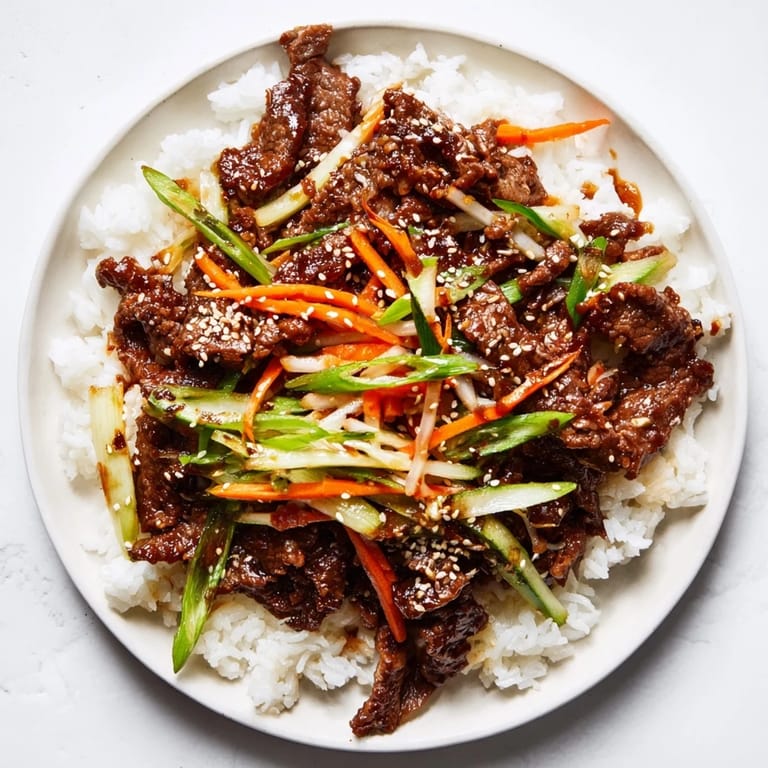
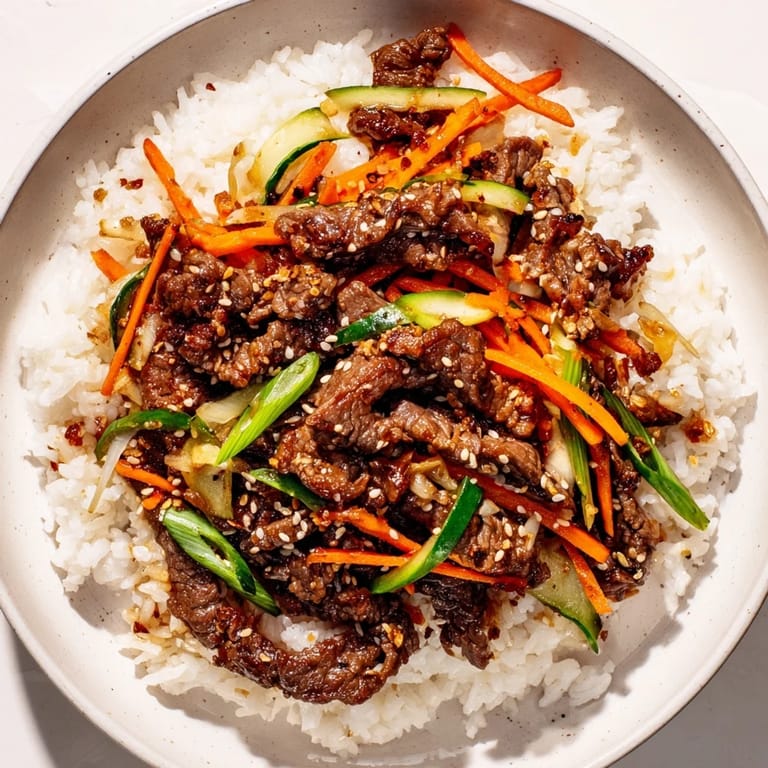
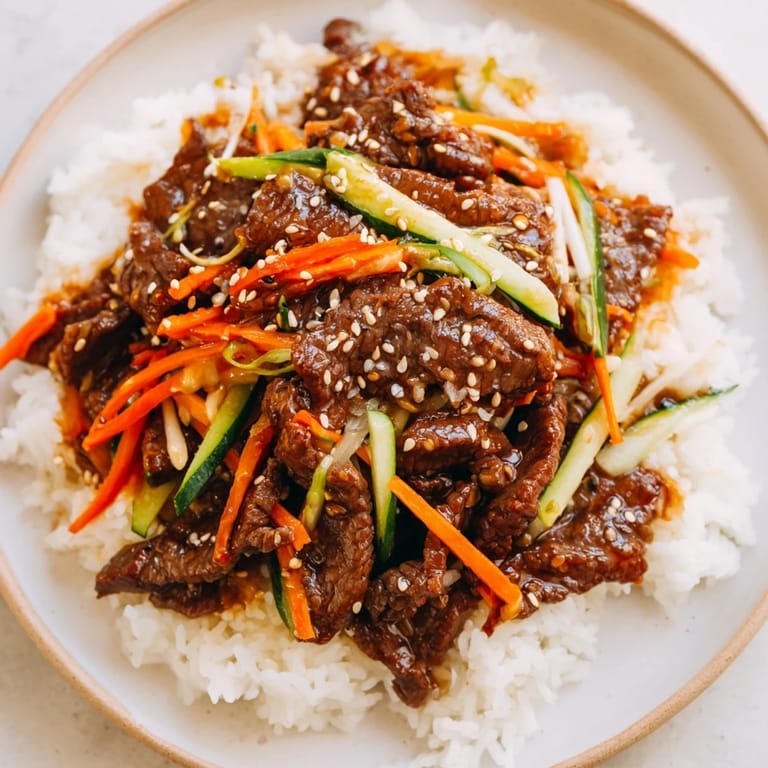
- Divide rice among bowls and arrange the warm beef, julienned carrots, cucumber matchsticks, and blanched bean sprouts on top in whatever pattern feels right to you. Drizzle any remaining marinade over everything.
- Finish and serve:
- Scatter extra scallions and toasted sesame seeds over the top and eat immediately while the beef is still warm and the vegetables still have their snap.
 Save
Save There's a moment right when the beef hits the hot pan where your whole kitchen transforms. That sizzle, that smell—it's the moment when simple ingredients become something that tastes like it took hours, even though you've barely started cooking.
Why the Marinade Matters
The magic here isn't in fancy technique or expensive ingredients—it's in giving the beef time to absorb flavor. The grated pear adds natural enzymes that break down muscle fibers, making the beef impossibly tender while its sweetness caramelizes at high heat. Brown sugar deepens that caramelization, sesame oil adds toasted richness, and the ginger-garlic combination brings warmth that feels almost medicinal in the best way. This isn't a quick toss; this is flavor engineering that happens while you're doing something else.
Building Your Perfect Bowl
The beauty of a bowl meal is that you control the balance with every bite. Some people love their vegetables heavily represented, others pile the beef high. The cold vegetables aren't just texture contrast—they're essential relief from the rich, salty warmth of the beef and marinade. If you blanch your bean sprouts briefly, they lose their raw edge but keep their crunch, which somehow feels more intentional and delicious.
Flavor Variations and Swaps
I've made this recipe dozens of ways depending on what's in my kitchen and what I'm craving. Sometimes I skip the gochujang entirely and double down on the ginger for a cleaner, brighter version. Other nights I add a fried egg on top for richness, and suddenly it's a completely different meal. The core marinade is your anchor, but everything else is your playground.
- Try swapping rice with cauliflower rice if you're watching carbs, though honestly the sauce-soaked regular rice is hard to beat.
- Kimchi adds a funky, fermented punch that elevates everything—even just a small handful makes a difference.
- A squeeze of fresh lime juice right before eating brightens everything and cuts through the richness beautifully.
 Save
Save This bowl has become my answer to "what's for dinner" more times than I can count, and every time it feels like I'm sharing something that tastes far more impressive than the effort required. That's the real magic here.
Common Questions
- → What type of beef works best for this dish?
Choose tender cuts like ribeye or sirloin, thinly sliced for quick cooking and optimal flavor absorption.
- → How long should I marinate the beef?
Marinate for at least 15 minutes to allow flavors to meld; up to 1 hour for deeper taste.
- → Can I adjust the spice level?
Yes, add or omit gochujang according to your preferred spice intensity.
- → What are good alternatives to jasmine rice?
Short-grain white rice or cauliflower rice work well as alternatives.
- → How do I prevent overcrowding when stir-frying beef?
Cook beef in batches to ensure even caramelization and avoid steaming.