 Save
Save Last Tuesday, I was staring at my nearly empty fridge, wondering how to make lunch interesting for myself and a friend stopping by, when I remembered scrolling through endless veggie board videos on my phone. Something clicked: why wait for a special occasion to make eating feel intentional and fun? I grabbed whatever looked fresh, threw it on a wooden board, and suddenly we were both arranging cheese and vegetables like we were curating art. That casual moment turned into something I now make whenever I want lunch to feel less like an obligation and more like a choice.
I made this for my coworkers during a chaotic Friday afternoon when the office felt like it was melting. Putting this board in the break room took maybe fifteen minutes, but watching people slow down to pick through vegetables and cheese and actually enjoy their break felt like I'd given them permission to breathe. One person said it reminded them why they used to love snacking before it all became processed convenience food.
Ingredients
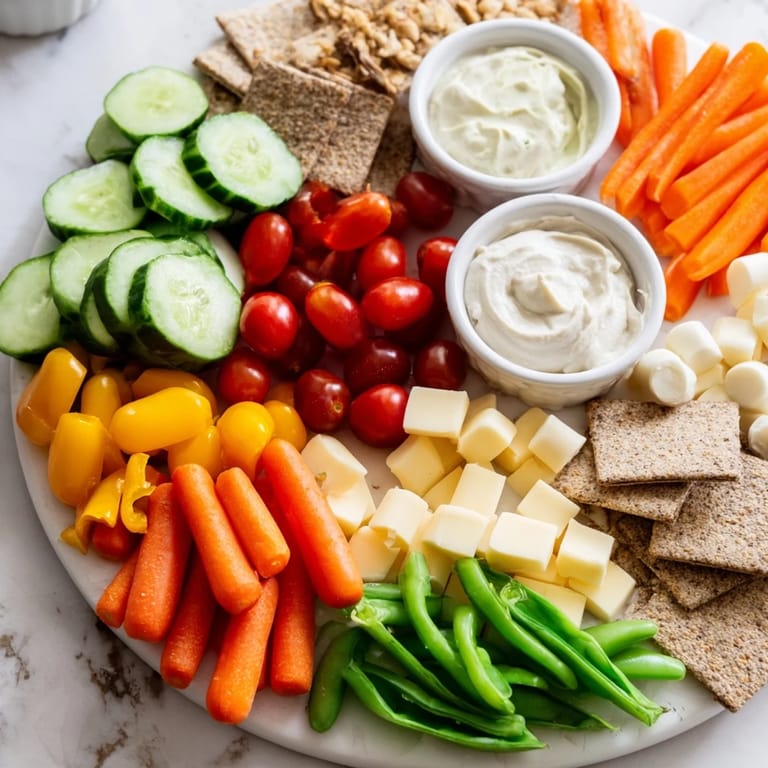
- Baby carrots: These stay crisp all day if you soak them in ice water for a few minutes beforehand, which I learned after getting soggy carrots the first time.
- Cucumber slices: Cut them thick enough that they don't get watery but thin enough to pick up easily without looking like you're eating a log.
- Cherry tomatoes: The small ones burst with flavor instead of tasting watery, and they're fun to eat straight from the board.
- Bell pepper strips: Mixed colors make the board look alive, and different peppers taste subtly different if you actually pay attention.
- Sugar snap peas: These are here because they're slightly sweet and somehow make everything feel a little fancier than it actually is.
- Hummus: Use whatever flavor speaks to you; I rotate between roasted red pepper and garlic depending on my mood and what else is on the board.
- Ranch or Greek yogurt dip: The creamy counterbalance to everything crisp, and Greek yogurt feels less heavy than traditional ranch if you're eating a lot of it.
- Cheddar cheese cubes: Sharp enough to taste like cheese, not so sharp that it overwhelms the gentler vegetables.
- Mozzarella balls: They're delicate and creamy, which is why they sit in their own cluster instead of mixing too much with other cheese.
- Gouda or Swiss cheese slices: The nutty sweetness rounds out all the other flavors without competing with them.
- Whole grain crackers: They hold up to dipping and don't disintegrate in your hand like some crackers do.
- Roasted nuts: These add an unexpected richness and texture that keeps your hand coming back to the board.
- Olives: They're salty enough to make you drink water, which means you actually stay hydrated instead of mindlessly snacking.
- Dried fruit: The sweet element nobody sees coming; apricots and cranberries add brightness that fresh fruit sometimes can't.
Tired of Takeout? 🥡
Get 10 meals you can make faster than delivery arrives. Seriously.
One email. No spam. Unsubscribe anytime.
Instructions
- Wash and dry everything:
- Wet vegetables make the board look sad and soggy within an hour. Take the extra thirty seconds to pat them dry with paper towels, and your board will stay beautiful from the first bite to the last.
- Arrange vegetables in sections:
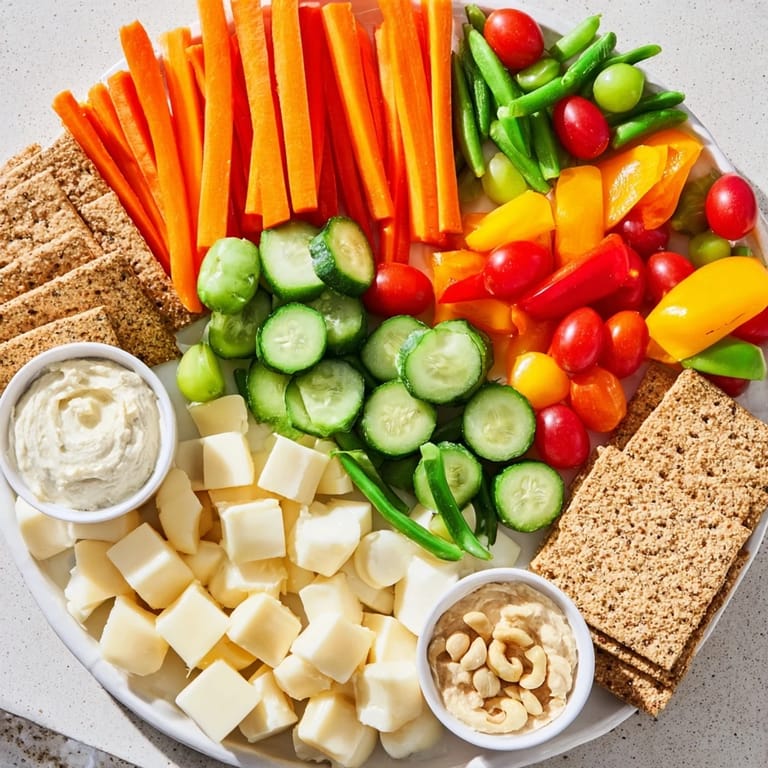
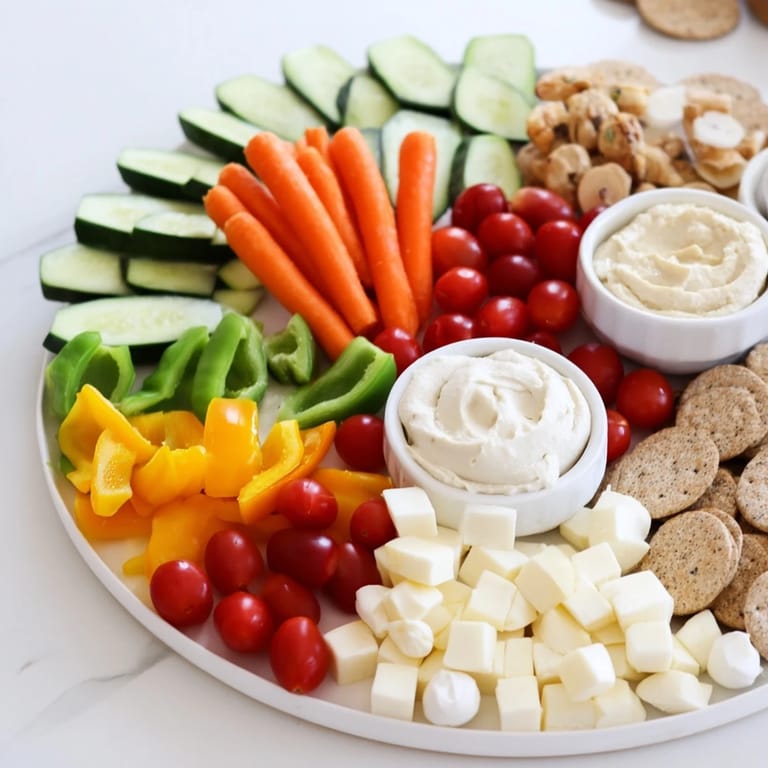
- Think of the board like a color wheel: reds with reds, oranges with oranges, greens clustered together. It makes the whole thing more visually compelling and easier for people to find what they're looking for.
- Nestle the dips in small bowls:
- Don't just plop hummus straight onto the board; it spreads and takes up space like it owns the place. Small bowls keep dips contained and make them feel intentional.
- Create cheese clusters:
- Group different cheese types together so the flavors don't blur into one dairy blob. Leave a little breathing room between clusters so your hand can grab without touching something else.
- Fill the gaps strategically:
- Crackers, nuts, olives, and dried fruit go in the spaces between vegetables and cheese. This is where the board transforms from healthy snack to complete experience.
- Serve or refrigerate:
- If you're eating within the hour, serve immediately while everything is at its crispest. If it's waiting, cover it loosely with plastic wrap so condensation doesn't turn your vegetables into mush.
 Save
Save There's something unexpectedly meditative about arranging a board like this. My hands slow down, I actually notice the colors of bell peppers, and suddenly lunch isn't something I'm rushing through between other tasks but something I'm experiencing. When someone else eats from it, they seem to feel it too.
Building Your Perfect Board
The beauty of this whole thing is that you're not following a recipe so much as starting with a template and making it yours. Some days I lean heavily into cheese and nuts, other days I add hard-boiled eggs or sliced turkey because I want more protein. The vegetables are mostly about what looked good at the market that day and what I'm actually going to eat instead of what I think I should eat. One time I added roasted chickpeas instead of nuts and it completely changed the texture game. You can't really mess this up because you're the only one who knows what you actually want to eat.
The Dip Strategy
I used to think one dip was enough, but I've learned that having two completely different options changes how people eat the board. Hummus is earthy and grounding, while ranch is creamy and craveable, and together they make vegetables feel less like the healthy obligation and more like a choice between two delicious things. You could easily add a third dip like baba ganoush or tzatziki if you're feeling ambitious, or stick with just one if you're eating alone and don't want to worry about dishes.
Making It Work for You
This isn't just a snack board; it's a system for eating better without making it feel like you're being virtuous. You get vegetables, protein, healthy fats, and something crunchy all in one place, and because it looks beautiful and feels intentional, you're more likely to actually sit down and enjoy it instead of standing at the counter shoving things in your face. Every element here serves a purpose, but mostly the purpose is making you happy to be eating.
- Keep your board components prepped in the fridge and assembled fresh when you need it for the crispiest result possible.
- Use an actual wooden board or marble platter if you have one; presentation genuinely makes food taste better in your brain and in your experience.
- This scales beautifully for two people or ten people; just proportion everything to how many people are eating and how much board space you have.
 Save
Save This board changed the way I think about lunch. Now when I make one, I'm not trying to eat healthy; I'm trying to eat well, which feels completely different. That's the real magic here.
Common Questions
- → What vegetables work best for this board?
Fresh, crisp vegetables like baby carrots, cucumber slices, cherry tomatoes, bell pepper strips, and sugar snap peas provide great texture and color.
- → Can I substitute the cheeses with plant-based options?
Absolutely. Dairy-free cheeses can be used to accommodate vegan preferences without compromising flavor variety.
- → How should dips be served on the board?
Place dips in small bowls spaced evenly among the vegetables and cheeses to allow easy access and an appealing layout.
- → What crunchy elements complement the veggies and cheeses?
Whole grain crackers, roasted nuts like almonds or cashews, and dried fruits add texture and satisfy crunch cravings.
- → How long can the board be prepared in advance?
Assemble the board shortly before serving or cover and refrigerate for up to a few hours to maintain freshness.