 Save
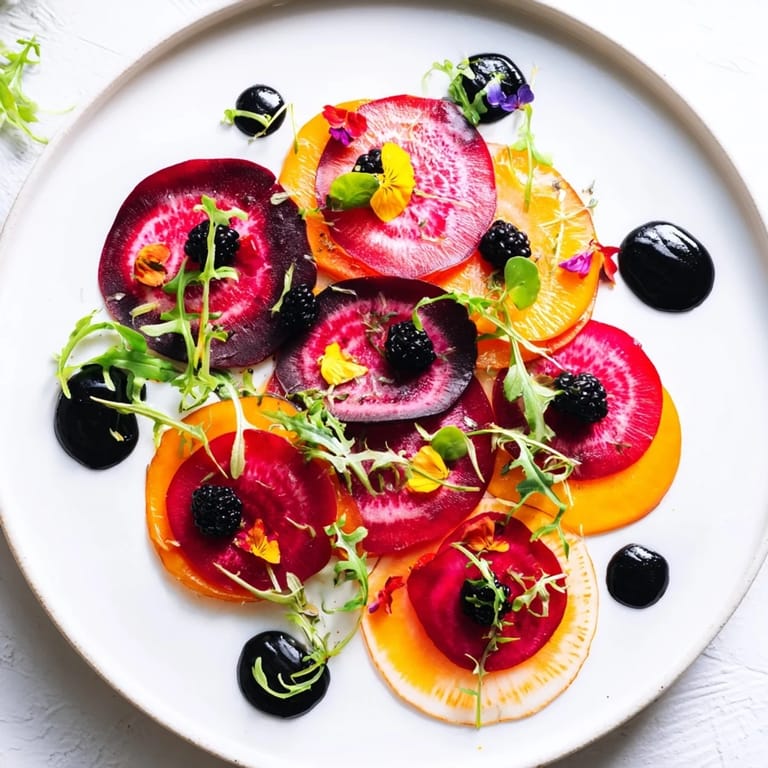
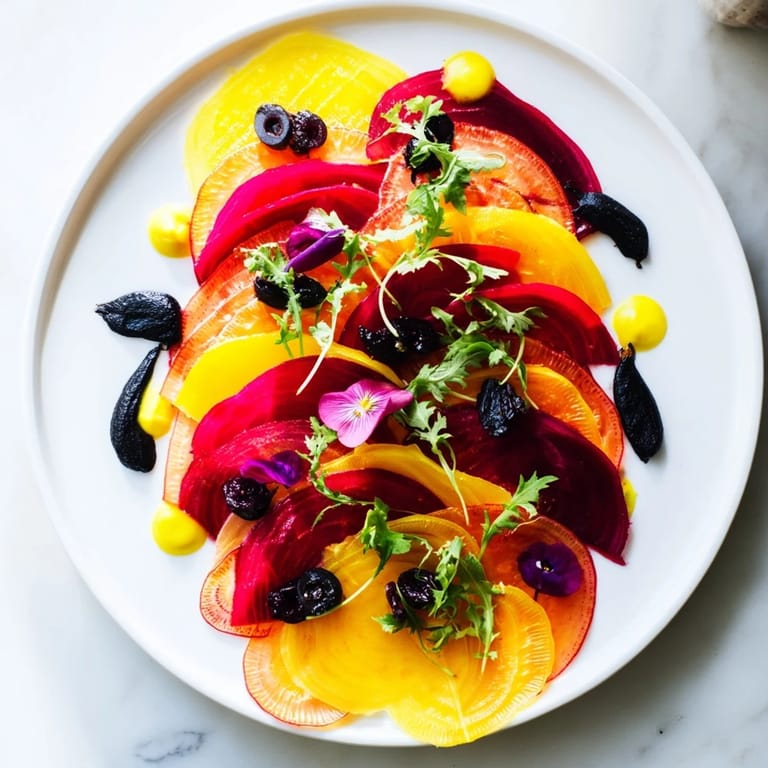
Save I discovered this dish by accident while reorganizing my spice cabinet and finding a container of black tahini I'd forgotten about. The stark contrast between its deep, almost inky color and the bright vegetables in my crisper drawer sparked something—what if I treated the plate like a canvas, using darkness and light intentionally? That evening, I arranged beets and radishes with deliberate care, letting shadows become part of the design rather than something to avoid. It felt like painting with food, and the result was so striking that I've been making it ever since.
I made this for a dinner party where someone had just started photography as a hobby. She spent the first ten minutes taking pictures of the plate from every angle before eating it, and I realized that's exactly what this dish deserves—it's meant to be admired before it's tasted. That moment taught me that food can be art first, and the eating part becomes even better because you've already fallen for it visually.
Ingredients
- Golden beet: Use a mandoline for paper-thin slices that catch light beautifully; they taste sweeter than red beets and provide brightness to the composition.
- Red beet: Earthier than golden, these create deeper tones in your shadow play and stain your fingers less than you'd expect.
- Baby arugula: Peppery and delicate, it should be added just before serving so the leaves stay perky and don't wilt into the dressing.
- Watermelon radish: The moment you slice into one, those hot-pink concentric circles reveal themselves—this is your showstopper ingredient, so don't bury it.
- Blackberries: Tart-sweet and nearly black, they function as both flavor and visual anchor; taste one first to make sure they're ripe enough to sing.
- Black olives: Use good ones if you can find them; cheap olives taste like brine, but quality ones add a briny sophistication that grounds the sweetness.
- Black tahini: If you can't find it, regular tahini works fine, but you lose that visual drama; squid ink added to regular tahini gives you the color without changing the flavor.
- Extra virgin olive oil: This isn't the time to use grocery store oil; a floral, peppery one makes the whole dressing sing.
- Lemon juice: Fresh squeezed, always—bottled tastes tinny against the delicate vegetables.
- Honey: A teaspoon is all you need to balance the acid and earthiness; it's barely noticeable but makes everything taste rounder.
- Microgreens: These add final texture and color dimension; purple radish or micro basil complement the dish without overwhelming it.
Tired of Takeout? 🥡
Get 10 meals you can make faster than delivery arrives. Seriously.
One email. No spam. Unsubscribe anytime.
Instructions
- Slice your beets paper-thin:
- Use a mandoline if you have one, or a very sharp knife and patience. Aim for translucent enough that you can almost see light through them when you hold a slice up to a window.
- Build your foundation:
- On a large white plate or platter, layer the golden and red beet slices in a semi-overlapping pattern, alternating colors so the eye travels across the plate. Think of it like shingles on a roof, each one slightly covering the one before.
- Add the brightness:
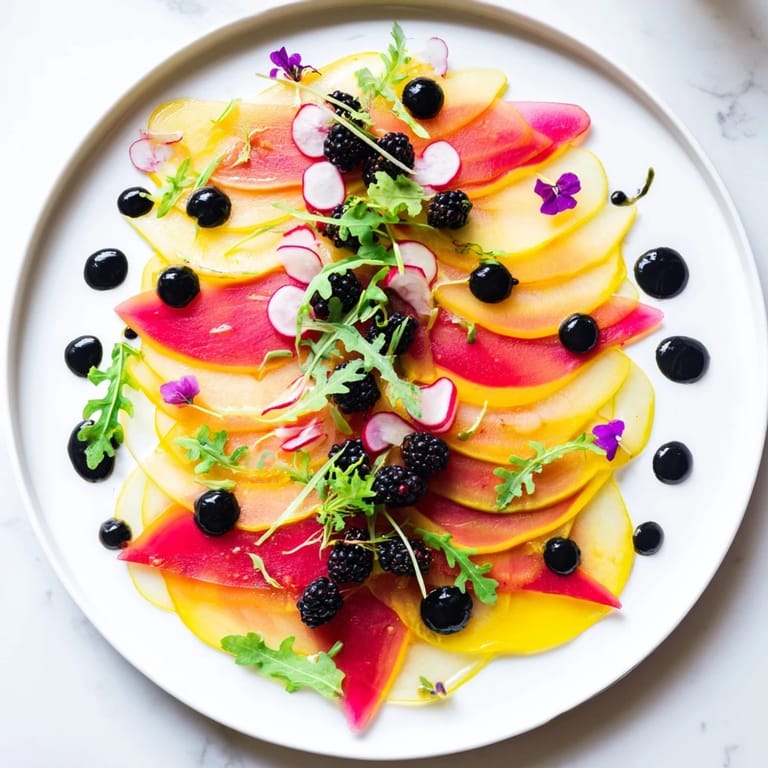
- Fan your watermelon radish slices over the beets in a scattered pattern—this is where the hidden pink surprise lives. Scatter baby arugula on top, leaving some gaps so you can still see the layers underneath.
- Create the shadows:
- This is the moment where you become intentional about placement. Nestle blackberries and black olives in the spaces between bright ingredients, positioning them so they appear to sit slightly behind or under the more vibrant elements. The goal is to create the illusion of depth.
- Make your dressing:
- Whisk together your olive oil, lemon juice, honey, salt, and pepper in a small bowl. Taste it—the lemon should be bright but not aggressive, and you should feel a whisper of sweetness beneath the acid.
- Add the dark tahini:
- Spoon small dollops of black tahini around the plate in a rhythmic pattern. Using the back of your spoon, smear each dollop slightly so it creates an intentional shadow effect rather than looking like an accident.
- Drizzle the dressing:
- Pour your dressing evenly over everything, letting it pool slightly in the beet layers. Don't oversaturate—you want the vegetables to maintain their crisp texture for as long as possible.
- Top with microgreens and flowers:
- A light scatter of microgreens adds that final touch of sophistication and texture. Edible flowers are optional but they do add an extra layer of visual interest if you have them.
- Serve immediately:
- This dish is best eaten within a few minutes of assembly, while everything is still crisp and the colors haven't begun to bleed into each other. That's part of its charm—it's meant to be a moment, not leftovers.
 Save
Save Someone once told me that food should nourish both the belly and the soul, and this dish does exactly that. When the plate arrived at the table and everyone stopped talking for a moment to just look at it, I understood why presentation matters—it's not vanity, it's respect for the ingredients and the people eating them.
The Art of Contrast
This dish is fundamentally about visual conversation—every bright element needs a dark one to make it sing. The golden beets become more luminous when surrounded by black olives, and the blackberries taste more tart when you eat them alongside the sweet arugula. I've learned that this principle applies to almost every plate: if everything is the same color or intensity, nothing really stands out. By intentionally creating shadows, you're actually amplifying the brightness of everything else.
Timing and Temperature
Raw vegetables have a window where they're at their best—crisp but never cold, fresh but not aggressively icy. I used to refrigerate my beets before plating and wondered why the flavors felt muted. Now I let them sit at room temperature for about five minutes before assembling the plate, and the earthiness comes forward. The dressing should also be at room temperature so the oil coats the vegetables properly rather than congealing into little beads.
Making It Your Own
The beauty of this dish is that it's a framework, not a formula. If you can't find watermelon radish, use thinly sliced purple carrots or candy-striped beets. If blackberries aren't available, pomegranate seeds or even dark purple grapes work beautifully. The point is the principle: bright and dark, earth and air, sweet and savory all working together.
- Try adding crispy chickpeas or toasted seeds for texture if you want to make this more substantial.
- A drizzle of aged balsamic adds another layer of dark elegance if you want to amp up the sophistication.
- Pair this with a very cold Sauvignon Blanc or an earthy Pinot Noir, or keep it alcohol-free with sparkling water and a squeeze of lemon.
 Save
Save This dish reminds me that cooking doesn't always have to be complicated to be impressive. Sometimes the most memorable meals come from paying attention to what's already beautiful and letting it shine.
Common Questions
- → How do I achieve the thin slices of beets?
Use a mandoline slicer or a very sharp knife to slice the beets paper-thin for even layering and visual appeal.
- → Can I substitute honey in the dressing?
Yes, agave syrup works well as a vegan alternative without altering the balance of flavors.
- → What creates the shadow effect in this dish?
Strategic placement of blackberries, black olives, and black tahini adds dark contrasts behind bright vegetables, forming artistic silhouettes.
- → Are there any allergen considerations?
This dish contains sesame from tahini and may have pits if olives are not fully pitted; check ingredients carefully if sensitive.
- → What wines pair well with this starter?
Light, crisp wines like Sauvignon Blanc or earthy Pinot Noir complement the fresh and layered flavors beautifully.