 Save
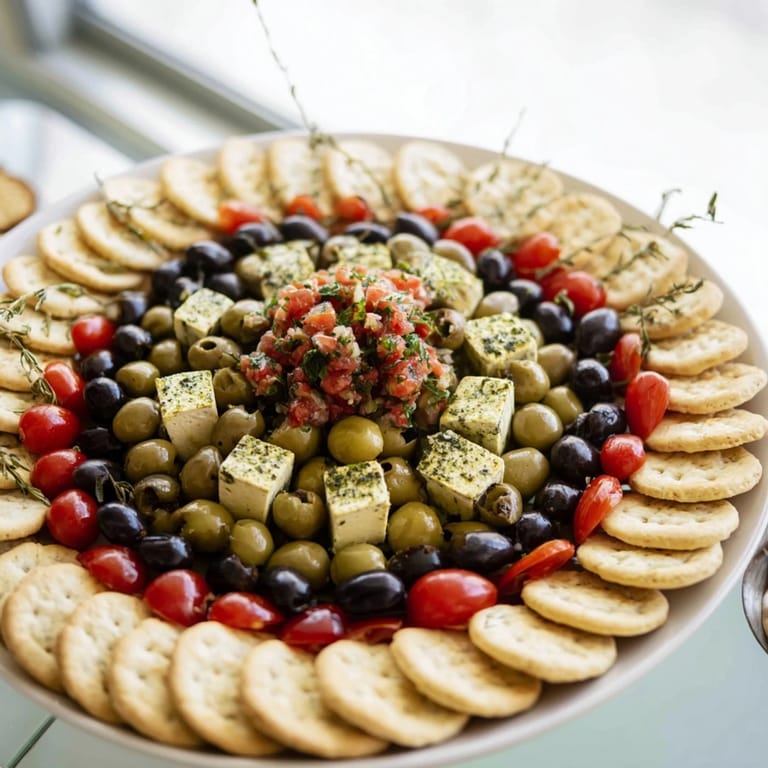
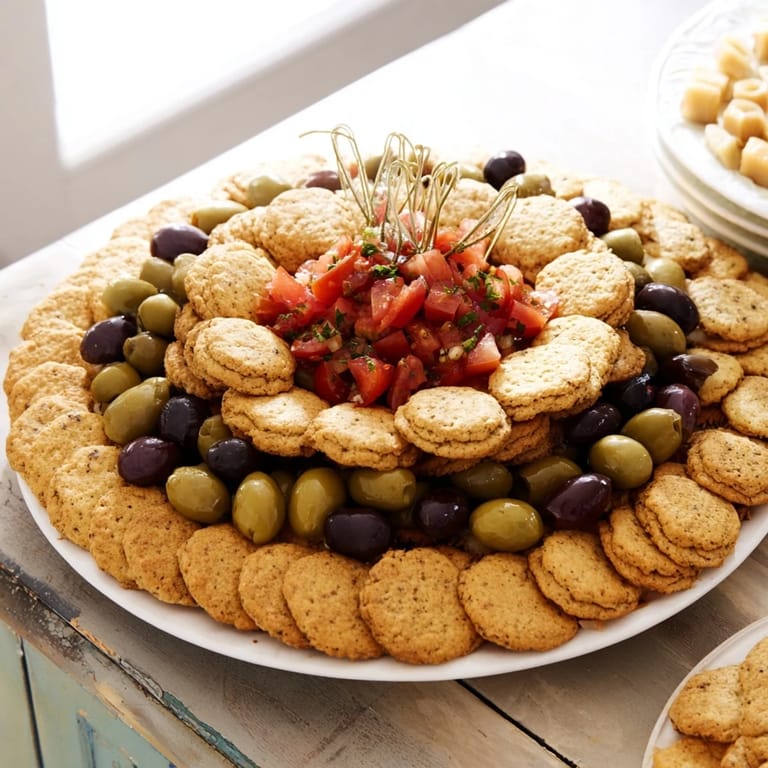
Save There's something magical about building food architecture at a dinner party, and this platter happened by accident one evening when I was running late and needed something impressive fast. I had a round board, some crackers, and a jar of mixed olives, and as I started arranging them, my guest leaned over and said, 'This looks like the Colosseum,' and suddenly the whole thing clicked into place. What started as a desperate scramble turned into this playful centerpiece that became the conversation starter before anyone even tasted it.
I've made this at least a dozen times now, mostly for gatherings where I want something that doesn't require last-minute reheating or plating. One friend actually asked if I'd studied food styling because she was so convinced this was complicated, and when I told her it was literally just crackers and olives arranged in circles, she laughed and asked why every appetizer couldn't be this simple.
Ingredients
- Round or oval crackers (100–120 g, about 40–50 pieces): These are your arena walls, so pick something sturdy enough to hold toppings without crumbling, but thin enough to actually enjoy eating; I've learned that slightly thicker crackers photograph better and stay crisp longer than ultra-thin ones.
- Mixed olives (1 cup, about 150 g, pitted): The pitting saves your guests from awkward olive-pit moments mid-conversation; I prefer a mix of green and black for color contrast, and buying them pre-pitted from a good deli counter is absolutely worth it.
- Fresh parsley, finely chopped (2 tbsp, optional): This bright garnish adds a pop of green that photographs beautifully and gives the platter a finished, intentional look.
- Extra virgin olive oil (1 tbsp, optional): A light drizzle over the olives makes everything look glossy and intentional, plus it brings out their flavor in a way that feels fancy but took zero extra effort.
- Aged provolone or mozzarella, cubed (50 g, optional): These add creaminess and salt that balance the olives perfectly; aged provolone especially gives you a sharper bite that feels more grown-up than mild cheese.
- Cherry tomatoes, halved (50 g, optional): They add acid and brightness, plus the red and green colors make the whole platter feel more intentional and carefully composed.
Tired of Takeout? 🥡
Get 10 meals you can make faster than delivery arrives. Seriously.
One email. No spam. Unsubscribe anytime.
Instructions
- Set your stage:
- Find your largest round platter or board—this is your canvas, and size matters because cramped arrangements lose the Colosseum drama. If you don't have anything round, square works fine; the concept translates anywhere.
- Build the arena walls:
- Stand your crackers upright around the edge of the platter in concentric circles, slightly overlapping them like they're tiered seating; this takes maybe three minutes once you get into a rhythm, and the overlapping pattern is what makes it look intentional rather than random. If you have room, do two or three layers going inward—each layer makes the effect more dramatic.
- Crown the center:
- Pile your olives in the middle where all those cracker circles point toward, creating a mound that looks deliberate and ceremonial. This is where the gladiators make their stand.
- Add your supporting cast:
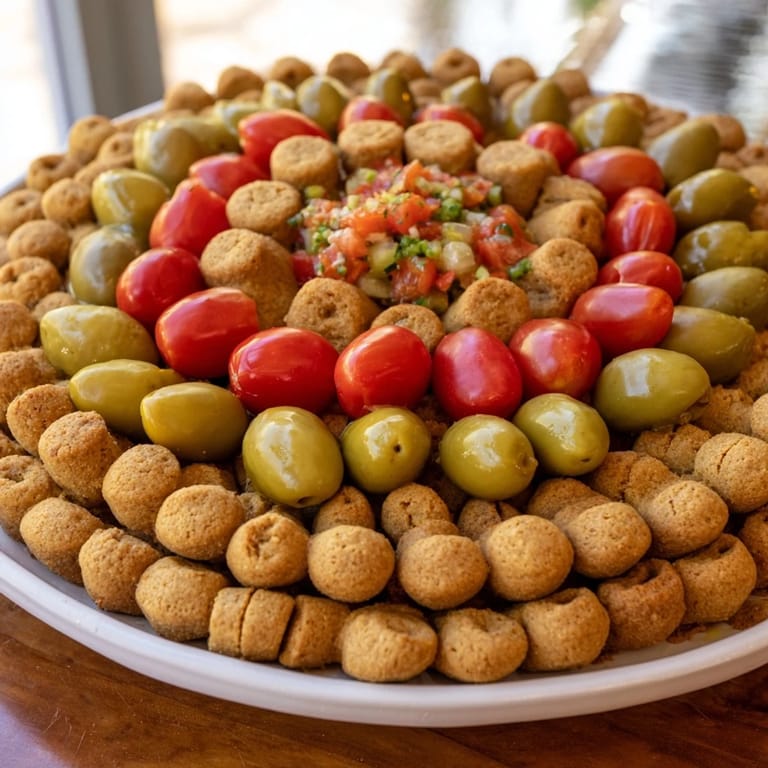
- Scatter cheese cubes and tomato halves around the olive center if you're using them; their job is to fill gaps and add color without overwhelming the main event. Think of them as the supporting characters that make the lead look even better.
- Finish with flourish:
- Sprinkle parsley over the top for green flecks, and drizzle a thin stream of olive oil that catches the light; this is the moment where it stops looking like snacks on a board and starts looking intentional. Serve immediately while crackers are still crisp.
 Save
Save The moment that made me love this recipe wasn't when I made it perfectly, but when my five-year-old nephew picked up a cracker, pointed at the olive mound, and said 'The gladiators are losing,' and suddenly my adult dinner party was explaining ancient Roman combat logistics through snack food. That's when I realized this platter isn't really about the food at all—it's about giving people permission to play with their appetizers.
Making It Your Own
Once you get comfortable with the basic structure, this platter becomes a canvas for whatever you have in your kitchen. I've done it with breadsticks instead of crackers when I was out of them, and it actually worked beautifully because the height variation made the layers even more visible. Crostini work too if you want something sturdier, though you lose some of the delicate crispness that makes round crackers special. The point isn't the exact ingredients—it's the circular architecture and the playful tension between the walls and the center.
Flavor Combinations That Work
The olive-and-cracker combination is perfect on its own, but I've learned that different additions create completely different moods. Roasted red peppers bring sweetness and smokiness; tiny mozzarella balls stay creamy and neutral; marinated artichoke hearts add tang and texture; sun-dried tomatoes bring concentrated umami. The beauty is that you're not changing the structure at all—just swapping what lands between the cracker walls and the olive center. Every version feels like a variation on a theme rather than a completely different dish.
Serving Strategy and Last-Minute Thoughts
Put this out before your guests sit down if you can, because the conversation-starting moment only works when people are still wandering and discovering it. Have small plates nearby so people have somewhere to put their assembled bites, and keep toothpicks in a little holder next to the platter so reaching for olives feels intentional rather than chaotic. The interactive element is the whole point—this isn't meant to be neat; it's meant to be explored.
- Make sure your board is clean and interesting enough to be part of the presentation, because everything is visible.
- If you're worried about crackers getting stale, assemble just before guests arrive and keep the back-up crackers in a sealed container.
- This recipe scales beautifully—use the same proportions but a bigger board for larger crowds, and the effect only gets better.
 Save
Save This recipe taught me that sometimes the most impressive appetizers aren't complicated—they're just clever. When you hand your guests permission to build, play, and taste however they want, that's when snacks stop being side dishes and become the main event.
Common Questions
- → What type of crackers work best for this platter?
Choose round or oval crackers that can be arranged upright or slightly overlapping. Options like crostini or breadsticks can add variety.
- → Can this platter accommodate dietary restrictions?
Yes, use gluten-free crackers for gluten intolerance and omit or substitute cheese for vegan preferences.
- → How should olives be prepared for the platter?
Use pitted mixed olives, both green and black, placed in a central mound to mimic gladiators in the arena.
- → Are there any suggested accompaniments?
Adding cubed aged provolone or mozzarella cheese and halved cherry tomatoes enhances color and taste.
- → What serving tools are recommended?
Use small bowls for olives and tongs or toothpicks for easy, hygienic serving.
- → Can this platter be prepared in advance?
For best freshness, assemble shortly before serving to maintain cracker crispness and olive quality.