 Save
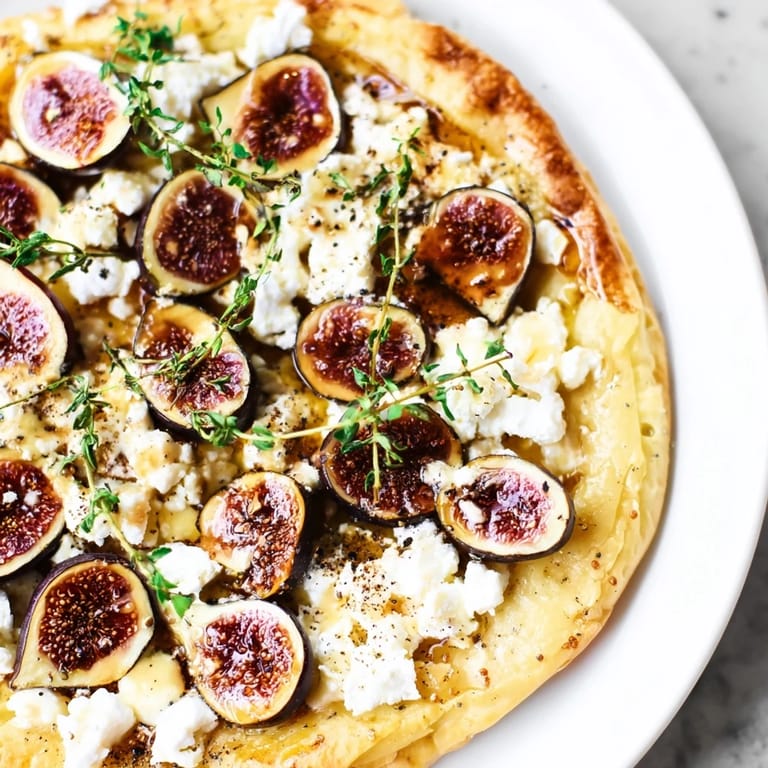
Save The first time I made this, I was trying to impress someone who insisted they didn't really "do" appetizers. I had a sheet of thawed puff pastry sitting on my counter, a handful of figs that were at their peak ripeness, and a small bottle of truffle oil I'd been saving for something special. Twenty minutes later, watching them take that first bite and close their eyes—that's when I realized this simple combination was pure magic.
I made this for a dinner party on a September evening when my garden was overflowing and I was desperately trying to use up figs before they spoiled. My friend brought wine, and we ended up sitting on the kitchen counter eating warm slices straight off the baking sheet, talking about everything except the food—but we kept reaching for more. That's when I knew this recipe was a keeper.
Ingredients
- Puff pastry sheet (approx. 250 g): Thaw it completely before using—cold pastry won't puff properly, and you'll miss that glorious flaky texture that makes this dish sing.
- Fresh figs (4–5): Look for ones that are soft but not split; they should have a slight give when you press them gently with your thumb.
- Goat cheese (120 g): The tanginess cuts through the sweetness beautifully, but don't over-mix it when crumbling—rustic chunks taste better than a smooth spread.
- Truffle oil (1 tbsp before baking, 1 tbsp after): This is your secret weapon; use a good quality one because it's doing most of the flavor work.
- Honey (2 tbsp): The final drizzle while everything's still warm makes it seep into the warm pastry and cheese—it's essential for that sweet-savory balance.
- Fresh thyme (1 tbsp): Optional but worth having on hand; it adds an earthy note that grounds all the richness.
- Olive oil (1 tbsp): A light brush prevents sticking and helps the pastry brown evenly.
- Sea salt and black pepper: Taste as you season—with something this delicate, you want restraint.
Tired of Takeout? 🥡
Get 10 meals you can make faster than delivery arrives. Seriously.
One email. No spam. Unsubscribe anytime.
Instructions
- Get the oven ready and prepare your space:
- Preheat your oven to 200°C (400°F) and line a baking sheet with parchment paper while you gather everything. This prevents last-minute scrambling and gives your pastry a head start on crisping.
- Lay out the pastry and score the border:
- Unroll the thawed puff pastry directly onto the prepared sheet and use a sharp knife to lightly score a 1 cm border all around the edges—don't cut through, just mark it so it puffs up differently. This creates a natural frame that keeps toppings contained.
- Brush and build your base:
- Give the interior (not the border) a light brush of olive oil, then arrange your fig slices evenly across the surface, leaving that border bare. The oil helps everything brown and prevents sogginess.
- Add the cheese and aromatics:
- Scatter the crumbled goat cheese over the figs and sprinkle thyme leaves if using. You want texture variation, so don't spread things too uniformly.
- Season before baking:
- Drizzle half the truffle oil over the toppings and season lightly with sea salt and pepper. The other half of the oil goes on after baking when everything's still warm and receptive.
- Bake until golden:
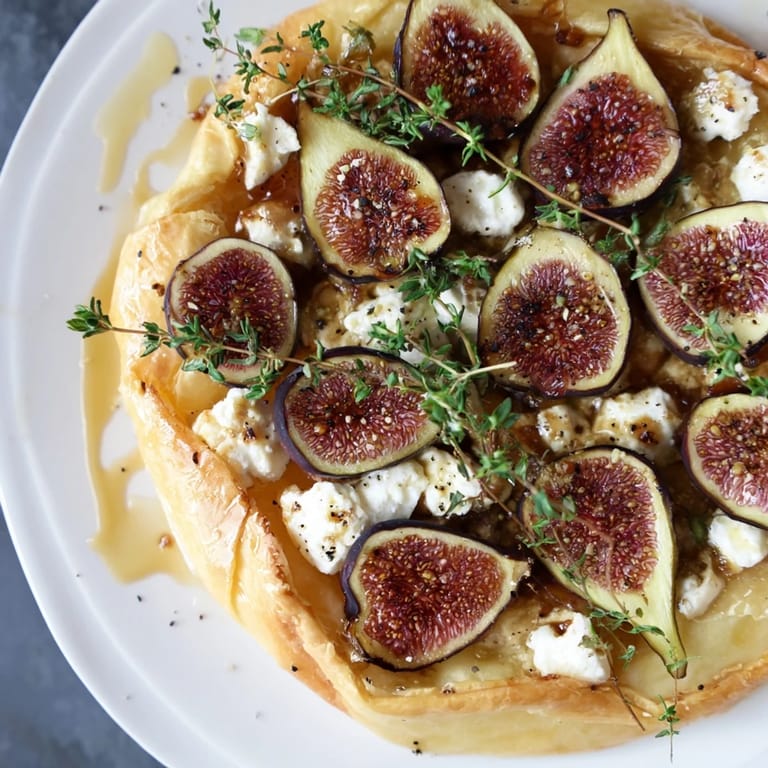
- Slide into the oven for 18–20 minutes—you're watching for the pastry to puff and turn deep golden while the figs begin to caramelize slightly at the edges. The kitchen will smell unreal.
- Finish while warm:
- The moment it comes out, drizzle with the remaining truffle oil and the honey while everything's still warm. This is non-negotiable; the heat helps the honey and oil sink into all the right places.
- Slice and serve immediately:
- Cut into squares or rectangles while the pastry's still crispy and serve right away, because the longer it sits, the more steam makes it soft.
 Save
Save What got me about this recipe was how something so simple made people feel genuinely cared for. It's the kind of thing that looks effortless but tastes indulgent, which means your guests feel special without you having to spend your whole day cooking.
Why This Works as an Appetizer
The beauty of puff pastry is that it does the heavy lifting texture-wise—you get that satisfying crispness and lift without any real technique. Pair that with ingredients that are inherently elegant (figs, goat cheese, truffle oil), and suddenly you've got something that looks like it belongs on a restaurant menu. The sweetness of the honey and figs prevents the dish from feeling too heavy, while the sharp goat cheese keeps it from becoming cloying. It's a perfect bite-sized moment of flavor.
Playing with Variations
I've tried swapping out the figs for caramelized onions when figs weren't in season, and it was just as good—different but equally satisfying. Blue cheese instead of goat cheese leans into savory, which works if you're serving something heavier afterward. Some people add crispy prosciutto or walnuts for texture, and while that changes the feel of the dish, it's never wrong. The framework here is flexible enough that you can play with it based on what you have and who you're feeding.
Wine Pairing and Serving Thoughts
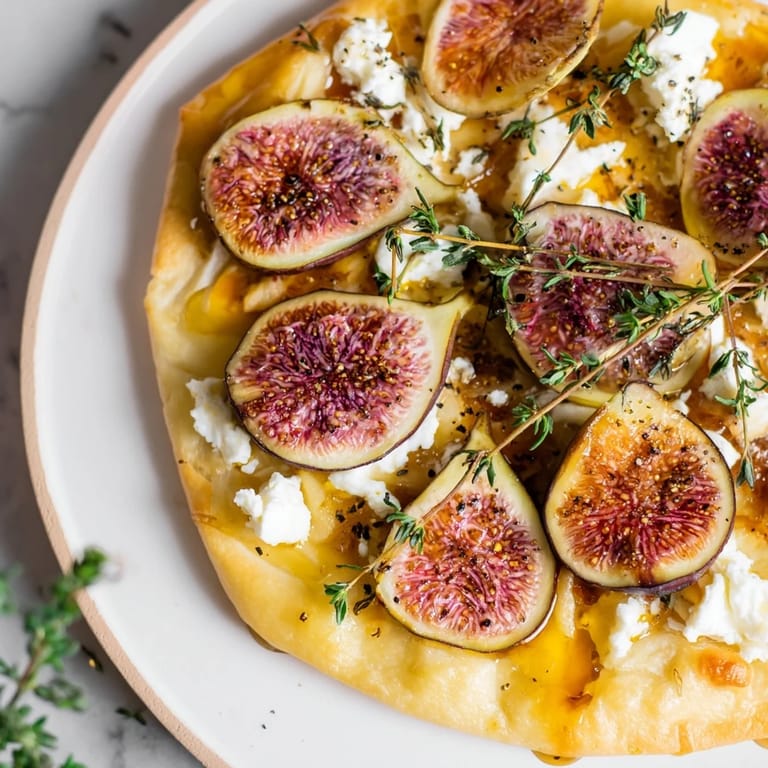
A crisp Sauvignon Blanc is the obvious choice because the acidity cuts through the richness beautifully, but a good sparkling wine works too—there's something about the bubbles that makes it feel celebratory. I've also paired this with a very light red wine, which surprised me but worked because the fruit in the wine played off the figs. Serve these warm if you can; that's when the honey's still liquid and the cheese hasn't firmed up again.
- Make these up to two hours ahead and rewarm gently in a 160°C oven for five minutes if they've cooled.
- If you're preparing for a crowd, assemble everything before baking and pop multiple sheets in the oven staggered by a few minutes.
- Leftovers are never really a problem because people always eat them cold the next day straight from the fridge—they're still good, just different.
 Save
Save This is the kind of recipe that bridges the gap between weeknight easy and genuinely impressive, which means you'll make it again and again. Whether you're entertaining or just want something special for yourself, it delivers every time.
Common Questions
- → What is the best way to make puff pastry crispier?
Ensure the puff pastry is cold before baking and use a hot oven (around 200°C). Scoring a border prevents toppings from making the edges soggy, helping the pastry puff up nicely.
- → Can I substitute goat cheese with another cheese?
Yes, blue cheese works well for a bolder flavor or cream cheese for a milder taste, depending on your preference.
- → How does truffle oil enhance the dish?
Truffle oil adds a rich, earthy aroma and flavor that complements the sweetness of figs and the tanginess of goat cheese, creating a sophisticated taste profile.
- → Is fresh thyme necessary for this dish?
Thyme is optional but adds a subtle herbal note that brightens the flavors without overpowering the other ingredients.
- → What wine pairs well with the puff pastry and toppings?
A crisp Sauvignon Blanc or sparkling wine balances the rich, creamy, and sweet elements perfectly.