 Save
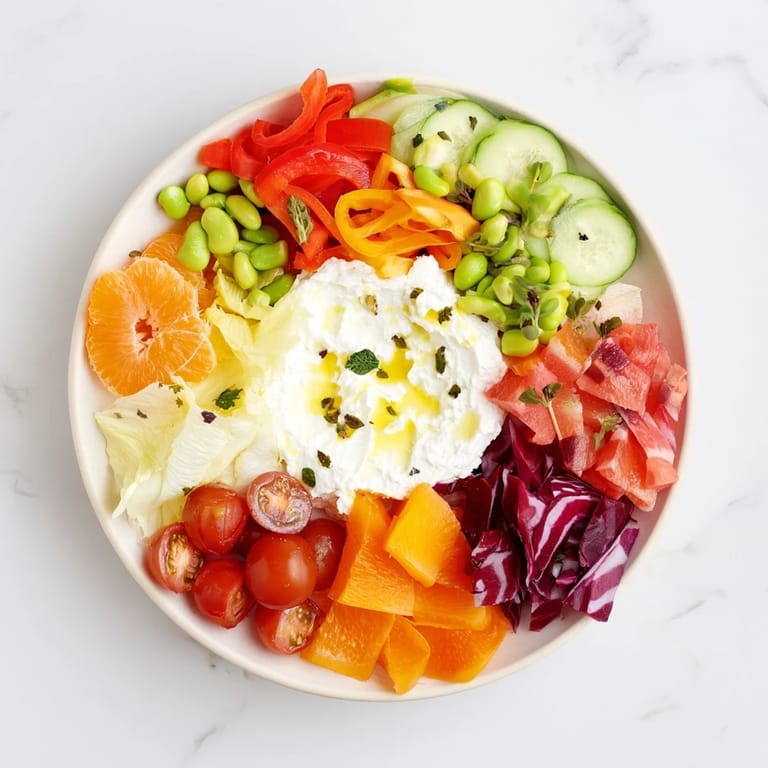
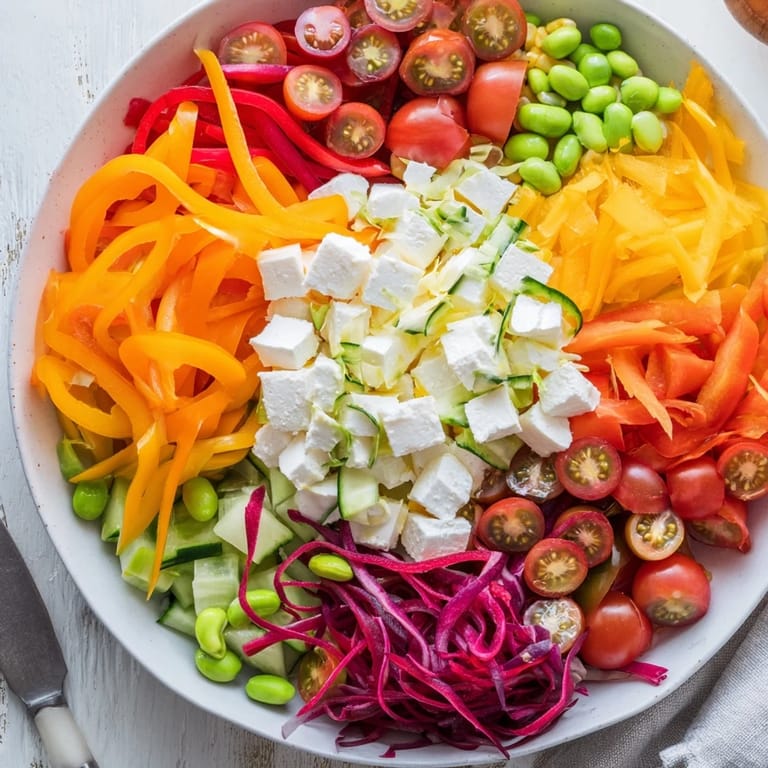
Save I discovered this salad by accident on a rainy afternoon when my daughter insisted we make something "look like a rainbow." I had a block of ricotta sitting in the fridge and suddenly remembered how my grandmother would arrange vegetables by color on platters, always saying the eye eats first. That simple idea spiraled into this stunning prism of flavors—something that turns a simple lunch into a small celebration just by the way it looks on the table.
The first time I made this for guests, a friend asked if it was "too pretty to eat." I watched her take the first bite, her fork cutting through the crisp vegetables into that creamy ricotta center, and she just closed her eyes for a moment. That's when I realized this dish works because it bridges the gap between visual art and genuine, uncomplicated nourishment.
Ingredients
- Ricotta cheese: The creamy white heart of this dish—use whole milk ricotta if you can find it, as it has better body and richness than the whipped versions.
- Extra-virgin olive oil: Quality matters here since it's one of the few background flavors holding everything together.
- Lemon zest: A teaspoon is enough to brighten the ricotta without making it taste like juice.
- Cherry tomatoes: Halve them so they nestle nicely in the arrangement and show off their juicy centers.
- Bell peppers (red, orange, yellow): Slice them thin enough to arrange easily, but thick enough to stay crisp through serving.
- Cucumber: Cut it thin and pat it dry so moisture doesn't seep into the other colors.
- Blueberries: These are your true blue layer—use fresh ones at peak season.
- Red grapes: Halved, they create that violet edge between blue and red when arranged close together.
- Corn and edamame: Both add little bursts of sweetness that balance the fresh vegetables.
- Purple cabbage: Shred it finely to fill gaps and deepen the blue layer.
Tired of Takeout? 🥡
Get 10 meals you can make faster than delivery arrives. Seriously.
One email. No spam. Unsubscribe anytime.
Instructions
- Build your white center:
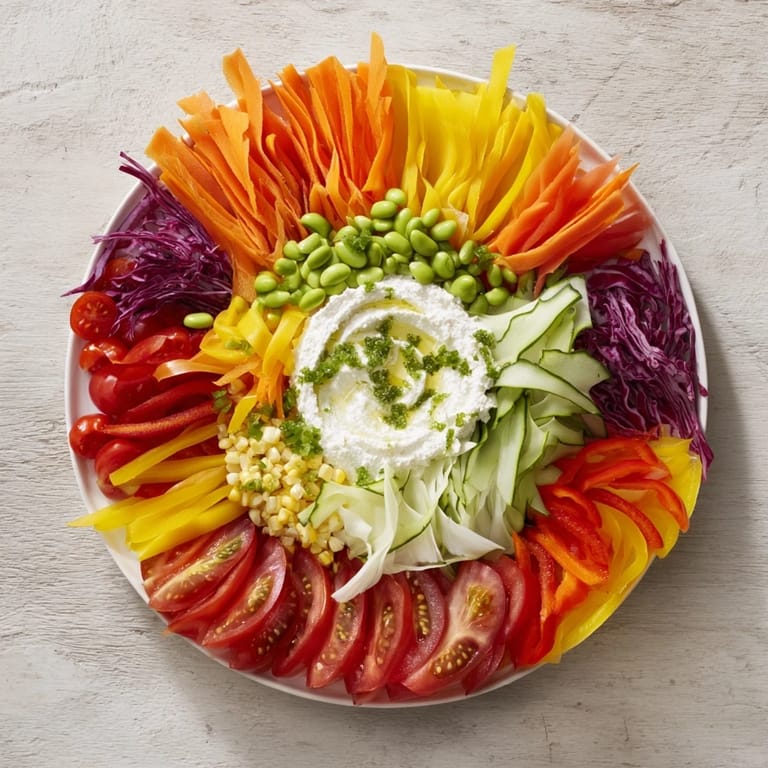
- Mix ricotta with olive oil, lemon zest, salt, and pepper until smooth and spreadable. Spoon it onto the center of your platter and gently swirl it into a circle about the size of your fist—this is your anchor point for everything radiating outward.
- Prep your color groups:
- Arrange each color layer in its own small bowl so you can grab and place them without hesitation. This keeps your arrangement crisp and your focus sharp.
- Fan out from the center:
- Starting with red, place vegetable slices or pieces in a gentle arc, letting each piece slightly overlap the next. Move outward in rainbow order—red, orange, yellow, green, blue, violet—letting the colors naturally separate as they radiate from the white center.
- Keep colors distinct:
- Use your fingers or the back of a small spoon to maintain clean lines between color groups. This is meditative work, and the precision is part of what makes it special.
- Make your dressing:
- Whisk together olive oil, lemon juice, honey, salt, and pepper just before serving. A touch of honey rounds out the acidity without making it sweet.
- Finish and serve:
- Drizzle dressing lightly or serve it on the side so people can control how much they use. Scatter fresh herbs and black pepper across the top as a final flourish, then bring it to the table while everything is still at its crispest.
 Save
Save My partner brought this to a potluck and someone actually gasped when they saw it come out of the car. It became the conversation starter before anyone even tasted it, and somehow that made the meal feel less like food and more like a moment we were all sharing together.
The Art of Color Arrangement
This salad teaches you something about how food moves through our senses. We taste with our eyes first, and that matters more than we typically admit when cooking at home. Once you see how dramatically presentation shifts the entire eating experience, you start thinking differently about what you put on a plate—even simple dishes begin to feel intentional and celebratory.
Variations and Personal Touches
The beauty of a structured salad like this is that it stays visually coherent while being completely flexible with what you actually have in your kitchen. I've swapped roasted beets for grapes when I had them, used microgreens for the green layer, and once replaced ricotta with a whipped goat cheese when a guest mentioned dairy sensitivity. Each version worked because the color logic stayed intact, even as the flavors shifted.
Pairing and Serving Ideas
Serve this at room temperature or slightly chilled, never straight from the fridge where it loses its character. A crisp white wine like Sauvignon Blanc cuts through the richness of the ricotta beautifully, while the fresh vegetables keep the whole experience feeling light. Think of it as an opening act that sets the mood for whatever comes next—it's generous enough to be a main course, elegant enough to start a meal, and simple enough to make on a Tuesday night when you want the ordinary to feel special.
- Toast pumpkin or sunflower seeds and scatter them across the top for an unexpected crunch.
- Add edible flowers in colors that complement your prism layers for extra sophistication.
- Serve the dressing on the side so guests can drizzle as much or as little as they prefer.
 Save
Save This salad reminds me that sometimes the most satisfying meals are the ones that feel like small acts of care—not complicated, but intentional. Make it when you want to slow down a little.
Common Questions
- → What makes the base of the Prism Burst salad unique?
The base is a creamy mixture of ricotta cheese combined with olive oil, lemon zest, salt, and pepper, providing a smooth, rich contrast to the fresh layers above.
- → Can this dish be prepared ahead of time?
Yes, components like the base and the vegetable slices can be prepared in advance, but arranging the layers is best done just before serving to maintain freshness and vibrant colors.
- → Are there alternative dressings suitable for this salad?
A simple vinaigrette with lemon juice, olive oil, and a touch of honey enhances the flavors, but fresh herb dressings or light citrus-based dressings also complement the layers well.
- → How can the salad be adapted for vegan diets?
Substitute the ricotta with vegan cream cheese or a thick plant-based yogurt to keep the creamy texture while ensuring it remains plant-based.
- → What is the best way to serve this multi-layered salad?
Arrange the colorful vegetable and fruit layers in a fan shape radiating from the creamy base on a large serving platter to showcase the prism-like visual effect.
- → Can additional textures be added to the salad?
Toasted nuts or seeds such as pumpkin seeds or pine nuts can add crunch and complexity, enhancing both texture and flavor.