 Save
Save I discovered this platter concept at a friend's dinner party where the table seemed to glow under soft lighting—not from candles, but from the purple and grey tones of the cheeses themselves. She'd arranged everything with such intentionality that I found myself pausing between bites, just looking at it. The lavender-coated goat cheese caught my eye first, then the ash-rinded brie, and I realized I'd been thinking about cheese boards all wrong. They didn't have to be about abundance; they could be about mood and color and the story each element told.
The first time I made this for my sister's book club, I was terrified the edible flowers would seem pretentious. Instead, someone held up a pansy-garnished bite and said it tasted like sophistication smelled—which is ridiculous and perfect, and now I make this whenever I want to mark a moment as special without announcing it.
Ingredients
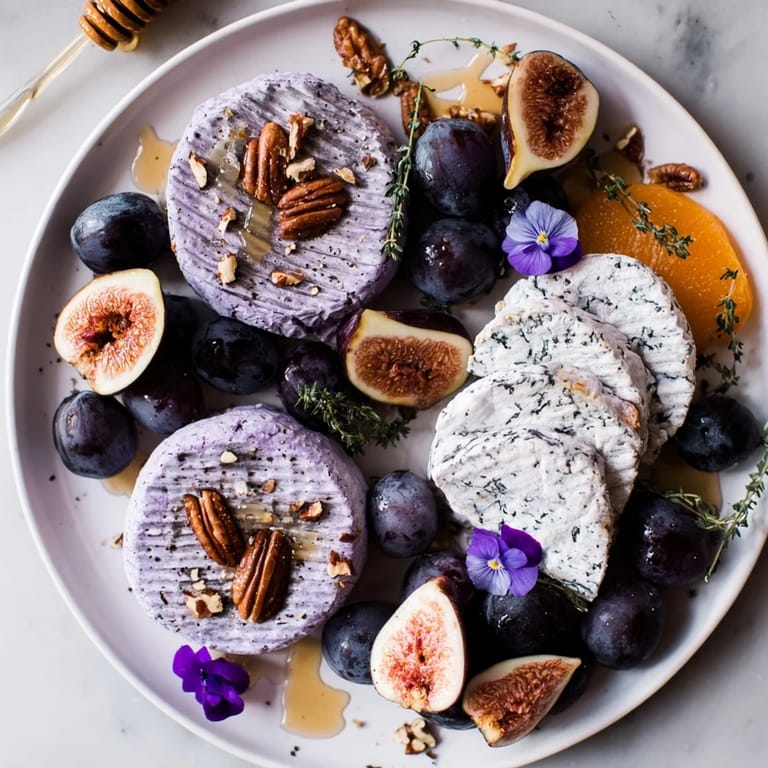
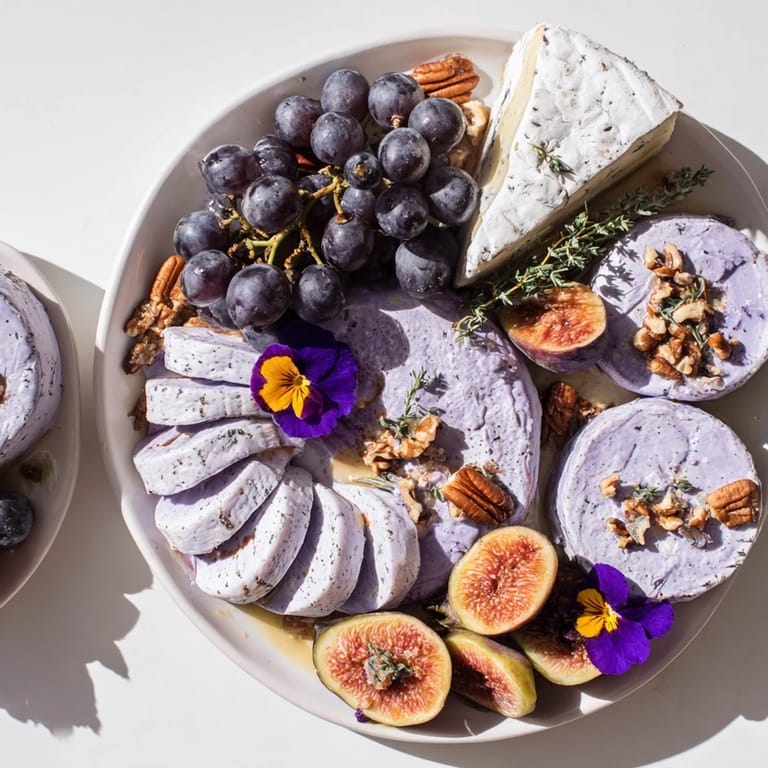
- Lavender-coated goat cheese, 150 g: This is your star—the coating provides earthiness that balances the bright tang of the cheese itself, and slicing it into rounds makes each bite look intentional.
- Ash-rinded brie, 200 g: The soft grey exterior is what gives this board its visual identity, and the creamy interior becomes silkier as it sits at room temperature.
- Red or black grapes, 1 cup: Halving them prevents rolling and makes them easier to eat with one hand, which matters more than you'd think when people are standing and chatting.
- Fresh figs, 1/2 cup: Quartered figs create little jewels of sweetness that pair beautifully with both cheeses; use dried figs only if fresh ones aren't available, though the texture will be more chewy than plump.
- Candied walnuts or pecans, 1/4 cup: These add crunch and a hint of sweetness that bridges the gap between fruit and cheese, so don't skip them.
- Lavender honey, 2 tbsp: This ties the whole flavor story together and should be drizzled sparingly so it pools slightly on the board, inviting people to discover it.
- Edible flowers such as violets or pansies, 1/2 cup: Source these from a reliable supplier or grow them yourself so you know they're food-safe; they're not just decoration, they're flavor.
- Fresh thyme sprigs: These add an herbal whisper that makes the board smell as good as it looks.
- Baguette or gluten-free crackers: Toast the baguette slices lightly so they're sturdy enough to hold cheese without cracking, but not so dark they overpower the delicate flavors.
- Charcoal or black sesame crackers: These create visual contrast and add a subtle nutty undertone that complements the floral notes.
Tired of Takeout? 🥡
Get 10 meals you can make faster than delivery arrives. Seriously.
One email. No spam. Unsubscribe anytime.
Instructions
- Begin with the cheeses:
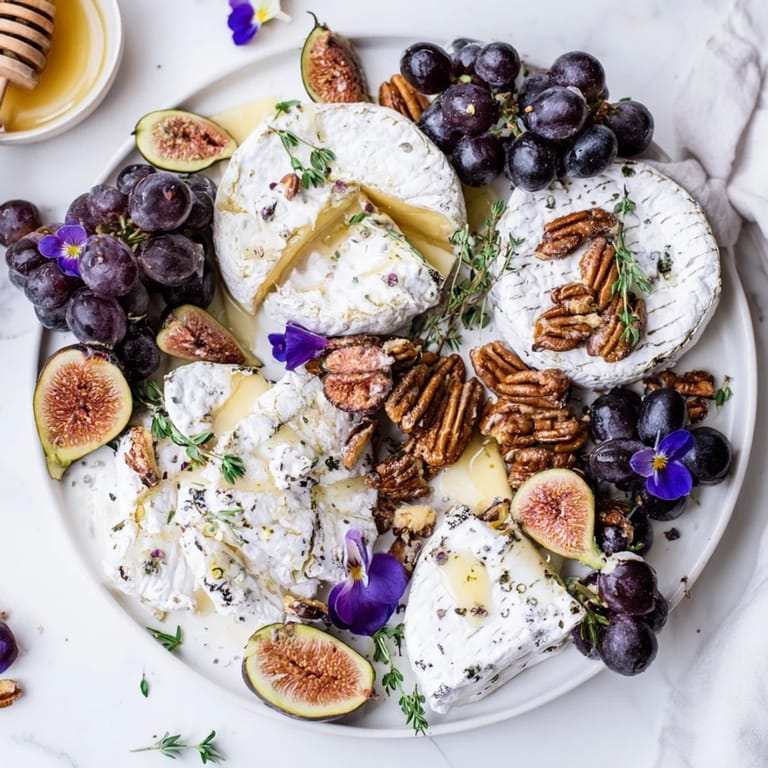
- Place your lavender-coated goat cheese and ash-rinded brie on the board first, leaving plenty of breathing room between them so the eye can rest on each one separately before moving to the next. Think of them as two focal points rather than one crowded arrangement.
- Build clusters of fruit:
- Arrange grapes and fig quarters in small groups between and around the cheeses; this creates natural pathways for the eye and makes it obvious where people should reach first. The clusters should feel abundant but not chaotic.
- Add textural contrast:
- Scatter the candied walnuts or pecans across the board in the gaps, letting a few drift near the cheeses and a few near the fruit so every bite someone constructs has potential for crunch.
- Introduce the honey:
- Drizzle the lavender honey over or near the goat cheese in thin threads rather than a pool, then place the bottle on the board so guests can add more if they want. This keeps the lavender flavor prominent without overwhelming anyone who prefers restraint.
- Crown it with flowers and herbs:
- Scatter edible flowers and thyme sprigs across the whole arrangement as if you're tucking them in to fill final gaps, not as an afterthought but as the finishing touch that makes someone take a photograph.
- Add the breads and crackers:
- Lean baguette slices against the cheeses or place them in small stacks, and arrange charcoal or black sesame crackers so their dark color echoes the ash on the brie and creates visual depth.
- Serve with intention:
- Present the board at room temperature so every texture is at its best, and step back to let people discover their own combinations rather than directing them toward what you think works. The beauty of this board is that it invites exploration.
 Save
Save My favorite memory of this board happened when my partner came home to find me arranging it in complete silence, moving a grape here and a flower there, completely absorbed. They asked what I was doing and I couldn't really explain—I just said it felt like painting, except you got to eat it. They understood immediately, which is when I knew I'd married the right person.
The Story Behind the Lavender Haze
This board exists because I was in a garden center on a random Tuesday and saw lavender honey for the first time, and something about it felt like possibility. I bought it without a plan, brought it home, and spent a week imagining what would deserve to be paired with it. The answer was simple: everything soft and elegant and a little bit unconventional, which is how I ended up falling in love with ash-rinded brie and thinking about serving boards as art.
Why This Works as a Platter
A cheese board doesn't have to be a test of your grocery budget or your ability to source rare ingredients. This one works because every element has a reason to be there—the grapes provide sweetness and juiciness, the figs add an almost jammy depth, the nuts give you something to chew on, and the honey ties it all together in a flavor story that makes sense. The edible flowers and thyme aren't just there to be pretty; they're there to be tasted, which elevates the whole experience.
Making It Your Own
The skeleton of this board is strong enough that you can absolutely swap things around based on what you love or what's in season. Winter calls for dried apricots and pomegranate seeds, while summer begs for fresh berries and stone fruit. The principle stays the same: create visual contrast, balance flavors between creamy and bright and sweet and savory, and arrange everything as if you're setting the table for someone you want to impress—which includes yourself.
- If you can't find lavender honey, regular honey drizzled over the goat cheese and then sprinkled with a tiny pinch of dried culinary lavender tastes almost identical.
- Purple endive leaves or thinly sliced purple radishes can replace some of the flowers if you want more crunch and less floral impact.
- Pair this with a chilled Provence rosé or a floral white wine like Gewürztraminer, and watch how the wine and the board talk to each other.
 Save
Save This board is my favorite thing to make when I want to mark an ordinary evening as something worth remembering. It takes almost no time, costs less than you'd think, and tastes like you've been planning it all week.
Common Questions
- → What cheeses are featured in this platter?
Lavender-coated goat cheese and ash-rinded brie form the centerpiece of this cheese board, providing a blend of floral and creamy flavors.
- → How should the accompaniments be arranged?
Grapes, figs, and candied nuts should be placed in small clusters around the cheeses to offer contrasting textures and colors.
- → Can this board accommodate dietary restrictions?
Yes, using gluten-free crackers instead of baguette makes it suitable for gluten-sensitive guests, and it is vegetarian-friendly.
- → What is the purpose of edible flowers on the platter?
Edible flowers add a burst of color and a subtle floral aroma, enhancing both the visual appeal and sensory experience.
- → How does lavender honey affect the flavor?
Lavender honey amplifies the floral notes in the cheese, providing a delicate sweetness that complements the goat cheese beautifully.
- → Are there suggested beverage pairings?
A chilled Provence rosé or a floral white wine like Gewürztraminer pairs wonderfully with the diverse flavors on this board.