 Save
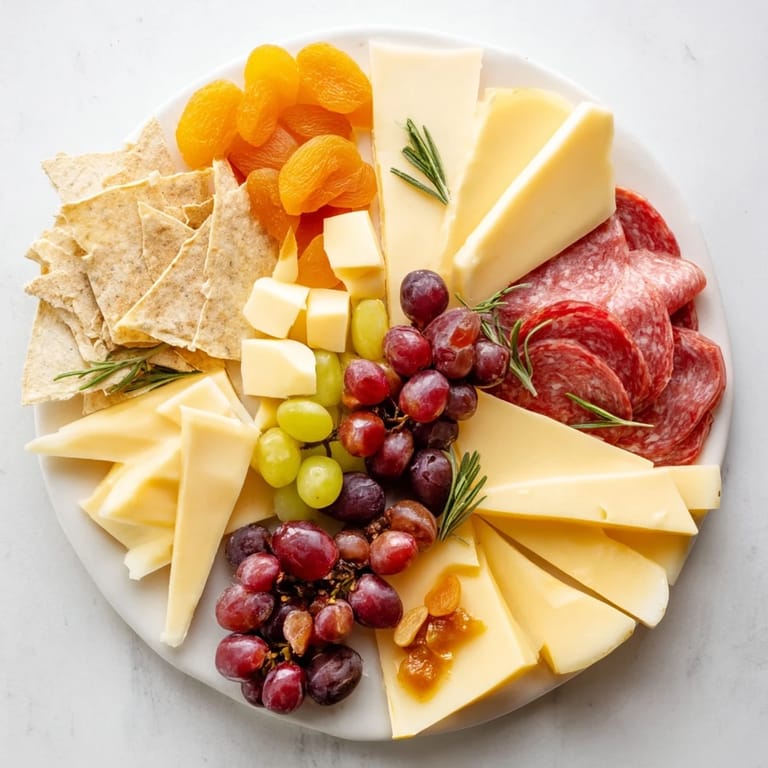
Save My friend called me the night before her dinner party in a mild panic—she needed something elegant, visually stunning, and completely stress-free. I found myself sketching geometric shapes on a napkin, thinking about how a charcuterie board could become art instead of just food. That's when the idea clicked: what if everything was intentional, cut with precision, arranged like a gallery installation? Cheese triangles, meat rhombuses, grapes nestled between sharp angles. Suddenly I wasn't just assembling a board; I was composing something worth talking about.
I made this board for the first time at my neighbor's summer gathering, and I watched people stand in front of it for a full minute before eating anything. They were photographing it, discussing the shapes, pointing out how the arrangement had actual visual flow. One guest said it felt too nice to eat—until she tried the Manchego triangle with a fig jam dollop and changed her mind completely. That's when I realized the precision wasn't pretentious; it was an invitation to pay attention.
Ingredients
- Manchego cheese: Firm, slightly nutty, and holds a clean triangle shape without crumbling—make sure it's chilled before cutting or the knife will drag.
- Aged cheddar: The sharper the age, the better it slices into defined geometric shapes, and the richer it tastes.
- Brie: Chill it thoroughly until it's almost stiff, otherwise your triangles will collapse the moment you move them.
- Gruyère: The rhombus cut works beautifully with its firm, crystalline texture—you'll feel the satisfying crunch as your knife pushes through.
- Prosciutto: Let it come to room temperature slightly so it folds without tearing; a brittle cold slice snaps instead of bends.
- Soppressata: Slice first, then trim the edges into rhombuses—working with rectangular pieces is easier than starting from whole slices.
- Chorizo: The diagonal slice (rhombus) becomes this beautiful parallelogram that catches the light differently than other cuts.
- Seedless grapes: Red and green together create automatic color rhythm without you having to arrange much else.
- Dried apricots: Cut them at angles if you're feeling committed to the theme, or leave them whole—they're already naturally organic against your geometry.
- Marcona almonds: Butter-soft and distinct, they fill gaps and add that Spanish flair the cheeses deserve.
- Fig jam: The sweetness against salty cured meats is non-negotiable; dollop it or offer it in a tiny bowl so people can control their own ratio.
- Gluten-free seed crackers: Break them by hand into uneven triangles—perfect uniformity here actually looks less elegant than slight variation.
- Fresh rosemary or thyme: The sprigs aren't just garnish; they perfume the whole board and signal that you thought about every sensory element.
Tired of Takeout? 🥡
Get 10 meals you can make faster than delivery arrives. Seriously.
One email. No spam. Unsubscribe anytime.
Instructions
- Sharpen and steady yourself:
- Pull out your sharpest chef's knife—a dull blade will crush cheese instead of slicing through it cleanly, leaving you frustrated. Place a damp towel under your cutting board so it doesn't slide as you work.
- Cut the cheeses with intention:
- Start with Manchego and aged cheddar, slicing them into triangles with deliberate, even pressure downward; let the knife do the work rather than sawing. The firmness of chilled cheese means one smooth stroke will give you a clean edge that looks intentional, not jagged.
- Handle the Brie like it's delicate:
- Chill it until it's almost hard, then use a cheese knife to make your triangular cuts in one decisive motion. If it starts to soften, pop it back in the fridge for five minutes before continuing.
- Cut the Gruyère into rhombuses:
- Slice the cheese on an angle, then cut your slices into diamond shapes by angling your next set of cuts in the opposite direction. You'll feel the satisfying resistance of those crystal shards breaking cleanly.
- Shape the cured meats:
- Prosciutto can be folded into loose triangles, while soppressata and chorizo should be sliced thin and then trimmed with a sharp knife into your rhombus shapes. Work quickly with the cured meats so they don't dry out.
- Arrange with the eye of a designer:
- Lay out your serving board and start placing shapes in clusters, alternating triangles and rhombuses so your eye naturally travels across the board. Leave small gaps for the grapes and other elements—don't pack it so tightly that there's no visual breathing room.
- Nestle the accompaniments:
- Arrange grape clusters in groups of three or five, tuck your diagonally-cut apricots into pockets between the cheese, and scatter the almonds in the remaining gaps. These organic, unperfect shapes balance the rigid geometry beautifully.
- Add the fig jam strategically:
- Place small dollops directly on the board or offer it in a tiny bowl; the deep purple-brown color becomes an accent that ties the whole composition together.
- Finish with garnish and purpose:
- Tuck sprigs of rosemary or thyme around the board—they add vertical interest and their fragrance will be the first thing people notice. Arrange your triangle crackers in neat stacks at the edges or fanned out as if they're meant to guide people into the arrangement.
- Serve with intention:
- Present the board before anyone gets hungry so they can appreciate the visual impact; the moment people start eating, the geometry dissolves, but that's actually perfect because now they're focused on flavor and enjoyment instead of precision.
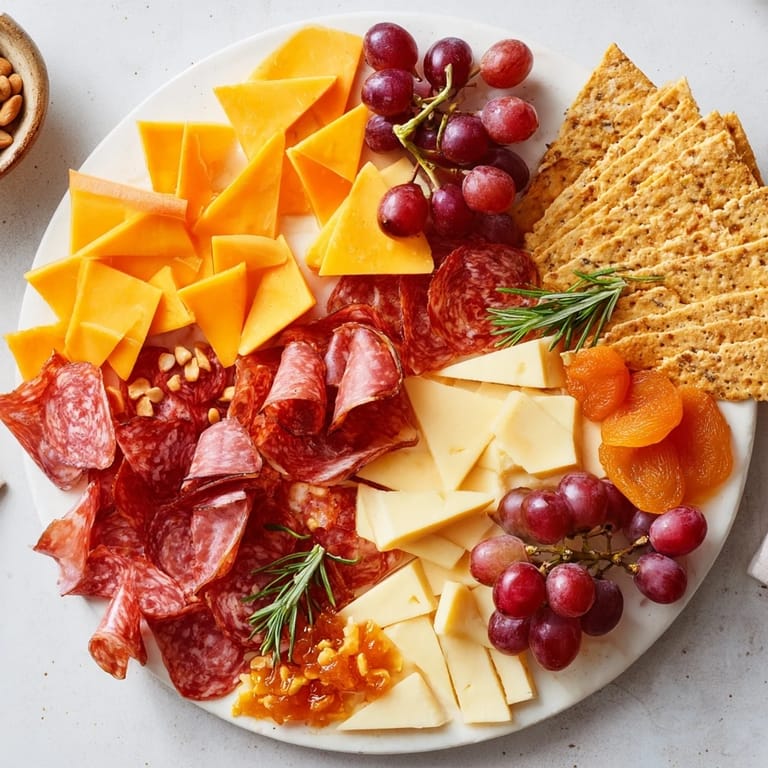 Save
Save What I didn't expect was how the precision changed the eating experience itself. My cousin picked up a triangle of Manchego with a fig jam swipe instead of just grabbing a chunk of something soft—the shape gave permission to be intentional about every bite. The geometry transformed what could have been passive snacking into actual engagement with the food.
The Shape-Cutting Strategy
Cutting everything into shapes sounds obsessive until you realize it forces you to work more slowly and deliberately, which means you're less likely to make mistakes. I used to cut one slice of cheese and then immediately assemble, creating this chaotic mess of different thicknesses and sizes. Now I cut all the cheeses first, then all the meats, then arrange everything at once—and suddenly I'm not scrambling. The rhythm becomes almost meditative, and the precision translates to an arrangement that actually looks intentional rather than haphazard.
Wine Pairing and Timing
A crisp Sauvignon Blanc or effervescent rosé cuts through the richness of aged cheese and cured meats without overwhelming them. The key is serving the board straight from the fridge so the cheese stays firm and the flavors stay bright; a board that's been sitting in warm air for an hour becomes droopy and loses its visual impact. I learned this the hard way at a summer party when the Brie started weeping halfway through the event, and suddenly my careful triangles were softening into blobs.
Customization Within the Theme
The beauty of this concept is that you can swap in any cheeses or cured meats you love, as long as they're firm enough to hold a clean edge. I've done this with Spanish Manchego and Italian bresaola one night, then French Comté and Spanish chorizo another, and both versions felt completely different while maintaining the same visual language. The geometric theme becomes the through-line that ties everything together, even when the ingredients shift.
- Substitute any firm cheese that you can slice without it crumbling—creamy blues and goat cheese won't work for this.
- Try harder cured meats like bresaola or spicy coppa, cutting them to match your geometric theme.
- If you want to add vegetables, cut them into shapes too—thin apple slices, radish rounds, or cucumber triangles extend the concept naturally.
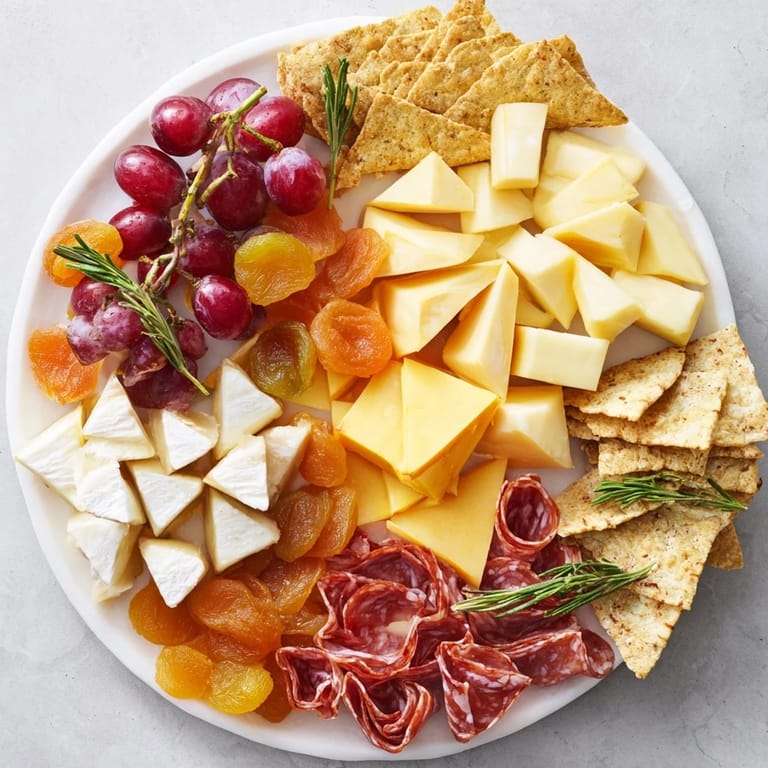 Save
Save This board proves that constraint breeds creativity—when you decide everything must be geometric, suddenly you're designing instead of just arranging. It takes the same amount of time as a casual cheese board but lands completely differently, making people pause and notice. That's the whole point.
Common Questions
- → What cheeses work best for geometric cutting?
Firm cheeses like Manchego, aged cheddar, Brie, and Gruyère hold shape well when cut into sharp triangles and rhombuses.
- → How can I achieve precise geometric cuts?
Use a sharp chef's or cheese knife, and consider a ruler or guide to ensure consistent triangle and rhombus shapes.
- → What pairings complement this board's flavors?
Seedless grapes, dried apricots, Marcona almonds, and fig jam bring sweet and nutty notes balancing savory cheeses and meats.
- → Are gluten-free crackers suitable here?
Yes, gluten-free seed crackers broken into triangles maintain the geometric theme while accommodating dietary needs.
- → How should the board be garnished?
Fresh rosemary or thyme sprigs add aromatic freshness and enhance the overall presentation with natural greenery.